

What to Know About Tank Decommissioning in Louisiana
The Louisiana Department of Environmental Quality (LDEQ) regulates underground storage tanks through its Underground Storage Tank Division, based in Baton Rouge, under Louisiana Administrative Code Title 33, Part XI. EPA lists Louisiana among the states with an approved UST program, and EPA's state programs page says approved programs operate in lieu of the federal program. State law in La. R.S. 30:2194 leaves out a tank storing heating oil for consumptive use on the premises, at any size, unless the oil is blended with hazardous waste. Farm or residential tanks of 1,100 gallons or less holding motor fuel for noncommercial purposes are excluded too. LDEQ's certified worker page lists closure of excluded tanks among the activities that do not require a certified worker. Gas station, fleet and other regulated USTs go through the full tank closure process described below.
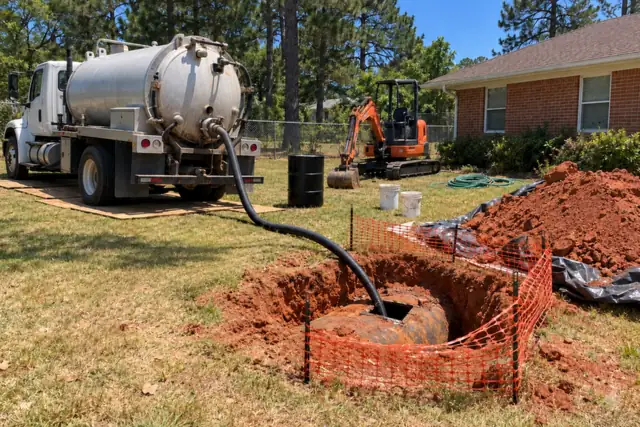
The owner of a regulated UST submits form UST-SURV-01 at least 30 days before the tank closure or change in service, and LDEQ's closure guidance says the 30 days run from the date of approval. The approved form becomes invalid if closure does not begin within 90 days. The regional office also needs notice at least seven days before the work and before any closure-critical juncture. An LDEQ-certified worker must be present and in supervisory control during cleaning and vapor removal, removal or filling of the tank, and subsurface sampling, unless an LDEQ-approved Response Action Contractor supervises the sampling. A site assessment is required at every closure. Within 60 days, the owner files form UST-SURV-02 and the closure assessment report with the UST Division regional office.
Louisiana's Motor Fuel Underground Storage Tank Trust Fund, managed by LDEQ's Financial Services Division, pays for cleanup after a confirmed release, not for closing a tank. The fund's 2025 cost guidance lists costs associated with closure activities, and removal of the tank, lines or dispensers, among costs it will not reimburse. LDEQ's fund guidance sets the deductible at $0 for eligible releases after August 1, 2024, though noncompliant sites with earlier releases can owe $10,000, and La. R.S. 30:2195.2 caps coverage at $2,000,000 per occurrence. The tank must have been registered before the release, with annual fees paid. The fund covers motor fuel tanks only, so heating oil tanks fall outside it. Our guide to closure in place versus UST removal explains what changes the scope of a closure job.
LDEQ's closure guidance adds practical steps. Louisiana One Call must be notified at least 48 hours before any excavation, and a removed tank must be labeled before it leaves the site. The guidance tells owners to keep the closure records indefinitely, and LDEQ's registration page says annual fees are owed even in the fiscal year a tank is closed. A release must be reported to LDEQ within 24 hours of becoming aware of it. LDEQ publishes a current certified worker list that can be searched by worker name or company. Before hiring any contractor on this page for a regulated UST, ask which certified worker will supervise the closure and look that person up.