

What to Know About Tank Decommissioning in Utah
This page covers underground storage tank decommissioning in Utah. The Utah Department of Environmental Quality (UDEQ) runs the Petroleum Storage Tank Program through its Division of Environmental Response and Remediation (DERR), and EPA has approved the Utah UST program. Utah Code 19-6-402 defines an underground storage tank by the federal UST law, and Utah's rules adopt the federal UST regulations. The federal definition in 40 CFR 280.12 leaves out any tank storing heating oil for use on the premises, at a home or a business, with no size limit. It also leaves out farm or residential tanks of 1,100 gallons or less that hold motor fuel for noncommercial use.
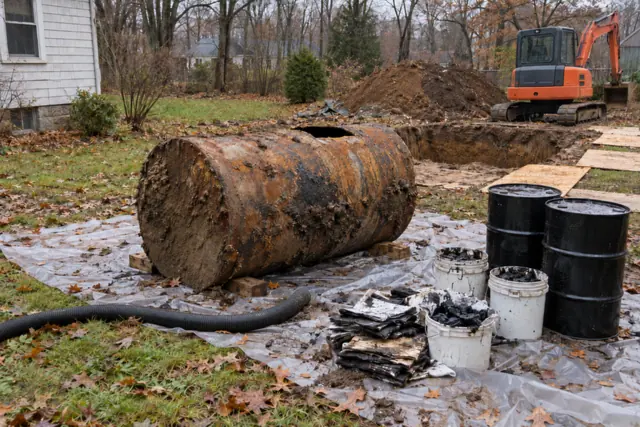
Tank closure for a regulated UST starts with a closure plan mailed to DERR's UST Section in Salt Lake City. Utah's R311 rules require it at least 30 days before closure, and work may not begin until DERR approves it. The director must also be told at least three business days before work starts. A certified PST remover must do the tank removal or supervise it on site, and the rule counts closure in place as tank removal. Closure in place, filling the emptied tank with sand or cement slurry, needs approval from the local fire department and DERR. A certified sampler takes the closure samples after the tank is emptied and cleaned. Contamination must be reported to DERR within 24 hours. The closure notice, with lab results and a site plat, is due within 90 days. A tank temporarily closed for more than three months needs a temporary closure notice within 120 days after the temporary closure begins. Under 40 CFR 280.70, a substandard tank idle more than 12 months must be closed unless DERR extends it.
Utah's Petroleum Storage Tank Fund pays cleanup costs after a release from a covered tank. Utah Code 19-6-402 defines those costs as investigation, abatement, corrective action and third-party claims, and tank decommissioning is not on that list. Each release carries a $10,000 deductible, paid by the responsible party. For releases reported since May 11, 2010, the fund then pays up to $1,990,000 at a petroleum production, refining or marketing facility, or at one with average monthly throughput of more than 10,000 gallons. Other tanks are capped at $990,000. Only tanks with a current certificate of compliance are covered, and a claim must be made within one year after a fund-covered tank is closed. For a regulated or fund-enrolled tank, the fund can also lend money for tank closure through the PST loan program, at 0% interest. Work done before the loan is approved and closed does not qualify. DEQ's closure plan page says registration and fund fees are due for the period in which the tank closes. Closure in place versus UST removal explains how the method changes the job.
Unless the owner has entered it in the Petroleum Storage Tank Fund, a home heating oil tank is not a petroleum storage tank under Utah Code 19-6-402. Utah's closure plan, certified remover and closure notice rules therefore do not apply to it. A leak from an underground heating oil tank is different: DERR oversees those releases under an agreement with the Division of Water Quality. For a regulated tank, DEQ publishes daily updated lists of companies with certified PST removers and samplers on staff, and says the lists do not endorse any company. Confirm the firm appears there, and ask to see the current Utah certificate of the person who will supervise the tank removal.