

What to Know About Tank Decommissioning in New Jersey
This page covers tank closure in New Jersey, from home heating oil tanks to commercial fuel tanks. The New Jersey Department of Environmental Protection (NJDEP) regulates underground storage tank systems under the Underground Storage Tanks rules, N.J.A.C. 7:14B. Those rules exempt heating oil tanks that serve a residential building, whatever their size. They also exempt heating oil tanks of 2,000 gallons or less that serve a nonresidential building. NJDEP calls both kinds unregulated heating oil tanks. Federal rules skip them too, because 40 CFR 280.12 excludes tanks storing heating oil for use on the premises. NJDEP oversees the cleanup once a discharge is found, and tank decommissioning still requires a firm certified by NJDEP, except on a farm.
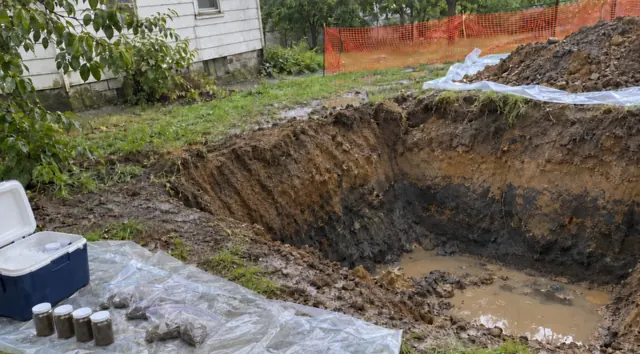
Closing a regulated underground storage tank, such as a gasoline or diesel tank at a business, follows Subchapter 9 of N.J.A.C. 7:14B. The owner files a notice of intent to close through NJDEP Online at least 14 calendar days before the closure date. A separate notice must reach NJDEP by email at least 14 days before physical work starts. The work must be done by an individual certified in closure, or under that person's immediate, on-site supervision. A licensed site remediation professional (LSRP), or the LSRP's representative, must be present when the tank comes out of the ground. Tank removal is the default. Closure in place, which the rule calls abandonment in place, is allowed if no contamination is found above remediation standards or removal is not feasible. It needs a New Jersey professional engineer's statement, cleaning, and a complete fill of sand, cement or other inert material. A site investigation report then goes to NJDEP, and the property owner must keep the closure documentation indefinitely. A tank left out of service past the limit in N.J.A.C. 7:14B-9.1 must be closed, barring the extension that rule allows.
New Jersey's state fund is the Petroleum Underground Storage Tank Remediation, Upgrade and Closure Fund, run by NJEDA with NJDEP. NJEDA stopped taking non-leaking tank applications on May 3, 2011, for insufficient funds. For leaking unregulated tanks, including every residential heating oil tank, the UST Fund page says new applications are date stamped and held until funding becomes available. NJDEP adds that the fund has never guaranteed funding. For a leaking unregulated tank, eligible costs include the minimal effective removal or closure, and replacing a home tank with an aboveground tank. Under the fund instructions, the tank must be removed and inspected before a leaking-tank application is accepted. The fund does not pay to abandon a leaking tank in place unless a licensed civil engineer finds removal may damage the house. NJEDA charges a $250 application fee for homeowner applicants and a $500 application fee for commercial and residential investment properties. For how the two methods differ, see closure in place versus UST removal.
When a home heating oil tank is closed, DCA Bulletin 95-1B sets the Uniform Construction Code rules for tank decommissioning. Tank removal and tank abandonment both need a demolition permit from the local construction office, with plan review and inspection by the fire subcode official and a location sketch before approval. If a discharge turns up, N.J.A.C. 7:26F requires an immediate call to the NJDEP Hotline and a cleanup run by a Certified Subsurface Evaluator or an LSRP. Before hiring, search NJDEP's list of certified UST firms for CLOSURE or HHO CLOSURE in the Cert Type column. Under N.J.A.C. 7:14B-16.10, a certified firm must show its NJDEP certification card on request and sign a written contract with a maximum price.