Find contractors in New Jersey for underground storage tank installation, fuel system installation, dispenser installation, and piping upgrades. Serving Newark, Jersey City, Edison, Trenton, and communities statewide.
Tank Installation Costs and Timelines in New Jersey
New Jersey ranks among the busiest states for tank installation. It is also pricier than most, with single-tank projects at $60,000 to $160,000. Dense population, aging fuel systems, and heavy commercial traffic push demand in Newark, Jersey City, and the surrounding Essex and Hudson County areas. Central New Jersey, particularly Edison, Woodbridge, and New Brunswick, sees steady gas station construction tied to suburban growth. South Jersey markets like Cherry Hill and Toms River have picked up as older single-wall systems reach end of life and owners invest in full replacements rather than piecemeal repairs. The state's tight lot sizes and high water tables make these projects more complex than in most other markets, which limits the contractor pool to firms with specialized equipment.
NJDEP rules at N.J.A.C. 7:14B govern regulated underground storage tank installations, covering permitting, construction standards, and release detection, while heating oil tanks serving a home on site are exempt. Every new UST system must meet federal double-wall containment standards and include continuous interstitial monitoring before it can accept fuel. The people performing this work in New Jersey must hold NJDEP certification, and the owner and operator must register each regulated tank with NJDEP at least thirty days before it is put into use. Convenience store chains, fleet operators, and fuel distributors are the primary buyers of new installations across the state.
A single tank installation in New Jersey typically costs $60,000 to $160,000, running 10 to 15 percent above national averages due to permitting fees and tight site access. Multi-tank gas station build-outs with dispensers, piping, and monitoring systems range from $275,000 to $550,000 or more depending on the number of product lines and canopy work. Monitoring equipment alone adds $5,000 to $15,000. If the site previously held USTs, soil sampling and potential remediation before the new system goes in can add $10,000 to $50,000 to the project. The state does not offer a reimbursement fund for these costs, though the cleanup fund may cover remediation of legacy contamination discovered during site preparation.
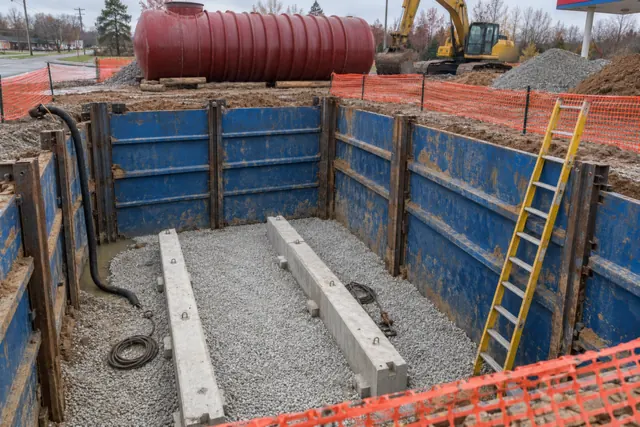
The project typically spans 8 to 16 weeks from permit application through final inspection. Site work begins with excavation and bedding preparation, followed by tank setting, piping runs, dispenser pads, and electrical connections, with state inspectors approving the system at multiple stages before fuel delivery is authorized. Compressed schedules are possible on greenfield sites, but brownfield redevelopments often stretch past six months when unexpected soil conditions surface. Before hiring a contractor, confirm the people doing the work hold NJDEP certification under N.J.A.C. 7:14B-13, and ask for at least three completed New Jersey references from the past two years. Confirm that their bid includes permitting, backfill, paving, monitoring setup, and the state registration filing, because skipping any of those line items means a surprise bill later.
Does New Jersey require a specific license for UST installation?
New Jersey requires contractors performing fuel storage system work to hold NJDEP certification under N.J.A.C. 7:14B-13, which covers both the individuals and the business firm. The installing firm must demonstrate compliance with N.J.A.C. 7:14B construction and operational standards. General contractors without UST-specific credentials cannot legally install fuel storage systems. Before signing a contract, ask the firm for its NJDEP certification number and verify it is current. Using an uncertified contractor can void your tank warranty and create permitting problems that delay fuel delivery by months.
How much does it cost to install an underground storage tank in New Jersey?
A single UST installation in New Jersey typically runs $60,000 to $160,000 including the tank, excavation, piping, and monitoring equipment. A full gas station build-out with multiple tanks, dispensers, and canopy work ranges from $275,000 to $550,000 or higher. These figures reflect New Jersey's above-average costs driven by dense development, high permitting fees, and strict environmental requirements. Sites with legacy contamination from previous tanks will see additional costs of $10,000 to $50,000 for soil remediation before the new system goes in. Always request an itemized bid so you can compare line items across contractors rather than relying on a single lump-sum number.
How long does a tank installation project take in New Jersey?
Most new fuel system projects in New Jersey take 8 to 16 weeks from permit submission through final state inspection. Greenfield sites with clean soil and straightforward access tend to finish closer to the 8-week mark. Brownfield sites where old tanks are removed first often stretch beyond six months, especially if contamination is discovered during excavation. State inspector availability can also affect the timeline because multiple inspections are required at different construction stages. Plan for at least two weeks of permit review before any ground is broken, and build a buffer into your fuel delivery schedule.
Why are tank installation costs higher in New Jersey than most states?
New Jersey's dense development and high water tables create engineering challenges that most other states do not face. Tight lot sizes limit equipment access, which increases labor hours and sometimes requires smaller, specialized machinery. The state's environmental permitting process is among the most detailed in the country, adding administrative costs that contractors pass through. Proximity to sensitive waterways and aquifers often triggers additional containment and monitoring requirements beyond federal minimums, and prevailing wage requirements on certain projects further increase labor costs. These factors combined push New Jersey project costs 10 to 20 percent above the national average for equivalent systems.
What happens if contamination is found during excavation for a new tank?
If soil or groundwater contamination is discovered during excavation for a new tank, the discharge must be reported to NJDEP right away. A Licensed Site Remediation Professional is hired to direct the cleanup, which generally proceeds without NJDEP approving a plan first. The contamination must be characterized through soil sampling and possibly groundwater monitoring before construction can resume. Cleanup costs range from $10,000 for minor soil impacts to $50,000 or more if groundwater is affected. New Jersey's cleanup fund may cover eligible remediation costs from previous tank releases if the responsible party qualifies and applies within required deadlines. This scenario is common on sites replacing older single-wall tanks that leaked undetected for years, so building a contamination contingency of 15 to 20 percent into your project budget protects against this risk.