

Planning a UST Installation in Texas
New UST installations in Texas cluster along major highway corridors. The I-10, I-35, and I-45 routes connecting Houston, Dallas, San Antonio, Austin, and Fort Worth generate the highest volume of projects. The Gulf Coast petrochemical region between Houston and Beaumont drives heavy industrial fueling infrastructure. El Paso and the Permian Basin generate steady demand from fleet operators and fuel distributors supporting oil field logistics. Convenience store chains expanding across the Dallas-Fort Worth metroplex and the San Antonio to Austin corridor drive the fastest-growing segment, while rural truck stops along I-20 and I-40 still need periodic replacements.
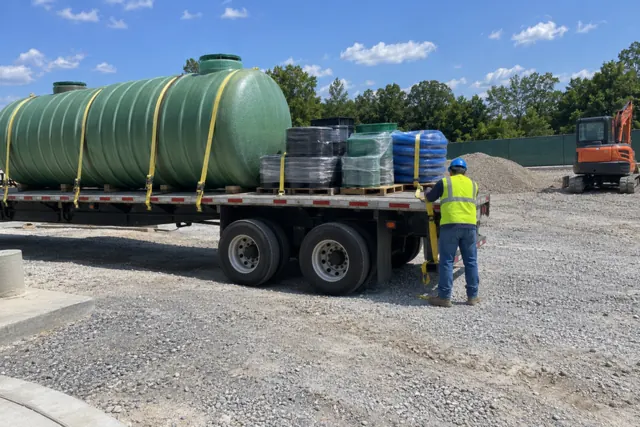
A single underground storage tank installation in Texas typically costs $50,000 to $175,000 depending on tank size, material, and site conditions. Multi-tank gas station build-outs with dispensers, piping, and monitoring systems run $300,000 to $500,000 or more, with monitoring equipment alone adding $5,000 to $15,000. These figures do not include land preparation, concrete work, or canopy construction, which can double the total project cost for a full gas station build. Rocky or clay-heavy soils in central and north Texas increase excavation costs compared to the sandy Gulf Coast. The Texas Petroleum Storage Tank Remediation Fund stopped reimbursing owners on September 1, 2012, so contamination from an older system found during a replacement is an owner cost on top of the build. Getting a fixed price before the geotechnical survey is done usually means paying for change orders later.
Texas has the largest regulated UST population in the country. The state treats new tank installation with corresponding seriousness, requiring every company performing underground storage tank installation to be a TCEQ-registered UST contractor, with a TCEQ-licensed on-site supervisor, before breaking ground. Secondary containment for all new tanks and leak detection equipment meeting federal standards under 40 CFR 280 are mandatory. Gas stations, fleet fueling facilities, and fuel distribution terminals across Texas must comply with these requirements. Fiberglass reinforced plastic and double-wall steel are the dominant tank types approved for new installations, and any facility skipping the state notification and registration process faces enforcement action, fines, and potential project shutdown.
For most sites TCEQ requires no installation permit, only a written construction notification filed at least thirty days before work starts. After that, the physical installation of a single tank takes one to two weeks, though a full multi-tank gas station build can stretch to three months or longer. After installation, the contractor must perform tank tightness testing and verify all leak detection systems before the tanks go into service. Confirm that your contractor handles both the installation and the state registration paperwork, and request references from projects completed in the last two years. Before signing any agreement, verify the company's TCEQ UST contractor registration and its on-site supervisor's TCEQ license.