
Oil Tank Removal Contractors in South Carolina
Find South Carolina contractors for oil tank removal, UST closure, UST decommissioning, commercial tank excavation, petroleum tank removal, gas station closures, and environmental remediation. Serving Charleston, Columbia, Greenville, Myrtle Beach, Rock Hill, Spartanburg, and communities statewide.
How South Carolina Regulates UST Closure and the SUPERB Fund
South Carolina oil tank removal runs under the SCDHEC Underground Storage Tank Program. SCDHEC administers USTs under South Carolina Regulation 61-92 and federal 40 CFR 280 rules. Commercial UST closure at gas stations, fleet yards, and industrial sites requires an SCDHEC-certified UST contractor. Residential heating oil tanks sit outside the federal threshold in most cases, though legacy buried tanks surface during older Charleston historic district and Greenville-Spartanburg neighborhood real estate transactions.
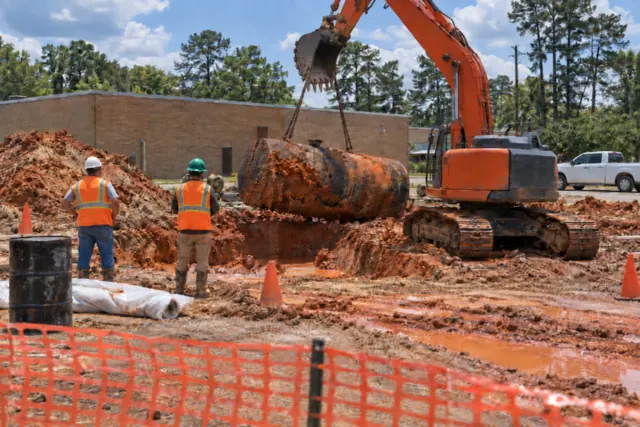
South Carolina tank removal work concentrates in the Charleston metro, including historic district residential tanks and commercial UST work around the Port of Charleston and I-26 corridor. Columbia anchors Midlands demand through gas stations, Fort Jackson support operations, and state-government fleet yards. Greenville and Spartanburg drive Upstate commercial UST turnover tied to BMW, Michelin, and manufacturing-corridor fueling networks. Myrtle Beach and the Grand Strand cycle tourism-fueling tanks along US-17. Rock Hill rides Charlotte-metro spillover. Piedmont red-clay soils slow excavation compared to softer Lowcountry alluvium. Hurricane season from June through November compresses coastal excavation windows.
Commercial UST closure at South Carolina gas stations typically runs $5,000 to $18,000 per tank. Residential heating oil tank removal in older Charleston, Greenville, or Columbia neighborhoods runs $1,800 to $4,000. If soil sampling exceeds SCDHEC cleanup thresholds, environmental remediation adds $10,000 to $50,000 or more, particularly at Lowcountry sites near tidal waters. South Carolina's SUPERB Fund (State Underground Petroleum Environmental Response Bank) reimburses eligible regulated-tank owners for corrective action costs after a deductible, aligned with the federal LUST Trust Fund program. Our cost guide breaks down pricing.
A typical South Carolina commercial closure starts with Palmetto 811 locates, SCDHEC notification, tank pumping, degassing, excavation, and soil sampling. A single-tank Charleston or Columbia closure wraps in two to three days. Multi-tank pulls stretch across a week. Soil laboratory turnaround runs seven to fourteen business days. Hurricane season routinely compresses Grand Strand and Lowcountry excavation schedules. Before signing, verify the contractor holds an active SCDHEC UST contractor certification, carries pollution liability insurance, and can show a closure report from a comparable Charleston, Columbia, or Upstate job. Property owners can find a tank contractor in South Carolina or request a free quote from active contractors.
Oil Tank Removal Contractors in South Carolina
Browse contractors, see contact details, and request free quotes.
Browse South Carolina Contractors →Frequently Asked Questions
Do I need a licensed contractor to remove an oil tank in South Carolina?
Yes. South Carolina Regulation 61-92 requires UST closure to be performed by an SCDHEC-certified contractor under federal 40 CFR 280 rules. The SCDHEC UST Program maintains the certified-contractor list. Residential heating oil tanks below the federal threshold sit outside the formal certification requirement, but Charleston, Columbia, and Greenville contractors that handle residential removals routinely carry pollution liability insurance and SCDHEC credentials.
How much does oil tank removal cost in South Carolina?
Commercial UST closure at South Carolina gas stations typically runs $5,000 to $18,000 per tank. Residential heating oil tank removal in older Charleston, Greenville, or Columbia neighborhoods runs $1,800 to $4,000. Contamination adds $10,000 to $50,000 or more, particularly at Lowcountry sites near tidal waters. South Carolina's SUPERB Fund may offset a portion for eligible regulated sites. See our cost guide.
How long does oil tank removal take in South Carolina?
A single-tank commercial closure in Charleston or Columbia wraps in two to three days on site. Multi-tank pulls stretch across a week. Soil laboratory turnaround runs seven to fourteen business days. If sampling triggers SCDHEC cleanup review under 40 CFR 280, paperwork adds six to fourteen weeks. Hurricane season often pauses Grand Strand and Lowcountry excavation from June through November.
How does South Carolina's SUPERB Fund work?
The South Carolina SUPERB Fund (State Underground Petroleum Environmental Response Bank) reimburses eligible regulated-tank owners for a significant share of corrective action costs after a deductible, drawing on per-gallon petroleum assessments plus federal LUST Trust Fund allocations. Eligibility requires the tank to be registered with SCDHEC, the release reported within state timeframes, and all work performed by certified contractors. Charleston, Columbia, and Greenville contractors experienced in SUPERB paperwork move claims faster.
Do I need to remove a buried oil tank before selling a South Carolina home?
No South Carolina statute forces removal. Buyers, lenders, and inspectors in Charleston's historic district, Mount Pleasant, Greenville's North Main and West End, and Columbia's Shandon and Heathwood routinely treat a buried heating oil tank as a reason to renegotiate or require escrow. Most sellers complete a tank closure, pass soil sampling, and hand buyers a clean closure report before listing. Lowcountry tidal proximity raises stakes on environmental documentation.
Browse contractors, see contact details, and request free quotes.
Browse South Carolina Contractors →For South Carolina UST regulations, visit the SC DHEC Underground Storage Tank Program. Federal requirements are available from the EPA UST Program.
