Find environmental remediation contractors in California for soil cleanup, groundwater treatment, LUST closure, and site investigation. Serving Los Angeles, San Francisco, San Diego, Sacramento, and communities statewide.
What to Know About UST Remediation in California
California environmental remediation contractors work under some of the country's strictest cleanup rules. The State Water Resources Control Board (SWRCB) administers the LUST program through nine Regional Water Quality Control Boards under California Health and Safety Code Chapter 6.7 and Title 23 CCR Division 3. Day-to-day permitting and inspection are delegated to local Certified Unified Program Agency (CUPA) offices, and operators must report a confirmed release within 24 hours and submit an unauthorized release report within five days. Cleanup standards must protect both soil quality and groundwater since California treats nearly all aquifers as potential drinking water sources. Many sites first surface during a Phase I ESA tied to a property sale or refinance.
Demand concentrates around the LA Basin, the Bay Area metros of San Francisco and Oakland, the Central Valley corridor through Fresno and Bakersfield, and the San Diego harbor area. Los Angeles County alone tracks thousands of historical LUST cases tied to legacy gas stations, dry cleaners, and aerospace facilities. Central Valley remediation often faces shallow groundwater under irrigated agriculture, which speeds plume migration through sandy alluvial soils. Bay Area sites commonly hit Bay Mud during excavation, requiring dewatering and offsite disposal that doubles soil-handling costs, while Sacramento and Stockton see steady remediation work tied to old fleet yards and rail-served fuel terminals. Operators choosing a contractor should compare regional experience against the actual hydrogeology of the site, since how site cleanup works varies by basin.
Soil excavation runs $150 to $400 per cubic yard for non-hazardous petroleum-impacted material in California, with hazardous-classification soil rising to $400 to $900 per cubic yard. Bay Area transportation and disposal costs typically add $50 to $150 per ton over Central Valley rates due to landfill scarcity and longer haul distances. Groundwater treatment with air sparging or pump-and-treat ranges $50,000 to $250,000 for moderate plumes, with five-year monitoring adding $30,000 to $80,000. The California Underground Storage Tank Cleanup Fund (USTCF) administered under California Health and Safety Code Section 25299.50 may reimburse eligible owners up to $1 million per claim after a $10,000 deductible. The figure comes from the state's own rule. Total project costs at LUST sites commonly land between $75,000 and $500,000 depending on plume size, depth to groundwater, and whether MTBE or PFAS is present.
The typical California cleanup begins with a corrective action plan submitted to the Regional Water Board, followed by remedial design, excavation or in-situ work, confirmation sampling, and a closure request that targets a no further action letter. Timelines stretch from 18 months for shallow soil-only releases to seven years or longer for deep groundwater plumes at Los Angeles or San Joaquin Valley sites. Field crews must hold valid 40-hour HAZWOPER training under 8 CCR 5192, 40 CFR 280, and Cal-OSHA before entering exclusion zones at LUST sites. Property owners should confirm any contractor carries pollution legal liability coverage and has filed USTCF claims before, since the Fund's documentation rules trip up firms new to the program. Ask each bidder for a Regional Water Board case number from a recent California closure before signing the contract.
California contractors for environmental remediation
Do California environmental remediation contractors need state certification?
Yes, California requires UST contractors to hold a CSLB Class A General Engineering license or a hazardous substance removal certification under Cal-OSHA, plus a UST tank tester certification when handling tightness work. Field workers must complete 40-hour HAZWOPER training under 8 CCR 5192 with annual 8-hour refreshers. Project supervisors at LUST sites typically operate under a licensed Professional Geologist or Civil Engineer who signs off on the corrective action plan. The local CUPA office often verifies these credentials before issuing a permit. Always confirm the firm's CSLB license status and Cal-OSHA hazardous substance designation before hiring.
How much does UST remediation cost in California?
Most LUST projects in California land between $75,000 and $500,000 from confirmed release through closure. Soil-only excavation cases at retail gas stations average $50,000 to $150,000, while groundwater plumes with extended monitoring can exceed $750,000 in the LA Basin or Bay Area. Costs swing on hazardous-soil classification (often $400 to $900 per cubic yard for disposal) and the depth to groundwater at the site. The Underground Storage Tank Cleanup Fund may reimburse up to $1 million per claim for eligible owners, but the $10,000 deductible and documentation burden are real. The figure comes from the state's own rule. Adding PFAS or 1,2-DCA testing can push the analytical line item past $25,000 on its own. When you compare quotes from soil remediation companies in California, make sure each one covers excavation, soil disposal, backfill, and the confirmation sampling needed to close the case.
How long does a California LUST cleanup take?
Shallow soil cases with no groundwater impact often close within 18 to 30 months from corrective action plan approval. Sites with groundwater contamination commonly run four to seven years, particularly in San Joaquin Valley aquifer systems where plume migration is slow. Regional Water Board review of closure submittals typically adds six to twelve months at the back end. PFAS detections trigger additional sampling and treatability studies that can extend the schedule by 18 months or more. Owners should plan financing around the conservative end since California reviewers rarely accelerate active cases.
What is the California UST Cleanup Fund and who qualifies?
The California Underground Storage Tank Cleanup Fund (USTCF) is administered by the State Water Resources Control Board under California Health and Safety Code Section 25299.50 and reimburses eligible tank owners for corrective action costs at petroleum LUST sites. Owners must hold a current State Water Board permit and have paid the storage fee on each gallon stored to remain eligible. Coverage runs up to $1 million per occurrence above a $10,000 deductible, with priority codes that put residential and small-operator claims ahead of large commercial owners. The figure comes from the state's own rule. The Fund does not cover non-petroleum chemicals like chlorinated solvents from dry cleaning, which require a separate funding path. Reimbursement typically takes 12 to 24 months after submitting eligible invoices, so most California owners pay contractors directly and recover later.
What happens during a California remediation project?
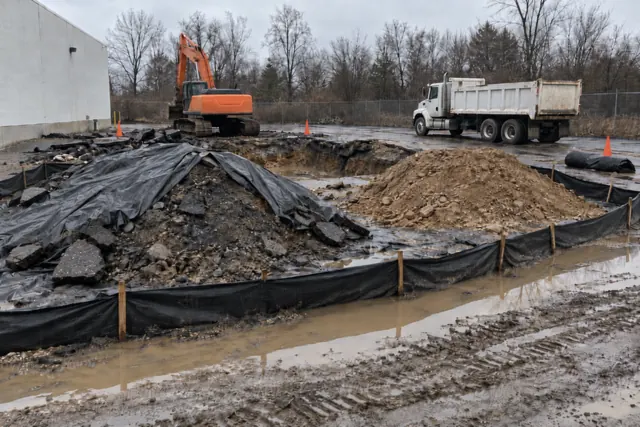
Work begins with site characterization sampling to map the contamination plume and define the corrective action plan that goes to the Regional Water Board. After plan approval, contractors excavate impacted soil to a permitted disposal facility or run in-situ technologies such as bioventing, chemical oxidation, or air sparging. Confirmation sampling at the excavation walls and floor, plus groundwater wells where required, documents that California cleanup goals were met. The Regional Water Board reviews the closure report and either issues a no further action determination or asks for additional work. Closure under the Low-Threat Closure Policy is the fastest path for qualifying petroleum-only sites with stable plumes.