Find contractors in North Carolina for underground storage tank installation, fuel system installation, dispenser installation, and piping upgrades. Serving Charlotte, Raleigh, Greensboro, Wilmington, and communities statewide.
Costs, Timelines, and Permits for North Carolina Tank Installation
A single underground storage tank installation in North Carolina typically costs $50,000 to $150,000. Final price depends on tank capacity, site conditions, and piping complexity. Multi-tank gas station build-outs with dispensers, canopies, and monitoring equipment push total project costs to $250,000 to $500,000 or more, with monitoring systems alone running $5,000 to $15,000. The Piedmont region tends to fall in the middle of these ranges. Coastal installations near Wilmington often cost 10 to 15 percent more due to high water tables requiring dewatering and specialized backfill. North Carolina does not operate a state fund that covers installation costs, so facility owners bear the full expense. Skipping quality leak detection often leads to far higher remediation costs later.
Demand for new tank installations in North Carolina clusters along the I-85 and I-40 corridors where commercial fueling infrastructure supports heavy freight traffic. Charlotte leads the state in new gas station permits, followed by Raleigh, Greensboro, and the Research Triangle region. Coastal areas around Wilmington and the Outer Banks see seasonal spikes tied to tourism and marine fueling. Convenience store chains expanding into suburban markets outside Durham and Fayetteville are driving multi-tank build-outs, and fleet operators near military installations like Fort Liberty generate steady replacement demand. Rural communities in the western mountains and eastern plains still rely on single-tank fueling setups that need upgrades to meet current double-wall and interstitial monitoring standards.
Every new UST installation in North Carolina must pass state inspection before accepting fuel. The state's environmental quality division oversees permitting, registration, and inspection of all underground storage tank systems, and no tank can go into service without passing an initial compliance check. North Carolina does not issue a UST-specific environmental safety training, so installers typically hold general contractor or environmental remediation credentials. Facilities ranging from gas stations and truck stops to fleet yards and marinas all fall under these requirements. Any installation involving double-wall tanks, leak detection, and overfill prevention must be documented and submitted to the state before the system becomes operational.
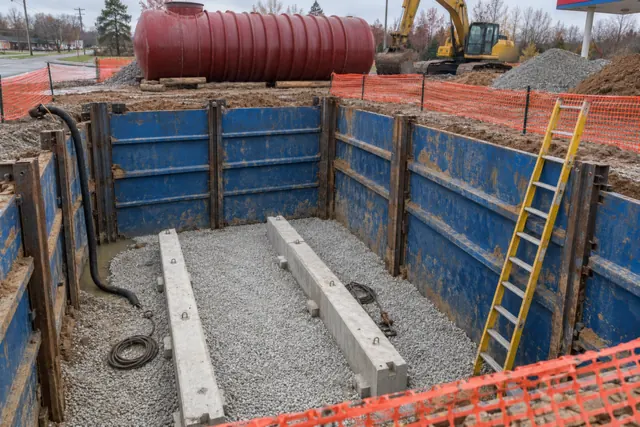
The installation process begins with site engineering and a permit application to the state, which typically takes two to four weeks for approval. Excavation, tank setting, piping, and backfill usually require one to three weeks of field work depending on the number of tanks and site complexity. After installation, the system undergoes a final inspection and tightness testing before the state grants operating approval. Verify that your contractor carries pollution liability insurance, not just a general CGL policy, because standard commercial insurance excludes fuel releases. Ask to see the installer's track record with the state's environmental quality program. Confirm they manage the full process from permit application through final inspection.
Do I need a special license to install underground storage tanks in North Carolina?
North Carolina does not require a UST-specific installer license. Contractors performing tank installations typically hold a general contractor license and carry environmental or pollution liability insurance. The state's environmental quality program does require that all installations meet federal technical standards under 40 CFR 280 and pass a compliance inspection before the system can accept fuel. You should confirm that any contractor you hire has documented experience with UST installations specifically. General excavation experience does not cover the leak detection, overfill prevention, and interstitial monitoring requirements that apply to fuel storage systems.
How much does it cost to install an underground storage tank in North Carolina?
A single-tank installation typically runs $50,000 to $150,000 depending on tank size and site conditions. Full gas station build-outs with multiple tanks, dispensers, and monitoring equipment range from $250,000 to $500,000 or higher. Coastal sites with high water tables add 10 to 15 percent for dewatering and engineered backfill. These figures do not include land acquisition, canopy construction, or environmental assessments, which are separate line items. Getting a fixed-price quote before site boring results come back is risky; soil and groundwater conditions at your specific location are the biggest cost variables.
How long does a UST installation take from permit to operation in North Carolina?
Plan for six to ten weeks total. The permit application and state review phase takes two to four weeks on average. Field work, including excavation, tank setting, piping, and backfill, runs one to three weeks depending on project scope. Final inspection and tightness testing add another one to two weeks before you receive operating approval. Multi-tank projects, difficult soil conditions, and winter weather in the mountain regions west of Asheville can all stretch these timelines, though the Piedmont and coastal areas rarely see weather-related delays.
Does North Carolina's high water table along the coast affect tank installation requirements?
Yes, and it affects both cost and engineering. Coastal areas from Wilmington through the Outer Banks sit on sandy soils with water tables that can be just a few feet below grade. Installers in these areas must use dewatering systems during excavation and engineered backfill materials to prevent tank flotation. Double-wall fiberglass tanks are the standard choice for high water table sites because steel corrodes faster in saturated conditions. The state requires the same leak detection and interstitial monitoring regardless of location, but coastal installations demand extra dewatering planning and careful backfill compaction to prevent settlement damage to piping connections.
What monitoring equipment is required for a new UST system in North Carolina?
Every new UST installation in North Carolina must be secondarily contained, with interstitial monitoring that runs without interruption and a printed record of results and alarms each month under 15A NCAC 02N .0901, and must include overfill prevention equipment. Line leak detectors are required on pressurized piping. The monitoring system must be operational and tested before the state grants final approval to dispense fuel. Budget $5,000 to $15,000 for monitoring equipment and installation on a typical single-tank setup. Skipping monthly monitoring checks after installation is one of the most common compliance violations the state flags during routine inspections, so build an ongoing monitoring protocol into your operations plan from day one.