

What to Know About Tank Decommissioning & Closure in Colorado
Colorado's underground storage tank program is run by the Colorado Division of Oil and Public Safety (OPS), part of the Department of Labor and Employment, not by the health department. Its petroleum program regulates petroleum USTs, and 7 CCR 1101-14 excludes any UST system of 110 gallons or less. Separately, EPA lists Colorado among the states with an approved UST program. The storage tank rules in 7 CCR 1101-14 exclude any tank storing heating oil for consumptive use on the premises, whether it serves a home or a business. They also exclude farm or residential tanks of 1,100 gallons or less holding motor fuel for noncommercial purposes. Gas station, fleet and other regulated USTs go through the full tank closure process below.
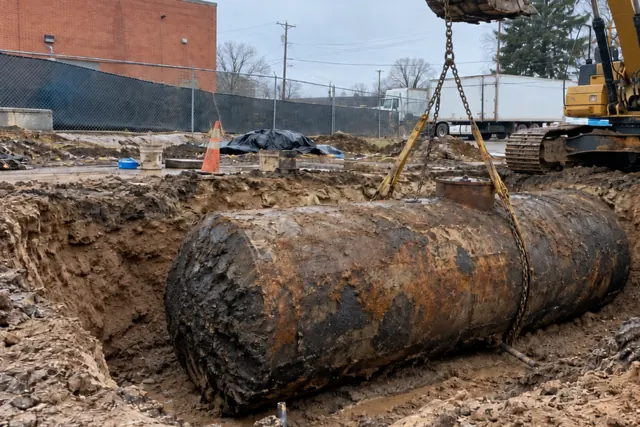
Under the Colorado Division of Oil and Public Safety rules, the owner must notify the Director at least 10 calendar days before beginning a tank closure or change in service. OPS's Notice of Intent form says the notice must be received 10 to 30 days before closure work begins and expires 60 days after OPS receives it. The tank is emptied of liquids and sludge and made inert. It is then removed, filled with an inert solid material, or closed in place in a manner the Director approves. For removal, soil samples go beneath each tank, dispenser and piping turn; for closure in place, OPS requires soil borings beside each tank and near piping turns and dispensers. Either way, the tank closure assessment report is due within 30 calendar days. OPS's closure inspection form says an OPS inspector is not required at the site.
Colorado's Petroleum Storage Tank Fund pays for assessment and cleanup of releases from regulated tanks, with eligibility decided by the Petroleum Storage Tank Committee. The fund's OPS page lists a $10,000 deductible; under 7 CCR 1101-14, releases after January 1, 2025 can qualify for a 10% deductible on the first $100,000 reimbursed when the Committee imposes no compliance reductions. State law sets a $2 million limit per occurrence, but a 2026 law (SB26-122) lets the OPS Director and the Committee approve a higher limit for an individual occurrence. Committee Policy #21 says costs of closure in place or change in service will not be reimbursed. Removal is treated differently. The committee's policy list includes Policy #29, UST Removal Reimbursement, which pays $2 per gallon removed, up to $60,000 per facility, for eligible tanks installed before August 2008, whether or not contamination is found. Heating oil tanks and other excluded tanks cannot get fund money. Our guide to closure in place versus UST removal explains what changes the scope of a job.
The Colorado Division of Oil and Public Safety certifies UST installers, and its rules require installation by a certified installer. OPS publishes lists of certified UST installers and Qualified Service Technicians, but neither certification covers tank removal. OPS also keeps a list of Colorado Recognized Environmental Professionals for site assessment work. A confirmed release, including contamination found during closure sampling, must be reported to OPS within 24 hours by telephone. Closure assessment records must be kept for at least three years. A tank counts as in use until it is closed under the rules, so registration duties continue until the closure is complete. Before hiring any contractor on this page, ask who will run the site assessment and whether the firm has closed Colorado tanks under OPS rules before.