

What Does Colorado Require for UST Inspection and Testing?
Colorado requires a monthly walkthrough of every regulated underground storage tank, an annual compliance inspection filed on an OPS form, and equipment tests on a three-year cycle. The Colorado Division of Oil and Public Safety (OPS), part of the Department of Labor and Employment, enforces these rules under 7 CCR 1101-14 through its petroleum program. They apply to petroleum USTs larger than 110 gallons at gas stations, fleet yards, truck stops and other commercial sites. The rules exclude any tank storing heating oil for consumptive use on the premises, so a home heating oil tank falls outside OPS inspection requirements.
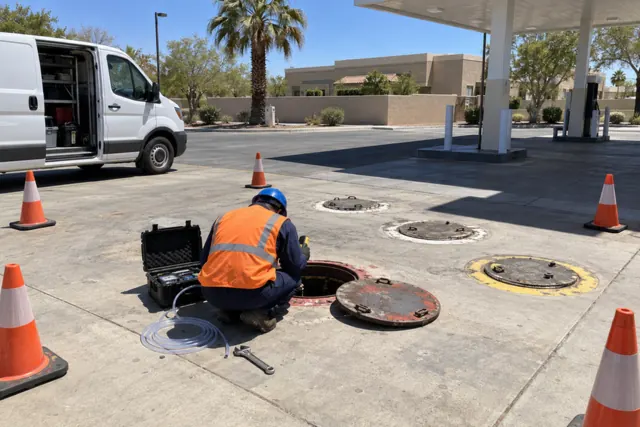
Most of the Colorado schedule mirrors the federal rule in 40 CFR 280. Each month a Class A or B operator, or a delegated designee, checks the release detection equipment, spill buckets, dispenser hanging hardware and exposed piping, and records it on a checklist. Each year the operator runs function tests on line leak detectors and sump sensors, then completes the Annual Operational Compliance Inspection Report and Certification Form that the Colorado Division of Oil and Public Safety provides. Release detection equipment and line leak detectors are tested every year. Pressurized lines also need an annual line tightness test unless they have monthly monitoring.
Three checks run on a longer cycle. Under section 2-3-5 of the OPS storage tank regulations, spill buckets and piping sumps used for interstitial monitoring are tested for tightness at least every three years, and overfill equipment is inspected on the same cycle. Cathodic protection is tested within six months of installation and every three years after that, and impressed current rectifiers are checked every 60 days. Colorado adds two items the federal rule does not: newly installed secondary containment is retested about a year after installation, and measurable water in a tank may not exceed one-fourth of an inch. The OPS UST operation guidance explains each check, and our UST inspection guide covers how testing is usually scoped and priced. Under Petroleum Storage Tank Committee Policy #4, a missed three-year spill bucket test can also reduce a later reimbursement from the Petroleum Storage Tank Fund.
Who does the work matters in Colorado. Since January 1, 2020, leak detection equipment work, the annual monitoring system test and secondary containment testing may only be done by an OPS-certified Qualified Service Technician. That technician must be on site supervising the work. The Colorado Division of Oil and Public Safety posts its lists of certified Qualified Service Technicians and certified UST installers on its helpful resources page, so you can check a name before the crew arrives. A failed test must be reported to OPS within 24 hours, and missing or broken spill, overfill, leak detection or corrosion protection equipment can earn a red tag on the fill pipe that stops fuel deliveries. The firms below list tank inspection or testing among their Colorado services. Ask each one which technician will sign the OPS forms, and compare the Colorado tank decommissioning contractors if a test points toward closing the tank.