Find Colorado contractors for oil tank removal, UST closure, UST decommissioning, heating oil tank closure, basement tank excavation, petroleum tank removal, alpine and resort tank work, and environmental remediation. Serving Denver, Colorado Springs, Fort Collins, Boulder, Aurora, Lakewood, Grand Junction, Pueblo, and mountain communities statewide.
How Colorado Regulates UST Closure Through OPS and the PST Fund
Colorado oil tank removal is regulated by the Division of Oil and Public Safety (OPS). OPS sits within the Colorado Department of Labor and Employment rather than CDPHE. The division handles UST registration, installer and remover certifications, closure notifications, and release response under federal 40 CFR 280 rules. Commercial UST closure at gas stations, fleet yards, and industrial sites must be performed by an OPS-certified UST professional. Residential heating oil tank closure below the regulated threshold does not require state certification, though soil sampling and tank disposal records still apply.
Colorado tank removal demand concentrates along the Front Range corridor from Fort Collins and Loveland through Boulder, Denver, Colorado Springs, and Pueblo. Commercial UST turnover runs heavy at gas stations along I-25, I-70, and I-76, plus Denver International Airport fueling facilities. Mountain and resort markets including Aspen, Vail, Breckenridge, Steamboat Springs, and Telluride generate higher-end residential heating oil tank work where natural gas service is limited. Western Slope and Grand Junction cover a petroleum legacy from oil shale and drilling activity in Mesa, Garfield, and Rio Blanco counties. Front Range clay soils, freeze-thaw cycles, and alpine sites above 7,000 feet create excavation and closure conditions that differ sharply from Great Plains or Midwest work.
Residential oil tank removal in Colorado typically runs $2,000 to $5,000 for a standard buried tank, with basement jobs at $3,000 to $6,000 and higher in resort markets. Commercial petroleum tank removal at gas stations and fleet yards runs $6,000 to $20,000 per tank before remediation. If soil sampling exceeds OPS cleanup standards, soil and groundwater remediation adds $5,000 to $45,000 or more depending on contamination plume and groundwater proximity. Colorado's Petroleum Storage Tank Fund reimburses eligible owners for corrective action and third-party damages on qualifying releases, aligned with federal LUST Trust Fund support. Our tank removal pricing breakdown sorts costs by tank size, soil condition, and site access.
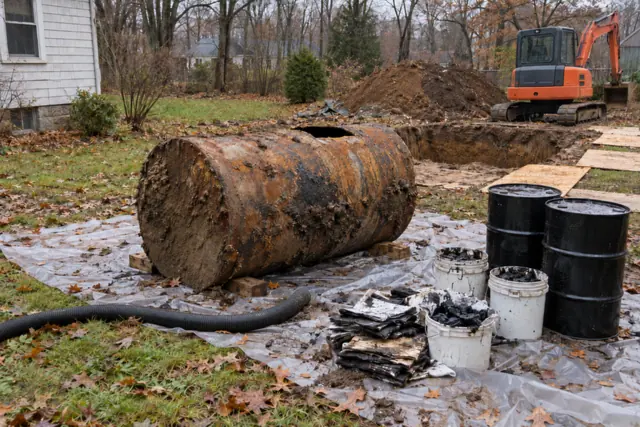
A typical Colorado job starts with Colorado 811 utility locates, then tank pumping, degassing, excavation, visual inspection, and soil sampling at the tank bed. A clean residential closure wraps in one day at Front Range elevations; alpine sites above 7,000 feet often stretch to two or three days. Remediation runs weeks to months when a release triggers OPS corrective-action review, particularly on clay-dominated Front Range sites. Before signing, verify the contractor holds active OPS UST certification, carries pollution liability insurance, and can show high-elevation or mountain-access experience if applicable. For residential jobs, keep lab soil results and the closure report with property records for resale due diligence. Tanks kept in service instead of removed need periodic Colorado tank inspection and testing to meet OPS requirements. Looking for a starting point? find a tank contractor in Colorado or request a free quote for direct comparisons.
Do I need a licensed contractor to remove an oil tank in Colorado?
For regulated commercial UST work, Colorado requires an OPS-certified UST professional registered with the state under federal 40 CFR 280 rules. Residential heating oil tank closure below the regulated threshold does not require state certification by law. Most Colorado homeowners still hire a licensed environmental contractor because soil sampling, closure documentation, and alpine-site logistics need field experience. Colorado 811 locates are mandatory before any excavation; Denver, Boulder, and mountain resort counties may apply additional permits.
How much does oil tank removal cost in Colorado?
Residential removal in Colorado typically runs $2,000 to $5,000 for a standard buried tank and $3,000 to $6,000 for basement jobs, with resort-market premiums on top. Commercial petroleum tank removal at gas stations and fleet yards runs $6,000 to $20,000 per tank before remediation. If soil contamination is discovered, environmental remediation can add $5,000 to $45,000 or more, particularly at clay-layered Front Range sites. Colorado's Petroleum Storage Tank Fund may reimburse eligible owners for corrective action costs under federal financial responsibility rules. See our cost guide for pricing by tank size, soil condition, and site access.
How long does oil tank removal take in Colorado?
A straightforward residential tank closure in Colorado typically takes one day at Front Range elevations. Basement or alpine sites above 7,000 feet often stretch to two or three days because of access, weather, and frost layers. Commercial tank closure at gas stations or fleet yards runs three to seven days depending on tank count and complexity. If soil sampling triggers OPS cleanup review under federal 40 CFR 280, paperwork adds 8 to 14 weeks before closure.
What's different about oil tank removal at Colorado mountain sites?
Alpine sites above roughly 7,000 feet have shorter construction windows because frost can run deep and late into the season. Access roads to resort properties in Aspen, Vail, Breckenridge, and Telluride may limit equipment size and require smaller excavators. Colder soil temperatures slow bioremediation and can push cleanup timelines if a release is found. Mountain contractors often charge a mobilization premium that reflects travel, lodging, and restricted work windows. Verify the contractor has high-elevation tank removal experience plus active OPS registration and can handle permitting in resort counties.
Does Colorado have a state cleanup fund for underground storage tank releases?
Colorado operates a Petroleum Storage Tank Fund administered through OPS. The fund reimburses eligible owners for corrective action costs and third-party damages on qualifying regulated-UST releases, aligned with federal financial responsibility rules. Coverage is funded through a per-gallon environmental response surcharge on motor fuel and tank registration fees. The program primarily serves gas station operators and commercial fleets; residential heating oil tanks below the regulated threshold fall outside program scope. Owners should file program paperwork before starting cleanup because pre-authorization affects reimbursement.