Find contractors in Wyoming for underground storage tank installation, fuel system installation, tank replacement, and dispenser installation. Serving Cheyenne, Casper, Laramie, Gillette, Rock Springs, and communities statewide.
Installing Underground Storage Tanks in Wyoming
Nearly all tank installation demand in Wyoming comes from commercial operations. The state's environmental quality department regulates all underground storage tank systems, requiring facility owners to submit notification forms and obtain permits before any new UST goes into the ground. Wyoming DEQ licenses UST installers, and at least one licensed installer must be on the job site whenever a regulated tank is installed or modified. Every new system must meet federal secondary containment and release detection standards under 40 CFR 280, and the state enforces post-installation testing before a facility can accept product. Owners who skip the notification step risk enforcement action and delayed fuel delivery.
Demand for tank installation in Wyoming clusters along the I-25 and I-80 corridors. Cheyenne sees the most activity as the state capital and a regional trucking hub, with convenience store chains and fleet operators driving new fuel system construction. Casper generates steady installation work tied to its oil and gas industry, where field camps and extraction sites need bulk fueling infrastructure. Gillette and the Powder River Basin create demand from coal and energy operations, while Laramie and Rock Springs add project volume from fleet upgrades and travel center replacements along I-80. Outside these corridors, ranch fueling operations and remote truck stops create scattered projects, and the limited contractor pool means scheduling stretches months ahead.
A single underground storage tank installation in Wyoming typically costs $50,000 to $150,000, covering the tank, excavation, piping, and monitoring equipment. Multi-tank gas station build-outs with dispensers and canopy work run $250,000 to $500,000 or more, with monitoring equipment alone adding $5,000 to $15,000 per system. Wyoming's low population density inflates project costs compared to Front Range states because contractors travel long distances for mobilization. Sites more than 100 miles from Cheyenne or Casper should budget an extra $5,000 to $20,000 for equipment transport. Fiberglass tanks cost less upfront, but double-wall steel with cathodic protection handles Wyoming's rocky, alkaline soils better over a 30-year service life. At leaking sites, the state may pay for cleanup itself through its corrective action account.
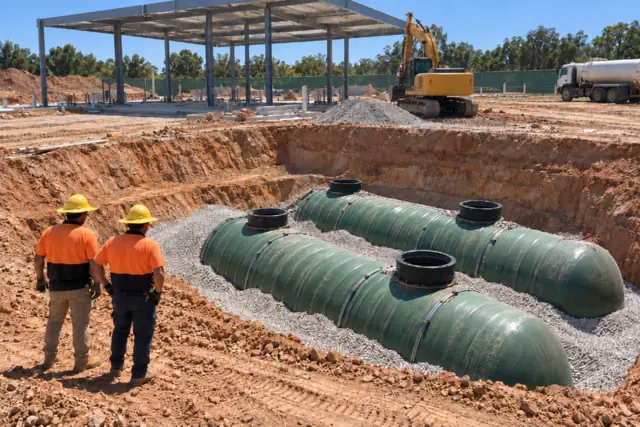
The installation process begins with engineering design and soil borings, moves through excavation and bedding, tank setting, piping connections, and backfill in controlled lifts. Single-tank projects typically take one to three weeks of field work; full station build-outs run six to twelve weeks. Frozen ground from November through March makes excavation impractical across most of Wyoming, and high-elevation sites stay frozen into late April. Before hiring, confirm the contractor carries pollution liability insurance as a separate policy from their general liability coverage, and verify the quote includes monitoring system commissioning. Confirm the contractor can mobilize during Wyoming's short May through October construction window before signing any agreement.
Does Wyoming require a specific license for UST installation?
Yes. Wyoming DEQ licenses UST installers under its storage tank rules, and at least one licensed installer must be on the job site whenever a regulated tank is installed or modified. To get the license, an installer must pass the International Code Council UST installation test. You can confirm an installer's license with the Wyoming DEQ Storage Tank Program. Ask prospective installers for documentation of training in current EPA installation standards and for references from recent UST projects in Wyoming. A contractor who has only installed septic systems or water tanks is not equipped for the secondary containment and leak detection requirements that apply to petroleum USTs.
How much does a UST installation cost in Wyoming?
A single-tank installation in Wyoming typically costs $50,000 to $150,000 for the tank, excavation, piping, and monitoring equipment. Multi-tank commercial projects with dispensers and canopy structures range from $250,000 to $500,000 or higher. Remote locations more than 100 miles from Cheyenne or Casper should add $5,000 to $20,000 for equipment mobilization. Tank material is a major cost variable: fiberglass is cheaper upfront but double-wall steel with cathodic protection performs better in Wyoming's rocky, alkaline soils and typically lasts longer.
How long does a tank installation project take in Wyoming?
A single-tank installation typically requires one to three weeks of on-site work from excavation through final tightness testing. Multi-tank gas station build-outs take six to twelve weeks for underground work, with dispenser and canopy installation adding time beyond that. Permitting and engineering review can add four to eight weeks before any field work begins. The realistic timeline from project start to pumping fuel is three to six months for a single-tank system. Full commercial build-outs take eight to fourteen months, assuming you start during the May through October construction window.
Why does Wyoming's climate make installation timing so critical?
Wyoming's ground freezes solid from November through March across most of the state, and high-elevation areas stay frozen into late April. Attempting excavation in frozen ground requires frost ripping or heated enclosures that can double the digging costs without producing better results. Sustained 40 mph wind gusts on the plains also make crane work for tank setting dangerous and sometimes impossible, adding delays that never appear in project estimates. Most qualified contractors book their warm-season schedules by February or March. If you need a summer installation, reaching out in January gives you the best chance of locking in your preferred crew and avoiding a full-year delay.
What monitoring equipment is required on new tanks in Wyoming?
Every new UST system in Wyoming must include automatic tank gauging, interstitial monitoring for double-wall tanks, and line leak detection on pressurized piping. These requirements align with federal standards under 40 CFR 280 and the state inspects for compliance after installation. Monitoring equipment typically costs $5,000 to $15,000 depending on the number of tanks and piping complexity. The system must be fully operational and pass testing before the facility receives its first fuel delivery. Failing to commission the monitoring equipment is one of the most common compliance gaps on new installations, and it can trigger a state inspection within the first operating year.