

What to Know About Tank Decommissioning & Closure in Arkansas
This page covers tank decommissioning in Arkansas: tank closure and tank removal for petroleum underground storage tanks. The Division of Environmental Quality (DEQ), part of the Arkansas Department of Energy and Environment, regulates these tanks through its Regulated Storage Tanks office. The state rules are APC&EC Rule 12, now codified at 8 CAR pt. 80. Rule 12 adopts most of the federal UST rules in 40 CFR part 280, closure rules included, with DEQ in place of EPA. It also adopts the federal UST definition, which leaves out any tank storing heating oil burned on the premises where it is stored. The definition also leaves out farm or residential tanks of 1,100 gallons or less holding motor fuel for noncommercial use.
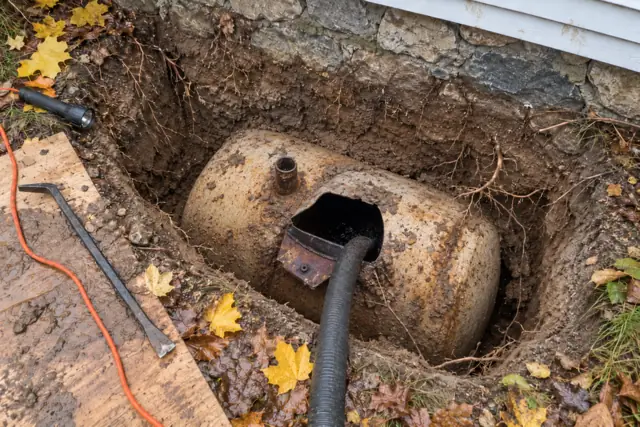
Tank decommissioning for a regulated UST starts with notice to DEQ at least 30 days before the work, on DEQ's closure notice form, returned to DEQ's Regulated Storage Tanks office in North Little Rock or filed through the SEEK portal. Under Rule 12, no one may close a UST unless that person is, or employs, an individual licensed by DEQ for the work. That individual must be on site at every critical juncture, from purging vapors to the site assessment. Under the federal closure rule that Arkansas adopts, the tank is emptied and cleaned, then removed, filled with an inert solid, or closed in place in a manner DEQ approves. The notice form requires soil or groundwater samples to check for a release, generally at least one per tank. Within 20 days after the tank closure, the owner sends DEQ the closure documentation, including the contractor's closure report, lab results and a site diagram. A temporarily closed tank out of service for more than 12 months must be closed unless it meets new or upgraded standards or DEQ grants more time.
Rule 12 sets no separate permit fee for tank decommissioning. The $75 annual registration fee per tank keeps running until the tank is removed or closed and DEQ has written notice of the change. The Petroleum Storage Tank Trust Fund pays corrective action costs after an accidental release from an eligible tank, not the cost of a routine tank closure. It does not pay costs incurred before a release is discovered. Rule 12 lists removing a leaking tank as generally reimbursable when DEQ requires it for the cleanup. The owner pays a $7,500 deductible per occurrence, and the fund pays up to $1,992,500 per occurrence for corrective action. Among other conditions, each tank must be registered with its fees paid, and the release reported on time. A home heating oil tank is not a regulated UST, so it does not qualify. Compare closure in place versus UST removal before choosing a method.
For a home heating oil tank, Rule 12 sets no notice, license, sampling or report requirement, because the tank falls outside the UST definition. The same holds for a heating oil tank at a business that burns the oil on site. A farm or home motor fuel tank over 1,100 gallons, or one used commercially, is a regulated UST and follows the closure rules above. For a regulated tank removal, look up the firm and the individual on DEQ's contractor license search before signing, and match the license number on the closure notice. Under Rule 12, a firm doing UST work for others must also post a surety bond, letter of credit or cash bond naming DEQ.