Tank Decommissioning Contractors in Oregon
Find licensed contractors in Oregon for heating oil tank closure, underground storage tank decommissioning, closure in place, oil tank disposal, buried oil tank closure, basement tank work, soil contamination testing, and environmental remediation. Serving Portland, Salem, Eugene, Gresham, Hillsboro, Bend, and communities statewide.
Is Oil Tank Closure Required in Oregon?
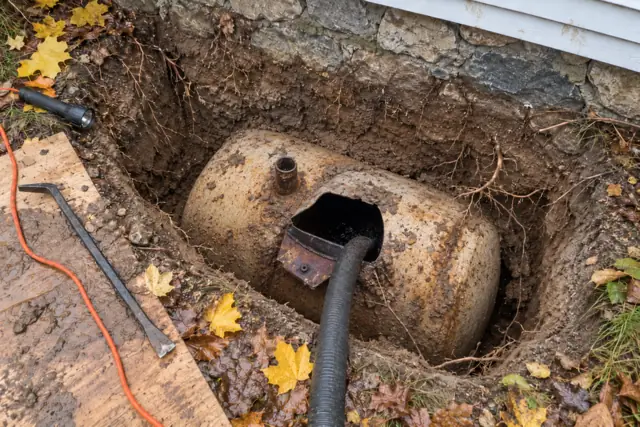
Oregon requires you to empty an abandoned underground heating oil tank. It does not require you to close it. No federal rule decides this either, because a residential heating oil tank sits outside the federal underground storage tank rules at 40 CFR 280, so tank closure here is a state question start to finish. Under ORS 466.878 an owner must pump out all heating oil from an unused underground tank at three moments: when they stop heating with oil, when they replace the tank, and when they sell the property. Once the tank is empty, Oregon DEQ states that actual decommissioning is voluntary, though the agency strongly recommends doing it anyway. Empty the tank and stop there and the vent lines have to stay in place and open. That distinction is the most useful thing a Portland homeowner can know before calling anyone, and no contractor competing for the job has a reason to volunteer it.
Oregon runs a dedicated Heating Oil Tank Program, the HOT Program, separate from the framework covering a regulated commercial underground storage tank, and it licenses at two levels. A business performing services on heating oil tank systems holds a Service Provider License. The individual supervising a cleanup or a voluntary closure holds a separate HOT Supervisor License, which requires passing an exam. A homeowner is allowed to do the work on their own tank. What a homeowner may not do is act as a general contractor and hire subcontractors for parts of it, because that moves liability for their work onto the homeowner. Portland adds a Fire Marshal permit inside city limits, and Salem, Eugene, Gresham, Hillsboro, and Bend each apply their own local review on top of the state process.
Closure in place for a residential tank runs $2,000 to $5,000 in Oregon. Full tank removal with excavation costs $5,000 to $15,000, and tanks under structures or in tight Portland lots sit at the top of that band. Soil sampling adds $500 to $2,000. Sampling is the step most often misdescribed. DEQ says an owner may choose not to have soil samples collected, and the consequence is not a penalty: the closure simply will not qualify for registration with the agency. Registration is the paperwork a buyer or a lender asks for later, so skipping samples saves a four figure sum now and costs the sale afterward. Contamination that does surface runs $15,000 to $100,000 or more once petroleum reaches groundwater, which sits close to the surface across much of the Willamette Valley.
Oregon's heating oil tank program does not come with a fund that pays the owner back. DEQ's Heating Oil Tank Program materials describe fees running from the owner to the agency when a tank closure or cleanup report is filed, and describe no reimbursement flowing back for a residential heating oil release. Budget it as an owner expense. Sequencing is the other thing the agency pages leave the reader to assemble: pump out first, then decide whether to close, then file, and expect the filing to be the item a buyer asks to see. A complete Oregon file holds the closure report certified by a licensed provider, soil results where sampling was done, a site diagram, and photographs. Browse Oregon UST contractors or request quotes and compare what scope each one puts in writing, and check the Oregon DEQ heating oil tank program for current forms.
Tank Decommissioning Contractors in Oregon
Browse contractors, see contact details, and request free quotes.
Browse Oregon Contractors →Frequently Asked Questions
Is oil tank decommissioning required in Oregon, or is it voluntary?
Both, depending on which step you mean. Oregon law requires you to pump out all heating oil from an abandoned underground heating oil tank when you stop heating with oil, when you replace the tank, or when you sell the home or business. Oregon DEQ then states that once the tank is emptied of oil, actual decommissioning is voluntary. If you empty the tank and leave it, the vent lines must stay in place and open. At sale you still have to give the buyer documentation showing the tank is empty.
Is soil testing required at every tank closure in Oregon?
No. DEQ states that an owner may choose not to have soil samples collected. The trade off is that the closure will not qualify for registration with DEQ. Sampling is required if you want the work certified as meeting state standards, which is what produces the documentation a buyer or lender will later ask to see. Most Portland sellers should sample for that reason rather than because a rule forces them to. The same logic applies whether the job is a full tank removal or a closure in place.
Who is licensed to close a heating oil tank in Oregon?
Oregon licenses at two levels. The business performing services on heating oil tank systems holds a Service Provider License, and the individual supervising the cleanup or voluntary closure holds a separate HOT Supervisor License that requires passing an exam. A homeowner may legally do the work on their own tank. A homeowner may not serve as a general contractor and hire subcontractors to do parts of it, because that transfers liability for any improper work onto the homeowner.
Does Oregon have a state fund for residential heating oil tank cleanup?
Not one that appears in the state's heating oil tank program materials. The fees DEQ describes for this program run from the property owner to the agency when a closure or cleanup report is filed, not the other way around. Treat a residential heating oil cleanup in Oregon as an owner cost. Some homeowner insurance policies and some lender escrow arrangements cover part of it, so those are worth checking before assuming the full bill is yours.
Are residential heating oil tanks regulated in Oregon?
Yes, through a dedicated Heating Oil Tank Program that sits separately from the rules covering regulated commercial underground storage tanks. That is unusual. Many states exclude residential heating oil tanks from the state program entirely and leave owners with no state process at all. Oregon instead gives homeowners a defined path: a pump out duty, licensed service providers, an optional certified closure, and a registration record at the end of it.
Is closure in place common in Oregon?
Yes, particularly in Portland neighborhoods where buried tanks sit beneath driveways, patios, decks, and additions. Excavation at those sites often means tearing out hardscape that costs more to replace than the tank work itself. The tank is emptied, cleaned, and filled with inert material, and samples are collected from accessible points if the owner is sampling. Closure in place produces the same documentation as a full removal and carries no asterisk on the record. Closure in place is a full closure, not a shortcut.
What records should I keep after closing a tank in Oregon?
Keep the closure report, soil sampling results where samples were taken, the site diagram, photographs, underground storage tank disposal records, and proof it was pumped out. In Portland, keep the Fire Marshal permit documentation as well. Keep them permanently rather than for a fixed period. Missing paperwork forces the next buyer to choose between trusting a closure they cannot verify and demanding the work be redone at the seller's expense.
Browse contractors, see contact details, and request free quotes.
Browse Oregon Contractors →For Oregon UST regulations, visit the Oregon DEQ UST Program. Federal requirements are available from the EPA UST Program.