Find environmental remediation contractors in Oregon for soil excavation, groundwater treatment, heating oil tank cleanup, and DEQ site closure. Serving Portland, Eugene, Salem, Bend, and communities statewide.
What to Know About UST Remediation in Oregon
Oregon environmental remediation contractors handle some of the wettest cleanup sites in the West. The Oregon DEQ UST Cleanup Program operates under ORS 466.706 to 466.835 and OAR 340-122, while a separate Heating Oil Tank program under OAR 340-177 covers residential tanks. Both programs implement the federal UST baseline at 40 CFR Part 280 for release reporting, corrective action, and financial responsibility. Tank owners must report a confirmed release and submit a site assessment after discovery. DEQ uses a Risk-Based Decision Making framework that compares site data to soil and groundwater matrix cleanup levels, and many releases first surface during a Phase I environmental evaluation tied to a refinance or commercial property sale.
Cleanup demand concentrates in the Portland metro through Northwest Industrial and the Eastside, the Willamette Valley corridor running south to Salem and Eugene, and the Bend and Medford service areas in central and southern Oregon. The Lower Willamette and Portland Harbor zones see regular work tied to legacy fueling stations, marine terminals, and rail yards. Western Oregon sites typically face shallow groundwater under saturated silt and clay, which speeds plume migration and forces dewatering during excavation. Eastern Oregon work in Pendleton, Hermiston, and the Bend basin runs through drier basalt and alluvial gravels where vapor intrusion and deep groundwater are the main concerns. Beaverton, Gresham, and Hillsboro projects often involve mixed commercial parcels with tight working room for excavation equipment.
Soil excavation at Oregon LUST sites typically runs $80 to $200 per cubic yard for non-hazardous petroleum impacted material, with hazardous-classified soil rising to $300 to $700 per cubic yard for offsite disposal. Groundwater treatment using air sparging or pump-and-treat ranges $40,000 to $200,000 for moderate plumes, and post-closure monitoring adds $20,000 to $60,000 over three to five years. Oregon DEQ's financial responsibility guidance routes tank owners to the federal mechanisms at 40 CFR 280.111(b), which in practice means pollution liability insurance. DEQ Heating Oil Tank Program materials describe fees running from the owner to the agency rather than reimbursement flowing back. Confirm with DEQ and your insurer what your own coverage responds to before assuming any part of a cleanup is recoverable. Total commercial cleanup costs at Oregon LUST sites in the Portland metro and Willamette Valley commonly land between $50,000 and $300,000 depending on plume size, depth to groundwater, and benzene concentrations.
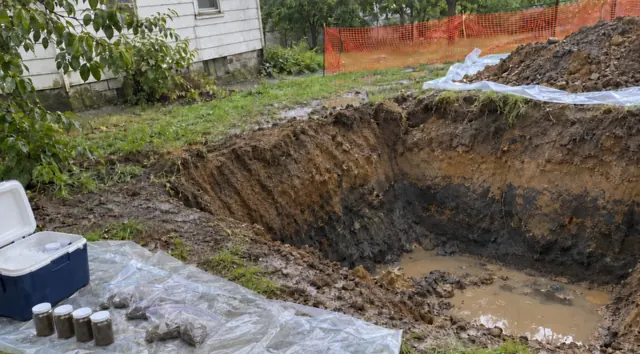
A typical Oregon cleanup begins with a DEQ-approved site assessment, followed by selection of a remedial action option, excavation or in-situ work, confirmation sampling, and a closure request that targets a No Further Action determination. Timelines run 12 to 24 months for residential heating oil cases and three to seven years for commercial groundwater plumes in the Willamette Valley. Field crews must hold valid 40-hour HAZWOPER training under 29 CFR 1910.120 with annual 8-hour refreshers before entering exclusion zones at confirmed release sites. Property owners should confirm the contractor is a DEQ-licensed Service Provider for commercial USTs or a licensed Heating Oil Service Provider for residential tanks before signing. Ask each bidder for a recent DEQ NFA letter or LUST file number from a closed Oregon project so you can verify their closure track record before awarding the work. Property owners new to the process should review how contaminated sites get cleaned up before evaluating bids.
Do Oregon environmental remediation contractors need state certification?
Yes. Oregon DEQ requires a Service Provider license for commercial UST cleanup work under OAR 340-160 and a separate Heating Oil Service Provider license for residential heating oil tanks under OAR 340-177. Field workers must complete 40-hour HAZWOPER training under 29 CFR 1910.120 with annual 8-hour refreshers. Decommissioning Supervisors and Soil Matrix Cleanup Supervisors must pass DEQ-administered exams to perform those specific roles on a project. Always verify the contractor's DEQ license status through the agency's online lookup before signing a contract, since heating oil work performed by an unlicensed contractor cannot generate a valid certificate for a real estate closing.
How much does UST remediation cost in Oregon?
Most commercial Oregon LUST projects land between $50,000 and $300,000 from confirmed release through No Further Action. Soil-only cases at retail gas stations average $35,000 to $125,000, while groundwater plumes with multi-year monitoring can exceed $400,000 in the Portland or Eugene areas. Residential heating oil tank cleanups typically run $5,000 to $25,000, and a homeowner should confirm with DEQ and their insurer what is recoverable before work starts. Hazardous-classified soil disposal is the largest cost driver on commercial work, often hitting $300 to $700 per cubic yard. Adding deep groundwater wells or vapor intrusion mitigation can push commercial budgets past $500,000. When you compare quotes from soil remediation companies in Oregon, make sure each one covers excavation, soil disposal, backfill, and the confirmation sampling needed to close the case.
How long does an Oregon LUST cleanup take?
Residential heating oil tank cases close within 6 to 18 months once excavation and confirmation sampling are complete. Commercial UST sites with soil-only impacts close within 18 to 36 months after the site assessment is approved. Groundwater plumes in Willamette Valley alluvium commonly run three to seven years, particularly when benzene exceeds matrix cleanup levels. DEQ review of the closure submittal typically adds three to nine months at the back end. Owners should plan financing around the conservative end of the range since DEQ does not accelerate file reviews.
Who pays for a heating oil tank cleanup in Oregon?
Plan on the property owner. Oregon DEQ's financial responsibility guidance routes tank owners to the federal mechanisms at 40 CFR 280.111(b), which in practice means pollution liability insurance. It names no state assurance fund or reimbursement program among the options. DEQ Heating Oil Tank Program materials likewise describe fees running from the owner to the agency when a closure or cleanup report is filed, not payments flowing back. Some homeowner and pollution liability policies do respond to a heating oil release, so check your own coverage with DEQ and your insurer rather than assuming a state program will cover it.
What happens during an Oregon remediation project?
Work begins with a site assessment that maps the release using soil borings, monitoring wells, and laboratory sampling against DEQ matrix cleanup levels. Contractors then propose a remedial action to DEQ, typically excavation for shallow soil cases or in-situ work like bioventing or chemical oxidation for deeper releases. Confirmation samples from the excavation walls and floor, plus any required groundwater wells, document that the site meets the applicable Risk-Based Decision Making cleanup goals. The Soil Matrix Cleanup Supervisor or licensed geologist signs off on the closure submittal before it goes to DEQ. Once DEQ reviews the file, the agency issues a No Further Action letter that supports refinance, sale, or redevelopment.