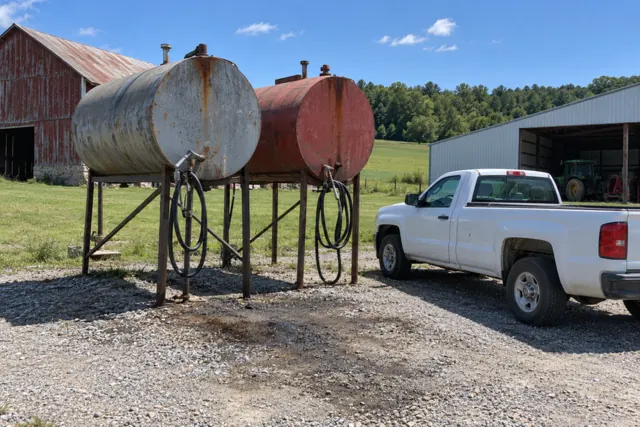
Oil Tank Inspection & Testing Companies in Michigan
Find contractors in Michigan for UST tightness testing, line tightness testing, monthly monitoring, and compliance inspections. Serving Detroit, Grand Rapids, Lansing, Ann Arbor, and communities statewide.
What to Know About Oil Tank Inspection & Testing in Michigan
Tank inspection and testing in Michigan starts with EGLE's Part 211 program under NREPA. Active gas stations, fleet depots, and industrial fuel storage sites across Michigan must complete annual line tightness testing, monthly monitoring records, and triennial tank tightness testing under federal 40 CFR 280 rules. EGLE inspectors prioritize sites near Great Lakes watersheds, and properties flagged during a Phase I ESA process often face follow-up integrity testing before financing closes. Owners must keep release detection records on file and maintain compliance documentation through the MiWaters submittal portal. EGLE credentials are required for any individual conducting UST tightness testing or compliance inspections in Michigan.
Demand for UST compliance inspection clusters around Detroit metro, Grand Rapids, and the Lansing-Flint manufacturing corridor. The I-75 and I-94 freight routes carry hundreds of fueling stops between Sterling Heights, Kalamazoo, and Ann Arbor that all require monthly monitoring and annual line testing. Automotive plants in Warren and Dearborn run on-site fleet fueling stations subject to the same UST testing schedule as commercial gas stations. Marina and Great Lakes port facilities in Muskegon and Bay City face additional tightness testing scrutiny because of their proximity to drinking water intakes. Lake-effect snow and freeze-thaw cycling in northern Michigan stress tank infrastructure harder than in flatter, drier states.
Tank tightness testing in Michigan typically runs $500 to $2,000 per tank, with line tightness testing adding $300 to $800 per product line. A full UST compliance inspection that covers leak detection, overfill prevention, and corrosion monitoring runs $1,000 to $3,000 depending on the number of tanks and dispensers. Detroit-area facilities and Lower Peninsula industrial sites tend to price at the upper end because of mobilization and labor costs. Upper Peninsula sites between Marquette and Sault Ste. Marie often add travel surcharges of $200 to $500 because the certified tester pool is small. The Michigan Underground Storage Tank Authority (MUSTA) administered by EGLE may reimburse eligible cleanup costs if testing reveals a release, but routine compliance work itself stays the owner's expense.
A typical Michigan sequence starts with a visual UST compliance inspection, moves to release detection record review, and finishes with tightness testing on tanks that fail visual checks. Most testing wraps in one to two days, with results delivered within two weeks for laboratory-analyzed methods. Before hiring, Michigan property owners should confirm the tester holds a current EGLE UST credential and that crews carry HAZWOPER training where contamination may be present. Ask each contractor for a sample inspection report and verify that the report format matches what EGLE accepts through the MiWaters submittal portal. Skipping that verification step is the most common reason a Michigan facility ends up paying for a second test.
Michigan contractors for tank inspection and testing
Active UST systems in Michigan must complete annual line tightness testing, triennial tank tightness testing, and monthly monitoring of release detection equipment under EGLE rules. Cathodic protection systems on steel tanks need testing every three years, and impressed current systems require 60-day operational checks. Failure to maintain current testing records is a common citation during EGLE compliance inspections. Records must be retained for at least one year, with cathodic protection records held for the life of the equipment.
How much does UST tank tightness testing cost in Michigan?
Tank tightness testing typically costs $500 to $2,000 per tank in Michigan, depending on tank size, location, and testing method. Line tightness testing adds $300 to $800 per product line. A full integrity testing visit covering all tanks and lines at a small gas station usually lands between $1,500 and $3,000. Upper Peninsula sites pay travel surcharges because certified testers travel from downstate. Compliance inspections that combine visual review with monitoring records typically run $800 to $2,500.
How long does a UST compliance inspection take in Michigan?
A standard UST compliance inspection at a Michigan gas station usually takes four to eight hours on site, with the written report delivered within two weeks. Full tightness testing that requires the tank to sit static for several hours may extend the visit into a second day. Lab analysis of tracer or vapor samples adds another five to ten business days before final results are available. Facilities that fail an initial test typically need one to three months to schedule remediation testing, depending on the contractor backlog.
Does the Michigan MUSTA fund cover UST testing costs?
The Michigan Underground Storage Tank Authority (MUSTA) reimburses eligible corrective action costs after a release is confirmed, but routine compliance inspection and tightness testing remain the tank owner's expense. If a tightness test reveals a release, the costs of confirmation testing, soil sampling, and corrective action may qualify for MUSTA reimbursement. Most facilities face a deductible per release before fund coverage applies. Owners must report suspected releases to EGLE within 24 hours through MiWaters to preserve fund eligibility. Late reporting is the most common cause of MUSTA claim denials.
What does a UST tightness test actually involve?
Volumetric tightness testing fills the tank to a precise level and measures temperature-corrected volume changes over several hours to detect leaks as small as 0.10 gallons per hour. Non-volumetric methods use tracer chemicals, acoustic listening devices, or vapor sensors to identify breaches without holding fuel at static levels. The certified tester documents pre-test fuel levels, water-bottom checks, ambient temperature, and final pressure or vacuum readings in a report formatted for EGLE submittal. Tank owners should be present at the start of testing to confirm meter calibration and chain-of-custody for any samples taken.