
Tank Inspection & Testing Contractors in New Hampshire
Find New Hampshire contractors for tank tightness testing, leak detection, line testing, and UST compliance inspection. Serving Manchester, Nashua, Concord, Portsmouth, and communities statewide.
What to Know About Oil Tank Inspection & Testing in New Hampshire
Tank inspection and testing in New Hampshire follows NH DES rules and the federal EPA UST program baseline. Regulated underground storage tanks must pass annual line tightness tests, monthly release detection walkthroughs, and triennial cathodic protection surveys. State inspectors verify release detection equipment, spill buckets, overfill prevention, and corrosion protection at each registered facility. Heating oil tanks above 1,100 gallons fall under the same rules, which catches many older Manchester and Concord property owners by surprise. A passing leak detection record is also frequently requested during commercial property transactions, often paired with a Phase I environmental evaluation before lender approval.
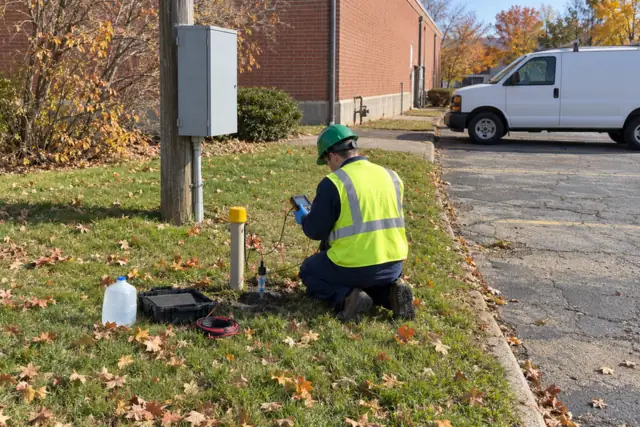
Demand concentrates around the Manchester-Nashua I-93 corridor where convenience-store fuel networks operate the densest UST count in the state. Portsmouth gas stations and Pease International Tradeport tenants generate steady tightness testing volume due to coastal salt corrosion accelerating tank wall thinning. Dover, Rochester, and the Seacoast region carry a heavy load of older single-wall steel tanks installed during the 1980s expansion that now demand frequent integrity testing. Up north, Lebanon and the Upper Valley fueling stops along I-89 face shorter inspection windows because frozen ground from December through March limits access to monitoring wells. Keene, Concord, and Salem fleet yards round out a market where municipal sand-and-salt fleets, school district fueling depots, and rural co-op stations share the UST compliance inspection calendar.
Tank tightness test pricing across New Hampshire typically runs $500 to $2,000 per UST, with Manchester and Concord stations landing at $700 to $1,200. A full UST compliance inspection covering release detection, spill equipment, and corrosion control adds $1,000 to $3,000, plus $300 to $800 per product line for line testing. Seacoast facilities pay another $400 to $900 per groundwater monitoring well where saltwater intrusion requires additional sampling. The state Oil Discharge and Disposal Cleanup Fund deductible scales by facility count, hitting $5,000 for 1-3 facilities, $10,000 for 4-9, $20,000 for 10-19, and $30,000 for 20+. Tightness results flagging a suspected release start the ODDCF eligibility clock the day the contractor files the report.
The typical New Hampshire process starts with a tank tightness test, ATG report pull, and a review of the past 36 months of monthly monitoring logs. Onsite work runs 4 to 8 hours per facility, with lab results back in 5 to 10 business days. NH DES expects the compliance report filed within 30 days of test completion. Before hiring, Portsmouth and Manchester facility managers should ask contractors about general liability insurance, NH DES facility-ID experience, and whether technicians hold hazardous materials training credentials. Request a sample inspection report from a recent Concord or Nashua project before signing the work order so you see exactly what state-required documentation should look like.
Tank Inspection & Testing Contractors in New Hampshire
Browse contractors, see contact details, and request free quotes.
Browse New Hampshire Contractors →Frequently Asked Questions
How much does tank tightness testing cost in New Hampshire?
Tank tightness test pricing in New Hampshire typically runs $500 to $2,000 per UST. Most Manchester and Nashua commercial sites land between $700 and $1,200. Full UST compliance inspection adds $1,000 to $3,000 if release detection records, cathodic protection, and spill equipment are reviewed in the same visit. Line testing for product piping runs $300 to $800 per product line. Coastal Portsmouth facilities sometimes pay an additional $400 to $900 for groundwater monitoring well sampling.
Does New Hampshire require licensing to perform UST tank testing?
NH DES requires anyone testing regulated UST systems to hold manufacturer-specific certification for the testing method they use, with technical standards spelled out in NH Env-Or 400. The rule lists testing-method requirements but does not issue a state-specific contractor license. Property owners should verify the contractor carries documentation from the testing-equipment vendor and that field technicians hold current safety credentials. Asking for the technician's certification card before the job starts is standard practice across Concord, Manchester, and Nashua facilities.
How long does a tank tightness test take in New Hampshire?
Onsite work for a single tank typically takes 4 to 8 hours, with most testing completed in a single day. Lab results return in 5 to 10 business days, sometimes faster for Portsmouth and Nashua contractors with regional partnerships. NH DES requires the test report filed within 30 days of completion. If the test fails, follow-up investigation can extend the timeline by 4 to 12 weeks before closure or repair work begins.
How does the New Hampshire ODDCF deductible work?
The Oil Discharge and Disposal Cleanup Fund deductible scales with how many UST facilities a single owner operates. Owners with 1 to 3 facilities pay $5,000 out of pocket. Owners with 4 to 9 facilities pay $10,000. The deductible jumps to $20,000 for 10 to 19 facilities and $30,000 for owners with 20 or more. This structure rewards small independent station operators and pushes larger chains toward private pollution insurance for added coverage.
What does a UST compliance inspection actually involve in New Hampshire?
A NH DES compliance inspection covers release detection, spill prevention, overfill protection, and corrosion control across the UST system. The inspector pulls 36 months of monthly monitoring logs plus the most recent annual line tightness test. Walkthrough interviews confirm Class A, B, and C operator training records and product-receiving procedures. Findings reach the owner in writing within 30 days. Violations trigger corrective-action deadlines tied to the severity of the gap.
Browse contractors, see contact details, and request free quotes.
Browse New Hampshire Contractors →For New Hampshire UST regulations, visit the NH DES Underground Storage Tanks. Federal requirements are available from the EPA UST Program.
