
Oil Tank Removal Contractors in Indiana

Find Indiana contractors for oil tank removal, UST removal, tank closure, tank decommissioning, and environmental remediation. Serving Indianapolis, Fort Wayne, Gary, South Bend, Evansville, and communities statewide.

Browse Indiana Contractors →

Indiana Industrial USTs and Closure Standards

Industrial fuel systems outnumber residential tanks in Indiana by a wide margin. Gary steel mills, Fort Wayne manufacturing plants, and grain terminals along the Wabash and Ohio rivers all operate USTs that cycle into closure during plant modernization. State environmental regulators license closure contractors through the state UST program, and every UST removal must be documented by a registered contractor who files closure reports. Federal 40 CFR 280 and Indiana's Excess Liability Trust Fund rules drive stricter oversight here than in many neighboring states.
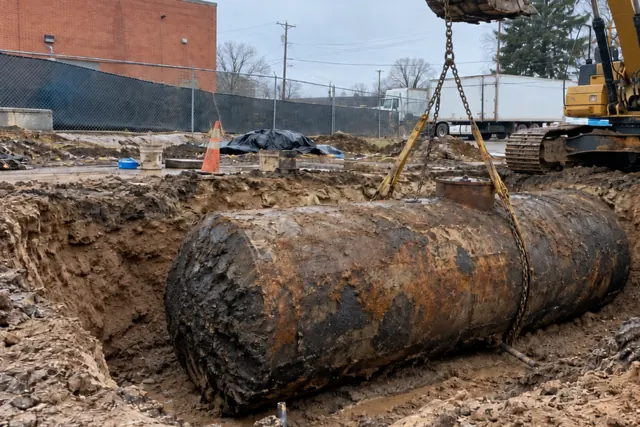
Indianapolis, Fort Wayne, and Evansville generate most of the state's commercial UST removal volume through gas stations, truck terminals, and municipal fleet yards. Gary and Hammond drive an industrial tank closure market tied to steel, petrochemical refining, and legacy manufacturing sites, many with contamination histories that predate the federal UST program. Grain elevator operations across central and northern Indiana run farm-scale bulk fuel tanks that reach closure when elevators upgrade or shut down. Residential heating oil work is modest, centered in older Lafayette, Bloomington, and Terre Haute neighborhoods. Commercial buyers and site acquisition firms routinely require tank closure and clean soil documentation before completing a sale.

Commercial UST removal at a single Indianapolis gas station starts around $5,000 per tank, with multi-tank sites climbing to $20,000 or more. Industrial decommissioning at Gary or Hammond plants can reach $50,000 per tank for complex piping and concrete work. Contamination turns every budget inside out, with environmental remediation adding $15,000 to $100,000 or more at heavily-regulated industrial sites. Indiana's Excess Liability Trust Fund reimburses eligible owners for a large share of cleanup costs, aligned with the federal LUST Trust Fund program, though claim processing runs many months. Our [oil tank removal cost](/oil-tank-removal-cost/) guide breaks out the variables by tank size and contamination scenario.

A clean commercial tank removal finishes in two to four days of on-site work. Soil samples return from the lab in one to two weeks, and a complete closure file moves to state review. Indiana's trust fund reimbursement adds several months of paperwork but reduces the out-of-pocket burden significantly. If contamination appears, the project converts to a corrective action case with workplan, monitoring wells, and state oversight that extends timelines from months to a year or more. Before signing a contract, ask for the contractor's IDEM UST registration number, a recent Indianapolis or Gary tank decommissioning report, and written pricing for both clean-soil and contaminated outcomes. To compare estimates from Indiana UST contractors, request a quote.

Oil Tank Removal Contractors in Indiana

Browse contractors, see contact details, and request free quotes.

Browse Indiana Contractors →

Frequently Asked Questions

Do I need a registered UST contractor to remove a tank in Indiana?

Yes. Indiana requires every UST removal to be performed by a contractor certified through the state UST program. Owners cannot pump, cut, or abandon a tank on their own or through an uncertified crew. Work performed outside this framework voids trust fund eligibility and can trigger corrective action liability. Your contractor files the closure report and certifies soil conditions at the excavation.

How much does oil tank removal cost in Indiana?

A single-tank commercial UST removal at an Indianapolis gas station runs $5,000 to $8,000 with clean soil. Multi-tank sites and industrial plants in Gary or Hammond reach $20,000 to $50,000 per tank. Contamination adds $15,000 to $100,000 or more to the final invoice. Indiana's trust fund reimbursement can offset a large share but takes months to process. Our pricing guide breaks out each variable.

How long does a commercial tank removal take in Indiana?

A clean single-tank removal wraps in two to three days on site. Soil lab results return in one to two weeks, and state sign-off follows quickly for a passing file. Multi-tank industrial removals stretch across a week or more depending on piping inventory and concrete cuts. If contamination is found, the project converts to corrective action with monitoring wells, a workplan, and state oversight spanning months to a year. Plan the project around lab turnaround and state review, not the dig itself.

How does Indiana's Excess Liability Trust Fund affect tank closure costs?

The trust fund reimburses eligible owners for a major share of corrective action expenses on petroleum releases, including soil sampling, remediation, and monitoring. Owners must be current on fund fees, the release must be reported within state timeframes, and a registered contractor must handle the work. Fund processing runs several months and requires detailed invoices tied to the specific site. Trust fund eligibility makes a substantial difference in out-of-pocket cost when contamination is discovered during a tank closure. Not every release qualifies, and denial can shift tens of thousands back to the site owner.

What does an industrial tank decommissioning in Indiana typically involve?

Large industrial sites in Gary, Hammond, and Indianapolis start with a pre-closure site assessment to scope tank count, piping layout, and known contamination history. A detailed workplan goes to state regulators before excavation begins, and crews then complete UST removal one tank at a time. Soil sampling follows each excavation, with expanded sampling at known release points. Closure documentation often takes longer than the physical work due to the volume of sampling and reporting.

Looking for a contractor in Indiana?

Browse contractors, see contact details, and request free quotes.

Browse Indiana Contractors →

For Indiana UST regulations, visit the IDEM UST Program. Federal requirements are available from the EPA UST Program.

Related Services in Indiana

Find Indiana ContractorsRequest a Free Quote
Free Quotes