

How DC Regulates UST Closure and DOEE Oversight
DC oil tank removal runs under the DOEE Underground Storage Tank program. The District regulates USTs under Title 20, Chapters 55 to 70 of the DC Municipal Regulations and federal 40 CFR 280 rules, and regulated UST closure work needs a DOEE-certified person under Chapter 65. Residential heating oil tanks under the federal threshold sit outside the formal certification requirement, but DC Metro closure work still requires DOEE notification and a licensed handler for the excavation. Capitol Hill, Georgetown, and Northwest DC carry most of the residential inventory.
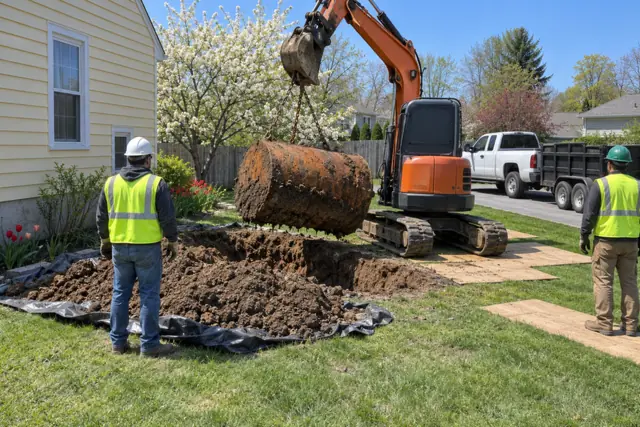
DC tank removal concentrates in older Georgetown, Capitol Hill, Dupont Circle, and Northwest neighborhoods where pre-1960s row houses and detached homes were built with underground heating oil tanks. Commercial UST closure work centers on gas stations along New York Avenue, Rhode Island Avenue, and South Capitol Street corridors. Anacostia and Southeast DC cycle legacy industrial fueling tanks tied to older municipal and federal properties. Embassy Row carries a small but regular flow of UST work at foreign mission properties. DC Metro sales routinely trigger tank closures because buyers, lenders, and condo boards expect clean documentation before closing.
Residential oil tank removal in DC typically runs $2,500 to $5,000 for basement-adjacent tanks in Capitol Hill, Georgetown, and Northwest row houses, where tight lots and hand excavation drive up costs. Standard buried tanks with machine access run $2,000 to $4,000. Commercial UST closure at DC gas stations starts around $5,000 per tank. If soil sampling exceeds DOEE cleanup thresholds, environmental remediation adds $10,000 to $50,000 or more, with Anacostia watershed proximity triggering expanded sampling. The DC UST Program coordinates with federal LUST Trust Fund support for regulated sites. Our cost guide breaks down pricing.
| Project type | Typical cost |
|---|---|
| Basement-adjacent residential tank (row house, hand excavation) | $2,500 to $5,000 |
| Standard buried residential tank with machine access | $2,000 to $4,000 |
| Commercial UST closure at a gas station, per tank | Starts around $5,000 |
| Remediation if sampling exceeds DOEE thresholds | $10,000 to $50,000 or more |
A clean DC residential job wraps in one day on site, with soil laboratory results returning in five to ten business days. Basement tank work in older Capitol Hill and Georgetown row houses stretches to two or three days when crews cut tanks inside foundations. DOEE notification is required before excavation, and the agency's proximity to job sites makes inspector site visits common on Northwest and Southeast DC closures. If contamination surfaces, the project enters corrective action under DOEE oversight. Before signing a contract, ask any DC contractor for DOEE tank handler credentials, pollution liability insurance, and a recent Capitol Hill or Georgetown closure report. View DC UST contractors for local options, or request a quote for direct estimates.