Find contractors in Iowa for underground storage tank installation, fuel system installation, dispenser installation, and piping upgrades. Serving Des Moines, Cedar Rapids, Davenport, Sioux City, and communities statewide.
Ethanol Compatibility, Licensing, and Costs for Iowa UST Installation
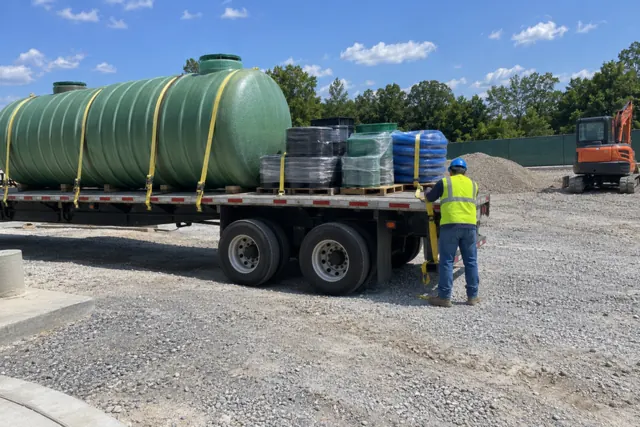
Iowa's agricultural economy drives a tank installation market that few other states can match. Grain cooperatives, ethanol plants, and rural supply depots replace aging USTs alongside traditional gas station and fleet fueling projects. Des Moines and its surrounding suburbs generate the most installation activity, followed by Cedar Rapids along the I-380 manufacturing corridor, Davenport and Council Bluffs along the I-80 interstate, and Sioux City near the Nebraska border. E15 and E85 ethanol products require compatible tank materials listed by Underwriters Laboratories, pushing many older facilities toward full system replacements rather than component upgrades.
A single underground storage tank installation in Iowa typically costs $50,000 to $150,000, depending on tank capacity, material, and site conditions. Multi-tank gas station build-outs with dispensers, canopy, and full piping systems run $250,000 to $500,000 or more, with monitoring equipment adding $5,000 to $15,000. Iowa's high water table increases excavation costs because dewatering is frequently required, and variable soil from loess to glacial till to rocky Driftless Area substrates can demand specialized equipment. Iowa does not operate a state fund that offsets installation costs, so facility owners should budget the full project amount. Get at least three bids, but compare scope carefully because some quotes exclude monitoring system setup or state registration fees.
Iowa treats tank installation as certified work: the installer must hold a DNR installer certification under 567 IAC chapter 134, and the company employing the installer must be certified too. Facility owners must register new tanks with the state environmental agency before operation and meet federal requirements for spill prevention, overfill protection, and corrosion protection under 40 CFR 280. Double-wall tank construction with interstitial monitoring is the standard, and release detection equipment must be operational from day one. Skipping any of these requirements delays registration and triggers enforcement action.
The installation process starts with engineering plans and a notice of intent to install, which Iowa DNR requires 30 days before installation, and a certified installation inspector reviews the work plan. Site preparation, excavation, tank setting, and backfill take three to seven days for a single-tank project, with piping and monitoring system installation adding one to two weeks. Final testing includes tank tightness testing, line leak detection verification, and spill bucket testing before a DNR-certified installation inspector's final inspection. The full timeline runs eight to sixteen weeks, though winter ground freezing between December and March can push schedules out by a month or more. Confirm that any installer you consider holds a current DNR installer certification, carries pollution liability insurance, and includes state registration paperwork in their scope of work.
What credential does Iowa require for UST installation?
Iowa requires installers to hold an installer certification issued by the Iowa DNR under 567 IAC chapter 134, and the company employing them must also be certified. The certification process involves demonstrating relevant experience and meeting training requirements established by the state environmental agency. Before hiring an installer, ask to see their current credential and verify it covers installation work specifically, since DNR issues separate certifications for removal and testing.
How much does it cost to install an underground storage tank in Iowa?
A single UST installation in Iowa typically runs $50,000 to $150,000 for the tank, excavation, piping, and monitoring equipment. Multi-tank gas station projects with dispensers and full site work cost $250,000 to $500,000 or more. Sites with high water tables require dewatering during excavation, which can add $5,000 to $15,000 depending on groundwater depth and pumping duration. Always confirm whether the quoted price includes monitoring systems, state registration fees, testing, and the final compliance inspection.
How long does a tank installation project take in Iowa?
Plan for eight to sixteen weeks from the 30-day notice of intent to install through the final inspection and the start of fueling operations. Instead of a state plan review, a certified installation inspector reviews the work plan before work starts. Excavation, tank setting, and backfill require three to seven days for a single tank. Piping, dispenser, and monitoring installation add one to two weeks of on-site work. Winter projects between December and March often face delays because frozen ground complicates excavation and backfill compaction.
Why does Iowa's water table affect tank installation costs?
Much of Iowa sits on a shallow water table, particularly in the Des Moines Lobe glacial region and major river valleys. When groundwater is present in the excavation zone, contractors must use dewatering pumps to keep the pit dry during tank placement and backfill. This adds equipment rental, labor time, and often requires a dewatering discharge permit from the state. Shallow groundwater also affects backfill selection because saturated native soils cannot be reused around the tank. Pea gravel or engineered fill must be brought in, adding material and trucking costs to the project budget. On some river valley and wetland sites, dewatering alone can add $10,000 or more to the total project cost.
Do new Iowa tank installations need ethanol-compatible materials?
Iowa is one of the largest ethanol-producing states in the country, and many retail stations dispense E15 or E85 blends. Tanks and piping that will store ethanol blends above E10 must be listed as compatible by Underwriters Laboratories or an equivalent testing organization. Fiberglass tanks from major manufacturers generally meet this standard, but older steel tank models and certain flexible piping products do not. Choosing non-compatible materials for an ethanol site means replacing components before the station opens, which doubles the cost of that portion of the project. Specify the fuel types you plan to store during the engineering phase so that every component is selected correctly from the start.