

What to Know About Oil Tank Removal in California
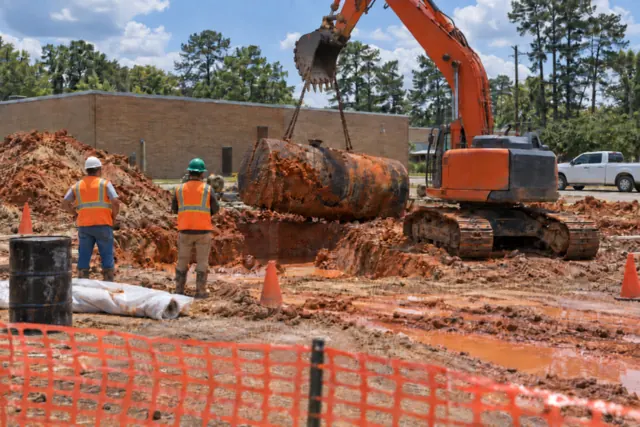
California regulates oil tank removal and USTs through a three-tier structure that shapes every closure project. The State Water Resources Control Board Underground Storage Tank Program sets statewide policy, and nine Regional Water Quality Control Boards carry out cleanup oversight in their geographic jurisdictions. Roughly 81 local Certified Unified Program Agencies run day-to-day permitting, inspection, and tank-closure approvals. California Health and Safety Code Division 20 Chapter 6.7 and Title 23 CCR Chapter 16 spell out closure, monitoring, and release-reporting obligations. A permitted UST contractor must perform the excavation, collect soil and vapor samples, and file the closure report with the local CUPA. Some sites close tanks in place instead of removing them, and California tank decommissioning follows the same CUPA approval process.
Los Angeles County runs the densest commercial tank market, with oil-industry legacy sites across Wilmington, Signal Hill, Long Beach, and Huntington Beach alongside modern gas-station turnover Valley-wide. The San Francisco Bay Area splits between peninsula gas stations overseen by San Francisco DPH Environmental Health and East Bay refining corridors in Richmond, Martinez, and Rodeo. San Diego County USTs route through the San Diego County DEH Hazardous Materials Division. Central Valley agriculture around Fresno, Bakersfield, and Modesto carries gas station and agricultural fuel tanks. Sacramento and Inland Empire logistics corridors add fleet-yard activity, and every region layers seismic-fault-zone review onto excavation planning.
Residential buried heating oil tanks are uncommon in most California neighborhoods because natural gas dominated home heating earlier than on the East Coast. Where they surface in older Pasadena, Piedmont, Berkeley Hills, and San Francisco Sunset and Richmond district homes, closure runs $2,500 to $5,500 due to tight urban lots and hillside access. Commercial UST closure at California gas stations starts around $6,000 per tank and climbs quickly with piping, pit size, and Los Angeles-County-specific air-district dust-mitigation requirements. If contamination surfaces, remediation work adds $15,000 to $100,000 or more, with California's low environmental screening levels for petroleum vapors routinely triggering expanded soil-gas and indoor-air sampling. California's UST Cleanup Fund reimburses eligible tank owners after a tiered deductible set by the Water Boards. Our oil tank removal cost guide breaks down what drives the final invoice.
A straightforward California commercial single-tank closure wraps in two to three days on site, with soil and soil-gas lab results returning in seven to fourteen business days. Multi-tank gas-station closures in Los Angeles, San Francisco, and San Diego run a week or longer on site due to stricter vapor sampling. Summer ozone and air-quality advisories in the LA Basin occasionally shift excavation schedules, and fault-zone properties in the Bay Area and Inland Empire trigger additional seismic-setback review. If sampling flags petroleum, the project enters corrective action under the relevant Regional Water Quality Control Board, with timelines running from months to years on larger plumes. Before signing a contract, ask for the contractor's California UST contractor license, the CUPA jurisdiction they work under, and written pricing for clean-soil and contaminated outcomes. Contractors active in your area are listed under the California UST contractor directory, and you can start a quote for direct pricing.
Closure of an underground tank in California triggers a soil sampling requirement. Samples are pulled from beneath the tank bed and along the product and vent lines. Each sample is analyzed for petroleum hydrocarbons against SWRCB cleanup standards. Results above the action level trigger a corrective action track and can push a straightforward oil tank removal into a multi-month remediation. The sampling lab must be a California-approved environmental laboratory. Chain-of-custody paperwork from the field to the lab is part of the closure record. Clean results clear the site for a no-further-action letter from SWRCB once the closure report is accepted. Some contractors bundle the sampling into the closure bid; others treat it as a line item. Property owners should confirm which approach their contractor uses before work begins, because the analytical cost can move a project budget by several thousand dollars.