Find Nebraska contractors for oil tank removal, tank closure, heating oil tank decommissioning, farm fuel systems, and remediation. Serving Omaha, Lincoln, Grand Island, Kearney, and communities statewide.
Nebraska Fuel Storage Regulation and UST Closure
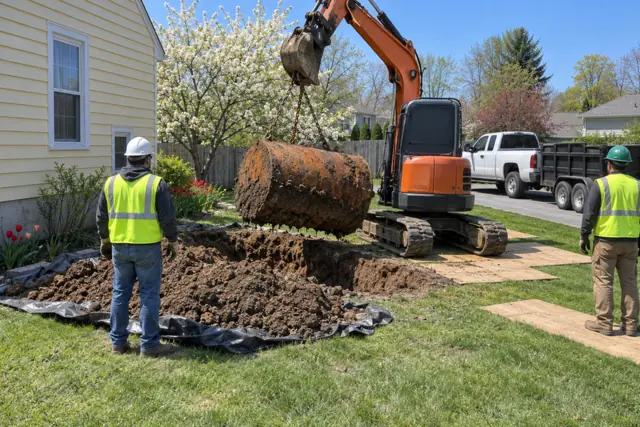
Most of Nebraska's underground tank inventory sits on farms and small-town gas stations across the Platte Valley, Sandhills, and Panhandle corridors. Grain elevators, cattle operations, and trucking terminals along Interstate 80 all rely on bulk diesel systems, with many sites carrying tanks installed in the 1970s and 1980s. A state-licensed contractor must perform every UST removal, document closure, and file reports under federal 40 CFR 280 rules. Farm tanks under 1,100 gallons fall outside federal UST rules but still require state permits and closure procedures. State Fire Marshal coordination is needed for above-ground conversions.
Omaha and Lincoln drive most commercial UST removal through gas stations, fleet yards, and older industrial sites. Grand Island, Kearney, North Platte, and Norfolk generate steady rural work tied to farm cooperatives and trucking stops along Interstate 80. Residential heating oil tank work is rare here because natural gas and propane dominated Nebraska home heating by the 1960s, leaving the suburban tank population small. Most of the state's underground inventory sits on farms and bulk plants, and ag lenders routinely require tank closure and clean soil samples before a property sale closes.
Residential tank pricing runs $1,500 to $3,500 for the rare suburban heating oil job. Commercial UST removal at gas stations starts around $5,000 per tank, while farm and bulk plant tanks land between $3,000 and $10,000 depending on access and soil. If contamination appears during excavation, site cleanup adds $10,000 to $50,000 or more. Nebraska's Petroleum Release Remedial Action Fund reimburses qualifying sites, though eligibility depends on release date and operator status. Our oil [tank removal cost](/oil-tank-removal-cost/) guide breaks out each variable.
A clean farmstead removal or residential heating oil tank job finishes in one day on-site. Soil lab results return in five to ten business days, and a clean file moves directly to tank decommissioning documentation. Multi-tank commercial sites stretch across two to four days depending on pit access and piping inventory. If contamination surfaces, the project converts to a remediation case under state oversight, and timelines stretch from weeks to several months. Before signing a contract, ask the contractor for a current State Fire Marshal license number, a recent Omaha or Lincoln tank decommissioning report, and written pricing for both clean-soil and contamination outcomes. Nebraska tank removal pros are listed in our directory, or get free quotes to gather pricing.
Do I need a state-registered contractor to remove a UST in Nebraska?
Yes. Every UST removal requires a contractor licensed by the Nebraska State Fire Marshal, whether the tank is a 1,000-gallon farmstead unit in the Sandhills or a 10,000-gallon gas station system in Omaha or Lincoln. Tank owners cannot pump out contents, cut up the shell, or leave a tank in place without closure documentation. Unregistered work exposes the property owner to fines and blocks state cleanup fund eligibility. Your contractor files the closure report and certifies soil sampling at the excavation.
How much does oil tank removal cost in Nebraska?
A standard farmstead diesel tank removal runs $3,000 to $6,000 with clean soil. Gas station UST removal at a single-pit site starts around $5,000 per tank, while multi-tank bulk plant projects commonly exceed $15,000 before remediation. Residential heating oil tank projects, when they happen, typically land between $1,500 and $3,500. Our pricing guide breaks out each variable.
How long does an oil tank removal take in Nebraska?
A clean farm or residential removal finishes in one day on site. Soil lab results come back in five to ten business days, and a clean file moves straight to tank decommissioning paperwork. Multi-tank bulk plant or gas station projects run two to four days of excavation. If contamination shows up, the project converts to a remediation case with state oversight, stretching timelines to weeks or months. Plan around the lab results, not the dig day.
Are farm fuel tanks in Nebraska regulated the same as commercial USTs?
No. Farm and residential tanks under 1,100 gallons are exempt from federal UST regulations, but Nebraska still requires closure procedures and permits for any buried fuel storage. A registered contractor must perform the removal, pull soil samples, and file closure documentation with state regulators. The state fire marshal oversees above-ground conversions and related fuel system work. Farm tanks over 1,100 gallons fall under the full UST program, including cathodic protection and leak detection requirements. Many older farmstead tanks predate these rules and surface during estate settlements or land sales.
What happens if contaminated soil is found during a Nebraska tank removal?
The project pauses at the excavation and converts to a remediation case managed under state cleanup rules. Your contractor collects additional samples to map the plume and submits a workplan for regulator review. If the site qualifies, Nebraska's Petroleum Release Remedial Action Fund may reimburse a portion of the cleanup costs, though eligibility depends on release date and operator compliance history. Remediation work can add weeks or months to the timeline and $10,000 to $50,000 or more to the final invoice. Clean soil verification and a closure letter from the state close out the file.