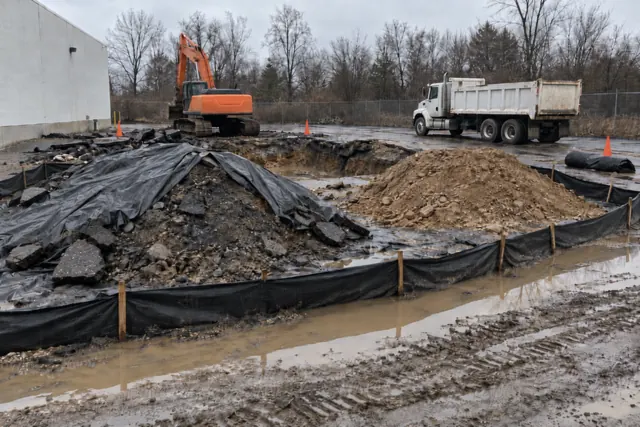
Soil excavation, groundwater treatment, and risk-based site closure for UST releases across Kentucky, including Louisville, Lexington, Bowling Green, and Covington.
What to Know About UST Remediation in Kentucky
UST remediation in Kentucky moves faster when you start with a defensible site investigation. The Kentucky Energy and Environment Cabinet, Division of Waste Management requires owners to characterize contamination under 40 CFR Part 280 before approving any active cleanup plan. Skipping a thorough environmental evaluation almost always costs more downstream because regulators send the work back for additional sampling rounds. Karst limestone bedrock under much of the state lets petroleum plumes travel through fractures and sinkholes, so subsurface mapping is not optional. Contractors who understand Kentucky geology, how contaminated sites get cleaned up, and the Petroleum Storage Tank Environmental Assurance Fund process tend to close sites faster than out-of-state crews.
Active UST cleanup work concentrates around Louisville, Lexington, Bowling Green, and Covington where decades of urban fueling stations left behind contaminated soil and groundwater. Older corner stations in Owensboro and Paducah often sit on properties where multiple tank generations were installed and removed without complete soil excavation. Rural sites along the I-65 and I-75 corridors present different challenges, with karst topography channeling contaminants miles from the source area. Most Kentucky remediation projects target benzene, toluene, ethylbenzene, and xylene compounds along with MTBE and lead from older gasoline formulations. Frankfort area cleanups frequently involve coordination between the Kentucky Division of Waste Management and the State Fire Marshal due to shared regulatory authority over heating oil and motor fuel tanks.
Remediation budgets in Kentucky typically run $40,000 to $150,000 for limited soil contamination at a single former tank pit, while plume cases involving groundwater commonly reach $250,000 to $750,000. Pump and treat systems for impacted groundwater wells add $75,000 to $200,000 in capital costs plus ongoing quarterly monitoring fees. Excavation and offsite disposal of petroleum-contaminated soil runs roughly $90 to $180 per ton in central Kentucky, with higher rates in the Louisville and northern Kentucky markets. Vapor intrusion mitigation, when required at commercial properties, adds another $15,000 to $50,000 per building depending on slab size and ventilation needs. The Petroleum Storage Tank Environmental Assurance Fund reimburses eligible cleanup costs above a deductible, but contractors must follow specific bidding and documentation rules to maintain reimbursement eligibility.
Hiring a remediation contractor in Kentucky requires verifying both their UST contractor certification with the State Fire Marshal and their workers' HAZWOPER training under OSHA 29 CFR 1910.120 for hazardous site operations. Ask for a recent example closure report from a Kentucky site of similar geology and contaminant type before signing any contract. Confirm the contractor maintains current pollution liability insurance and is willing to name the property owner as additional insured during the cleanup window. Request that the firm walk through how they handle Petroleum Storage Tank Environmental Assurance Fund paperwork because reimbursement delays can stall projects for months. Get at least three written quotes from firms with documented Kentucky experience before committing to a remediation plan.
Kentucky contractors for environmental remediation
How long does UST remediation typically take in Kentucky?
Most Kentucky UST remediation projects close within 18 to 36 months from approved corrective action plan to no further action letter. Simple soil-only excavation cases at small former gas stations sometimes wrap in 6 to 12 months when contamination stays inside the tank pit footprint. Groundwater plume cases involving karst geology routinely run 4 to 8 years because pump and treat systems and monitored natural attenuation require quarterly sampling across many cycles. The Kentucky Energy and Environment Cabinet reviews each case at defined milestones and can extend timelines if data shows the cleanup goals are not being met. Realistic project schedules build in regulator review periods of 60 to 120 days at each major submittal. When you compare quotes from soil remediation companies in Kentucky, make sure each one covers excavation, soil disposal, backfill, and the confirmation sampling needed to close the case.
Does Kentucky have a fund to help pay for UST cleanup?
Yes, the Petroleum Storage Tank Environmental Assurance Fund reimburses eligible owners for cleanup costs at registered UST sites after a per-incident deductible. Eligibility depends on tank registration status, fee payment history, and operational compliance at the time of release discovery. Reimbursement covers approved investigation, remediation, and monitoring costs but not general business losses or property value diminution. Owners must use contractors and consultants who follow the Fund's documentation and bidding rules to keep payments flowing. Many Kentucky remediation firms specialize in working through the Fund and will help prepare reimbursement packages as part of their service.
What contamination levels trigger required cleanup in Kentucky?
Kentucky uses risk-based corrective action standards that compare site sample results to screening levels protective of human health and groundwater. Soil and groundwater concentrations above the default screening levels for petroleum constituents like benzene, toluene, ethylbenzene, and xylene trigger formal corrective action. Where karst geology or nearby drinking water wells are present, cleanup target levels can be much stricter than the statewide default values. Vapor intrusion screening applies whenever contaminated groundwater sits beneath occupied buildings within a defined separation distance. Site-specific cleanup targets are negotiated with the Kentucky Energy and Environment Cabinet based on current and reasonably foreseeable land use.
Can I sell a property in Kentucky with an open UST cleanup case?
Yes, Kentucky law allows property transfers during active UST remediation, but lenders and buyers will scrutinize the open case carefully. Buyers typically request a copy of the corrective action plan, recent monitoring reports, and any communication from the Energy and Environment Cabinet regarding case status. Many transactions close with the seller retaining cleanup responsibility through an environmental escrow or indemnification agreement covering future regulatory costs. Some buyers will only proceed once a no further action letter is issued or after the seller funds a holdback against worst-case future expenses. Working with an attorney experienced in Kentucky environmental transfers and pulling current Petroleum Storage Tank Environmental Assurance Fund documentation early in the deal protects both parties.
Who oversees UST remediation work in Kentucky?
The Kentucky Energy and Environment Cabinet is the lead agency for underground storage tank releases involving regulated motor fuel tanks at gas stations and commercial properties. The Kentucky Division of Waste Management handles broader hazardous waste and solid waste regulation that can overlap on industrial cleanup sites. Local health departments and city engineers may also weigh in when remediation work involves utility easements or municipal water supplies. Federal oversight through the EPA only applies in rare cases involving large interstate spills or sites listed on the National Priorities List. Most day-to-day UST remediation correspondence in Kentucky goes through the Division of Waste Management's regional offices.