
Site Assessment Contractors in Georgia

Find contractors in Georgia for Phase I ESAs, Phase II investigations, soil sampling, and groundwater testing. Serving Atlanta, Savannah, Augusta, Macon, and communities statewide.

Browse Georgia Contractors →

What to Know About Site Assessment in Georgia

Georgia regulates UST site assessment as a structured, agency-supervised process. The Georgia EPD UST Program enforces the Georgia Underground Storage Tank Act (O.C.G.A. 12-13-1 et seq.) and Chapter 391-3-15 of the state rules. Property transactions across the state routinely begin with an environmental due diligence review under ASTM E1527-21 to satisfy lender requirements and CERCLA innocent-purchaser protections. Georgia EPD recognizes subsurface investigations performed under the responsible charge of a state-registered Professional Geologist or Professional Engineer. Commercial real estate buyers, redevelopment authorities, and lenders are the most common parties commissioning these reports.
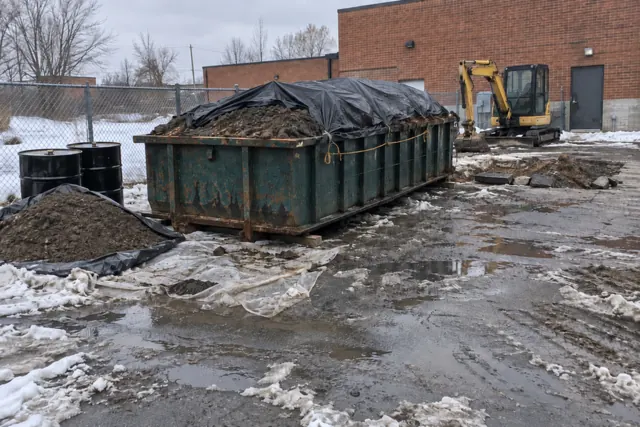
Demand concentrates in Atlanta's Beltline corridor, where former gas stations and dry cleaners are converted into mixed-use redevelopment. Along the Savannah port industrial belt, decades of fuel storage on freight terminals require subsurface evaluation before parcels change hands. Augusta sees recurring contamination assessment work tied to Fort Gordon contractor housing, while Macon's I-75 logistics corridor drives Phase II investigations when distribution centers acquire neighboring fueling parcels. Columbus and Albany add another layer with agricultural fueling sites and rural fleet yards in southwest Georgia, often with shallow groundwater that complicates the sampling scope. Atlanta's redevelopment volume creates unusually high demand for urban brownfield evaluations on tight lots where access constrains drilling rigs.

Phase I ESA fees in Georgia typically run $1,500 to $4,000 for standard commercial parcels, and Atlanta intown sites often push the upper end because of records-review depth. A Phase II ESA escalates to $3,000 to $10,000 once soil borings, monitoring well installation, and laboratory analysis enter the scope. Individual soil sampling locations add $500 to $2,000 each depending on depth and analyte panel. Cost drivers include the number of recognized environmental conditions flagged in Phase I, the parcel's UST history, and whether the site sits on Atlanta granite or coastal-plain sand. The Georgia Underground Storage Tank Trust Fund may reimburse eligible costs tied to a confirmed release, though it applies only to corrective action, not pre-purchase due diligence.

A Georgia Phase I begins with records review, agency file searches at the EPD UST Program, historical aerial photography, and a site walk to flag recognized environmental conditions. If concerns surface, the Phase II scope adds a sampling plan, geoprobe borings, monitoring well installation where groundwater is suspected, and lab analysis under EPD-recognized methods. Phase I reports typically deliver in two to three weeks; Phase II investigations run four to eight weeks once mobilization, lab turnaround, and report drafting are factored in. Before hiring, Georgia property owners should confirm the consultant works under a state-registered Professional Geologist or Engineer of record, and that field crews carry current HAZWOPER training under OSHA 29 CFR 1910.120 for any Phase II soil contact work. Ask for a redacted sample report from a prior Georgia parcel before signing the proposal.

Site Assessment Contractors in Georgia

Browse contractors, see contact details, and request free quotes.

Browse Georgia Contractors →

Frequently Asked Questions

Does Georgia require a license for site assessment work?

Subsurface investigations involving soil borings, monitoring wells, or geologic interpretation must be performed under the responsible charge of a Georgia-registered Professional Geologist or Professional Engineer. Phase I records reviews under ASTM E1527-21 do not require a P.G. signature, but reputable Georgia consultants assign an environmental professional meeting the 40 CFR 312.10 qualifications. Field samplers must hold current HAZWOPER certification before any intrusive work begins. Verify the firm's P.G. roster against the Georgia Board of Registration before signing the contract.

How much does a Phase I ESA cost in Georgia?

Phase I fees typically run $1,500 to $4,000 for a standard commercial parcel. Atlanta intown lots and Savannah industrial properties hit the upper end because dense historical records take longer to review. Larger acreage and rural Albany or Columbus sites with sparse file documentation can also push beyond that range. Phase II investigations start near $3,000 and climb past $10,000 once monitoring wells and full TPH and BTEX analytical panels are involved.

How long does a Phase II ESA take in Georgia?

A Georgia Phase II runs four to eight weeks from signed scope to final report. Drilling rigs typically mobilize within two weeks of authorization, and EPD-recognized lab methods return results in 10 to 21 business days. Report drafting plus internal P.G. review adds another one to two weeks. Atlanta urban infill sites with permit complications can extend the window to ten weeks or longer.

Will the Georgia UST Trust Fund cover my site assessment?

The Georgia Underground Storage Tank Trust Fund reimburses eligible costs only when there is a confirmed release from a registered UST and the owner is in compliance with EPD reporting. Pre-purchase Phase I and Phase II assessments on parcels with no confirmed release fall under voluntary due diligence and are not fund-eligible. Once a release is confirmed, delineation and contamination assessment work tied to corrective action becomes reimbursable subject to the fund's deductible. File the release notification within 24 hours of discovery, or the eligibility window may close.

What is the difference between a Phase I and Phase II ESA?

A Phase I ESA is a non-intrusive ASTM E1527-21 review that combines records research, EPD UST Program database searches, historical aerial review, and a site walk to identify recognized environmental conditions. It does not include soil borings or laboratory analysis. A Phase II is the intrusive follow-up that uses borings, monitoring wells, and lab testing to confirm or rule out the conditions flagged in Phase I. A property advances to Phase II only when Phase I uncovers credible evidence of contamination risk.

Looking for a contractor in Georgia?

Browse contractors, see contact details, and request free quotes.

Browse Georgia Contractors →

For Georgia UST regulations, visit the Georgia EPD UST Program. Federal requirements are available from the EPA UST Program.

Related Services in Georgia

Find Georgia ContractorsRequest a Free Quote
Free Quotes