Find Illinois contractors for oil tank removal, UST removal, heating oil tank closure, tank decommissioning, and environmental remediation. Serving Chicago, Aurora, Rockford, Naperville, Joliet, Peoria, and communities statewide.
Illinois UST Closure Work Across Commercial and Residential Markets
Chicago-area gas stations generate most of the tank removal work in Illinois. Residential jobs with clean soil price at $2,000 to $4,500. Commercial corridors across Cook, DuPage, and Lake counties cycle tanks through upgrade and closure regularly, which drives a mature contractor market. State environmental regulators certify closure contractors through the Illinois UST program, and every UST removal must be documented by a licensed crew. Tank owners cannot self-close or abandon tanks without state approval. LUST Trust Fund eligibility requires the work to be performed by a registered contractor from start to finish.
Chicago-area commercial UST work dominates the state's tank closure market, with steady turnover across North Shore, West Loop, and suburban gas station chains. Suburban Joliet and Aurora add an industrial component, and legacy manufacturing corridors in Rockford and East St. Louis generate tank closure work tied to contamination histories. North Shore communities like Winnetka, Highland Park, and Lake Forest carry a significant residential heating oil tank population in homes built between the 1910s and 1950s. Oil tank sweeps have become standard during home inspections in these neighborhoods, and lenders routinely block closings when a buried tank is flagged.
Residential pricing in older Illinois neighborhoods runs $2,000 to $4,500 for a standard tank with clean soil. North Shore basement jobs climb to $3,500 to $6,500 because of confined access and hand excavation. Commercial UST removal at Chicago-area gas stations starts around $5,000 per tank and jumps quickly with pit size and piping complexity. If contamination appears during excavation, petroleum cleanup adds $10,000 to $50,000 or more, especially in areas with known plume overlap. Illinois' LUST Trust Fund reimburses a substantial share of corrective action costs for eligible sites, aligned with the federal LUST Trust Fund program. Our [oil tank removal cost](/oil-tank-removal-cost/) guide breaks down what drives the final invoice.
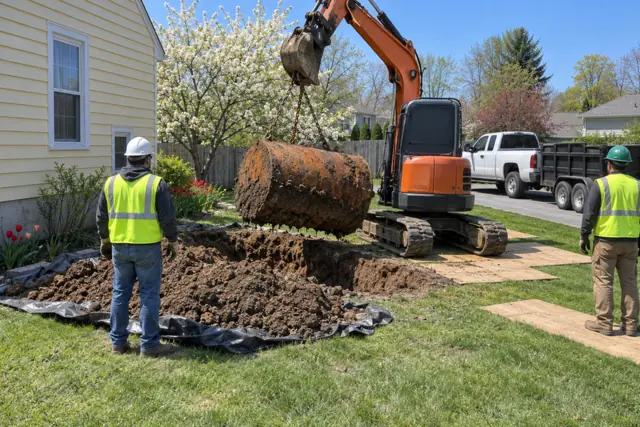
A clean residential job finishes in one day on site, with soil lab results returning in five to ten business days. Basement and North Shore homes can extend to two or three days when access requires interior shoring or hand excavation. If contamination shows up, the project converts to a corrective action case with state oversight, and timelines stretch from weeks to many months. Before signing a contract, ask for the contractor's IEPA UST certification number, a recent Chicagoland or Metro East tank decommissioning report, and written pricing that covers clean-soil and contaminated outcomes. Browse Illinois tank removal pros or get free quotes to start your project.
Do I need a certified contractor to remove an oil tank in Illinois?
Yes. State law requires UST removal to be performed by a contractor licensed through the Illinois EPA UST program under federal 40 CFR 280 rules. That requirement covers regulated USTs. A heating oil tank serving a farm or residence is excluded from the UST definition at any capacity, so residential heating oil work is not gated by the state license. Unlicensed work blocks real estate closings, disqualifies the site from LUST Trust Fund reimbursement, and creates personal liability for future cleanup. Your contractor files the closure report and certifies soil conditions after excavation.
How much does oil tank removal cost in Illinois?
A standard residential removal runs $2,000 to $4,500 with clean soil and accessible ground. North Shore basement jobs climb to $3,500 to $6,500 because crews need smaller equipment and careful shoring. Commercial UST removal at Chicago-area gas stations starts around $5,000 per tank and jumps with pit size. Contamination extends every bracket, often by tens of thousands of dollars. Our pricing guide breaks out each variable.
How long does a tank removal in Illinois take?
A clean residential job finishes in one day on site, with lab results back in five to ten business days. North Shore basements can stretch to two or three days. Commercial multi-tank removals run several days for excavation plus additional time for state review. Contamination can push a project into weeks or months with corrective action oversight. Plan around the lab calendar and state sign-off, not the dig day.
How does Illinois' LUST Trust Fund help with oil tank cleanup costs?
The LUST Trust Fund reimburses eligible owners for a substantial portion of corrective action costs on petroleum releases from underground storage tanks. Soil sampling, remediation, monitoring, and a share of contractor fees fall under the program. Owners must be current on fund fees, the release must be reported within state timeframes, and a licensed contractor must handle the work. Fund processing runs many months and requires detailed invoices. Denial is always possible, so working with a contractor experienced in fund claims improves the eligibility picture.
Do I need to remove an oil tank before selling a North Shore home in Illinois?
No state law forces removal, but buyers, agents, and lenders in Winnetka, Highland Park, Lake Forest, and Evanston routinely treat a buried heating oil tank as a deal-breaker. Most sellers complete a UST removal or documented tank decommissioning before listing, then hand buyers a closure report and clean soil results at closing. Waiting until a buyer's oil tank sweep finds a tank usually forces a rushed job, a price concession, or a failed deal. Clean documentation is the only path that keeps the sale on schedule.