
Oil Tank Removal Contractors in Montana
Find licensed Montana contractors for oil tank removal, UST decommissioning, heating oil tank closure, rural fuel tank removal, soil contamination testing, and environmental remediation. Serving Billings, Missoula, Great Falls, Bozeman, Helena, Butte, and communities statewide.
What to Know About Oil Tank Removal in Montana
Montana carries three active oil refineries at Billings plus an extensive pipeline and Bakken-corridor fuel network, which gives the state a dense commercial UST footprint for its modest population. The Montana DEQ Underground Storage Tank Program licenses UST contractors and regulates closure work under Title 75 Chapter 11 Part 5 of the Montana Code and ARM 17.56. DEQ requires a 30-day advance notice before any permanent tank closure and a 24-hour release report when contamination is confirmed. A DEQ-licensed tank contractor must perform the excavation, collect soil samples, and file the closure report. Property owners cannot legally abandon or partially close a regulated tank without that license.
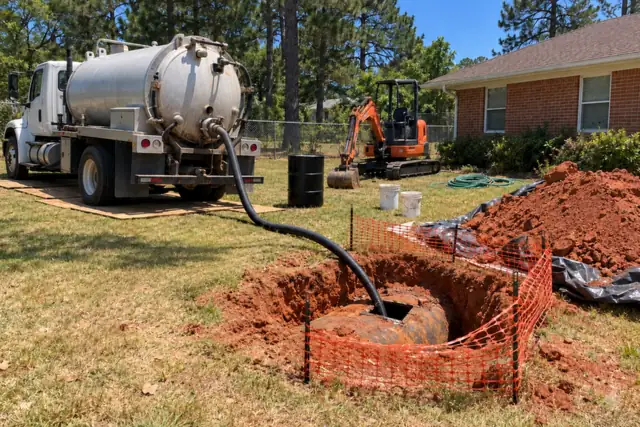
Billings anchors Montana's commercial tank market thanks to three working refineries and the Yellowstone River industrial corridor. Missoula's Hellgate Valley, Great Falls along the Missouri, Bozeman's Gallatin Valley, and Helena add steady fleet-yard work. Butte and Anaconda carry a deeper contamination history from the region's Superfund legacy, which layers EPA oversight on top of state closure work. The Flathead Valley through Kalispell and Whitefish, Hi-Line communities from Havre to Wolf Point, and Bakken-corridor towns like Sidney and Glendive cycle fuel tanks tied to oilfield and rail operations. Rural eastern and central Montana still uses heating oil in older farm and ranch homes, and national-park gateway fueling at West Yellowstone, Gardiner, and East Glacier adds seasonal commercial turnover.
Residential pricing in Billings, Missoula, Bozeman, and Great Falls runs $1,200 to $2,800 for a standard buried tank with clean soil and machine access. Basement heating oil tanks in older Butte, Helena, and Kalispell homes climb to $2,500 to $4,500 due to tight foundation access and shoring needs. Commercial UST closure at Montana gas stations starts around $5,000 per tank and climbs with piping and pit size. Work inside the Butte-Anaconda Superfund zone or within one mile of the Yellowstone, Missouri, or Clark Fork rivers often triggers expanded sampling and longer timelines. If contamination surfaces, environmental remediation adds $10,000 to $50,000 or more. Montana's Petroleum Tank Release Compensation Board reimburses eligible owners for a significant share of corrective action costs up to a per-release cap, after a deductible, aligned with the federal LUST Trust Fund program. Our oil [tank removal cost](/oil-tank-removal-cost/) guide breaks down what drives the final invoice.
A straightforward Montana residential job wraps in one day on site, with soil laboratory results returning in five to ten business days. Basement tank work in older Butte and Helena homes stretches to two or three days when crews cut tanks inside foundations. November through March frost depth regularly exceeds four feet across the state, so most residential and commercial closure work compresses into an April through October window. If sampling flags petroleum, the site enters corrective action under Montana DEQ oversight, with timelines running weeks to many months. Before signing a contract, ask for the contractor's Montana DEQ UST license, a recent closure report from a comparable Montana job, and written pricing for both clean-soil and contaminated outcomes. Ready to start? find a tank contractor in Montana or request a free quote from professionals in your area.
Oil Tank Removal Contractors in Montana
Browse contractors, see contact details, and request free quotes.
Browse Montana Contractors →Frequently Asked Questions
Do I need a licensed contractor to remove a tank in Montana?
Yes for regulated underground storage tanks. ARM 17.56 requires closure work to be performed by a contractor licensed through the Montana DEQ UST Program, with a 30-day advance notice before excavation. Residential heating oil tanks sit outside the formal UST license requirement but still trigger release reporting. Unlicensed work blocks PTRCB eligibility, creates personal liability for future cleanup, and derails Billings, Missoula, and Bozeman commercial property sales.
How much does oil tank removal cost in Montana?
Standard residential tank closure in Billings, Missoula, Bozeman, and Great Falls runs $1,200 to $2,800 with clean soil. Basement tanks in older Butte and Helena homes climb to $2,500 to $4,500 due to tight foundation access. Commercial UST closure at Montana gas stations starts near $5,000 per tank. Work inside the Butte-Anaconda Superfund zone or along the Yellowstone, Missouri, or Clark Fork watersheds can climb sharply due to expanded sampling. Montana's PTRCB Fund may offset a portion for eligible regulated sites. Our pricing guide breaks out each variable.
How does Montana's Petroleum Tank Release Compensation Board help?
The Petroleum Tank Release Compensation Board reimburses eligible Montana tank owners for a significant share of corrective action costs up to a per-release cap, after a deductible. Eligibility requires the tank to be registered with Montana DEQ, the release reported within state timeframes, and all work performed by licensed contractors. Claim processing runs many months, and contractors experienced with PTRCB paperwork move Billings, Missoula, and rural Montana claims faster than first-time applicants.
How does the Butte-Anaconda Superfund zone affect tank work?
Butte-Anaconda carries one of the largest Superfund sites in the country from a century of copper mining and smelting. Any UST closure inside the Superfund boundary layers EPA oversight on top of Montana DEQ requirements, with expanded soil and groundwater sampling, additional disposal documentation, and tighter timelines than a standard Montana project. Owners and sellers should plan six to twelve months of lead time for tank closure inside the Superfund zone, and should use a contractor familiar with both DEQ and EPA reporting.
When is the working season for tank removal in Montana?
April through October is the practical window for most Montana tank closure work. November through March frost depth regularly exceeds four feet across the state, which makes excavation prohibitively slow in Billings, Missoula, Great Falls, and rural counties. Bozeman and the Gallatin Valley sometimes see mild early winters. Plan closures between Memorial Day and early October to leave buffer time for soil lab results and any Montana DEQ follow-up before winter shuts the excavation season down.
Browse contractors, see contact details, and request free quotes.
Browse Montana Contractors →For Montana UST regulations, visit the Montana DEQ Underground Storage Tanks. Federal requirements are available from the EPA UST Program.
