
Tank Installation Contractors in Kentucky
Find contractors in Kentucky for underground storage tank installation, fuel system installation, tank replacement, dispenser installation, and piping installation. Serving Louisville, Lexington, Bowling Green, Covington, and communities statewide.
Licensing, Costs, and Timelines for Kentucky Tank Installation
Kentucky treats UST installation as licensed work under the State Fire Marshal's office. Every contractor installing underground storage tanks must hold a current state-issued UST contractor license before breaking ground. The installing company is responsible for ensuring the completed system meets both federal EPA technical requirements and Kentucky's own permitting standards. New installations require secondary containment, automatic leak detection, spill prevention equipment, and overfill protection. The State Fire Marshal's office also requires notification before installation begins and conducts post-installation inspections before any fuel enters the system. Skipping those steps or using an unlicensed installer creates a permitting problem that can delay fuel loading by months.
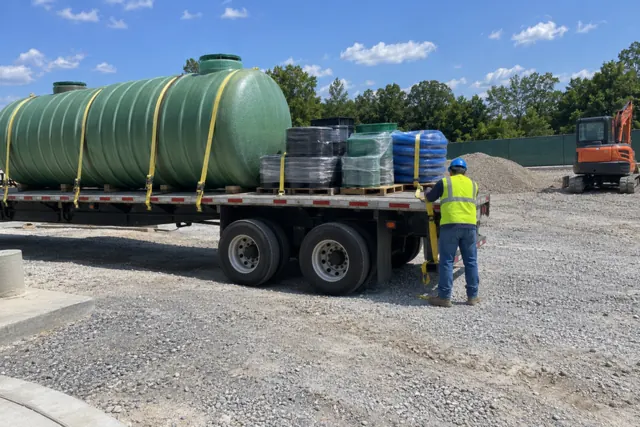
Louisville drives the largest share of Kentucky's tank installation demand, with gas station development, fleet fueling projects, and convenience store build-outs concentrated along the I-64 and I-65 corridors. Lexington's growing commercial base and proximity to central Kentucky's horse farm economy generate steady work for fuel distributors and private fleet operators. Bowling Green sees rising demand from automotive manufacturing supply chain facilities and travel centers along the I-65 corridor between Nashville and Louisville. Covington and the northern Kentucky suburbs benefit from Cincinnati metro spillover, where fuel retailers expanding south of the river need Kentucky-licensed installers. Smaller markets like Owensboro, Paducah, and Ashland add volume from agricultural cooperatives and regional fuel distributors replacing aging tank systems that no longer meet current federal standards.
A single underground storage tank installation in Kentucky typically costs $50,000 to $150,000, which covers the tank, excavation, backfill, piping connections, and basic monitoring equipment. Multi-tank gas station build-outs with dispensers, canopy work, and full compliance systems run $250,000 to $500,000 or more depending on the number of product lines. Monitoring equipment alone adds $5,000 to $15,000, and site conditions create the biggest cost swings across the state. Properties in the western Kentucky lowlands near the Ohio and Mississippi river floodplains often require dewatering during excavation, adding $8,000 to $20,000 to the project. Kentucky's Petroleum Storage Tank Environmental Assurance Fund does not pay for installation work, but proper installation and registration are prerequisites for fund eligibility, and owners who cut corners on documentation risk losing that coverage.
The typical installation timeline runs three to six months from engineering to fuel delivery, stretching longer for multi-tank stations or sites where an old tank must come out first. Permitting and design take four to eight weeks, with the State Fire Marshal's review adding time if the application is incomplete or the site has prior contamination history. Excavation, tank placement, and piping work require one to three weeks of field time for a single-tank project. Tightness testing and leak detection verification follow, and both must pass state inspection before fuel loading is authorized. Before signing with an installer, confirm their state license is current, verify the quote includes monitoring equipment, compliance testing, and permit filing, and ask specifically what happens if contamination is found during excavation. That question separates experienced Kentucky contractors from those who have not priced the risk.
Tank Installation Contractors in Kentucky
Browse contractors, see contact details, and request free quotes.
Browse Kentucky Contractors →Frequently Asked Questions
Does Kentucky require a license for UST installation contractors?
Kentucky requires all contractors performing underground storage tank installation to hold a valid license issued through the State Fire Marshal's office. The license confirms the contractor meets state competency and insurance requirements for tank system work. Operating without it is a violation that can result in fines and stop-work orders. You can verify a contractor's license status through the state's licensing records before signing any agreement.
How much does it cost to install an underground storage tank in Kentucky?
A single UST installation in Kentucky typically runs $50,000 to $150,000 including the tank, excavation, piping, and monitoring equipment. Multi-tank gas station projects cost $250,000 to $500,000 or more depending on the number of fuel products and site complexity. Properties near river floodplains in western Kentucky may require dewatering that adds $8,000 to $20,000. If an old tank needs removal before the new one goes in, expect another $5,000 to $20,000 on top of the installation cost. These ranges assume clean soil conditions; contamination discovery during excavation changes the budget significantly.
How long does a tank installation project take in Kentucky?
Most single-tank UST installations in Kentucky take three to six months from initial design through fuel delivery. The permitting phase accounts for four to eight weeks, and field work runs one to three weeks for excavation, tank placement, and piping. State inspection and compliance testing add two to four weeks before fuel loading is approved. Projects that involve removing an existing tank or addressing site contamination can push the total timeline to six months or longer.
Does Kentucky's cleanup fund cover any UST installation costs?
Kentucky's Petroleum Storage Tank Environmental Assurance Fund does not reimburse installation costs. The fund exists to cover eligible cleanup expenses from petroleum releases at registered UST sites. A properly installed and state-registered tank system is a prerequisite for future fund eligibility if a release occurs. Owners who skip registration steps or use unlicensed installers risk disqualifying the facility from fund coverage. Filing the registration paperwork correctly at the time of installation protects you from paying full cleanup costs out of pocket years later.
What monitoring equipment is required on new tank installations in Kentucky?
New UST installations in Kentucky must include secondary containment with interstitial monitoring, automatic tank gauging for leak detection and inventory control, spill containment at fill connections, and overfill prevention devices. Double-wall tanks with continuous interstitial sensors are the standard configuration. Pressurized piping runs require line leak detectors. All monitoring systems must be tested and operational before the State Fire Marshal's office authorizes fuel loading. Facility operators are responsible for maintaining the equipment and retaining monthly monitoring records for state inspections.
Browse contractors, see contact details, and request free quotes.
Browse Kentucky Contractors →For Kentucky UST regulations, visit the Kentucky State Fire Marshal UST Program. Federal requirements are available from the EPA UST Program.
