

What to Know About Tank Decommissioning in Pennsylvania
The Pennsylvania Department of Environmental Protection (PADEP) regulates underground storage tank closure under 25 Pa. Code Chapter 245, the rules that carry out the Storage Tank and Spill Prevention Act. The first question is whether your tank is covered at all. The chapter's definition of an underground storage tank leaves out any tank storing heating oil for consumptive use on the premises, with no size limit, and DEP's tank data page states that home heating oil tanks are not regulated. Farm and residential tanks of 1,100 gallons or less holding motor fuel for noncommercial use are also outside the rules. Gas station, fleet and other regulated USTs go through the full state tank closure process described below.
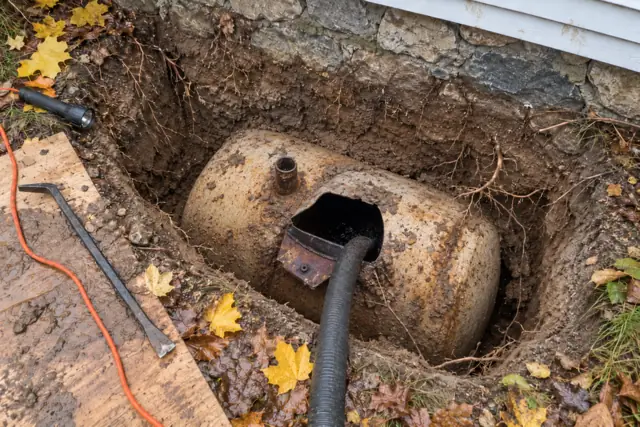
For a regulated tank, 25 Pa. Code § 245.452 requires notice to PADEP at least 30 days before closure begins, on DEP's Installation/Closure Notification Form. DEP's guidance says a copy also goes to the Department of Labor and Industry's Flammable and Combustible Liquids Section, or to the local agency in Philadelphia or Allegheny County where the tank falls under local rules. The tank work must be done or directly supervised on site by a DEP-certified installer holding the UMR (tank removal) certification. The tank is either removed or filled with a nonshrinking, inert solid material, so closure in place is allowed, though DEP's closure guidance recommends removal where practicable. The owner must sample for a release. Within 30 days of finishing, the owner files an amended registration signed by both the owner and the certified installer, and the closure report goes to DEP when the agency asks for it.
Pennsylvania's Underground Storage Tank Indemnification Fund (USTIF), overseen by the Insurance Department, pays for cleanup after a release, not for closing a tank. The fund's claims page states that it will not cover repair and maintenance work on USTs, including tank removal. When a claim is paid, the deductible is at least $5,000 per tank per occurrence, and fees must be current for the tank to qualify. Homeowners have a separate DEP program. The Underground Heating Oil Tank Cleanup Reimbursement covers releases from buried heating oil tanks of 3,000 gallons or less, with a $1,000 deductible and a maximum of $4,000, and it is funded through December 31, 2027. Removing a tank that is not leaking does not qualify. Compare written quotes from more than one contractor.
Local permits come on top of the state steps. Philadelphia's Department of Licenses and Inspections requires a building permit to install or remove hazardous material tanks, so Philadelphia owners should ask L&I whether their tank needs one. For a regulated UST, 25 Pa. Code § 245.455 requires the closure site assessment results to be kept for at least 3 years, and a confirmed release must be reported by telephone to the DEP regional office within 24 hours. DEP's underground storage tank page links a daily list of certified tank handling companies that can be searched by county and certification category. Before hiring any contractor on this page for a regulated UST, confirm the company appears on that list under UMR.