Find contractors in Maryland for underground storage tank installation, fuel system installation, dispenser installation, and piping upgrades. Serving Baltimore, Silver Spring, Columbia, Annapolis, and communities statewide.
Maryland Tank Installation: MDE Permits, Chesapeake Bay Rules, and Project Costs
Baltimore's port corridor and the DC suburban belt drive most of Maryland's UST installation demand. The Baltimore metro area, including Dundalk, Glen Burnie, and Essex, supports commercial fuel system work tied to industrial zones, the port, and I-95 traffic volume. From Silver Spring through Bethesda, Rockville, and down to Waldorf, convenience store chains and fleet operators serving the federal workforce account for a steady pipeline of new installations. The Eastern Shore and western Maryland generate fewer projects, but Salisbury and Hagerstown support regional fueling infrastructure along US-50 and I-81. Under COMAR 26.10.03.01, every UST system installed in Maryland after January 11, 2009 must have secondary containment, statewide rather than only near the Chesapeake Bay.
A single underground storage tank installation in Maryland typically costs $55,000 to $160,000, depending on tank capacity, material, and site complexity. Multi-tank gas station build-outs with dispensers, canopy, and monitoring systems run $275,000 to $525,000. Monitoring equipment alone adds $5,000 to $15,000 per tank. Sites in the Baltimore industrial corridor tend to price 10 to 20 percent higher than rural areas because of permitting complexity and tighter access. Maryland's Oil Contaminated Site Environmental Cleanup Fund stopped taking reimbursement applications from underground oil storage tank owners after December 31, 2007 under Environment Article 4-705, and it does not pay for replacement tanks. Owners replacing tanks at sites with known contamination should budget separately for soil work, which can add $15,000 to $100,000 depending on the extent of the release.
Technician certification from the state environmental agency is the first requirement for any UST installation project in Maryland. The state requires this credential for anyone performing UST installation, removal, or testing, and every new tank system must be registered before it holds regulated product. Operators need to demonstrate financial responsibility and meet federal secondary containment standards before receiving an operating permit. Gas stations, fleet fueling facilities, and bulk petroleum storage operations make up the bulk of new installations. Category A licensing means Maryland is stricter than many neighboring states, and contractors working here carry credentials that some mid-Atlantic states do not require.
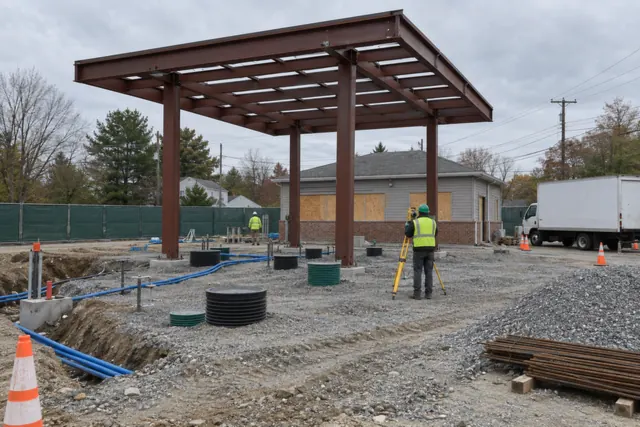
The installation process starts with engineering plans and permit applications, which in Maryland typically take six to ten weeks before excavation begins. Tank placement, backfill, piping connections, and dispenser work follow over three to eight weeks for a single-tank project. Multi-tank stations can require four to six months from groundbreaking to an operating permit. Every new system must pass a tightness test on both the tank and piping, and release detection equipment must be verified operational before the system stores any regulated substance. Contractors without current Maryland technician certification cannot legally pull UST permits, and projects started without proper credentials face stop-work orders that add weeks to the schedule.
Does Maryland require a license for UST installation work?
Maryland requires technician certification issued by the state environmental agency for anyone performing UST installation, removal, or testing. This is not a general contractor license; it is specific to underground storage tank systems. Contractors must also carry appropriate environmental liability coverage and register every new tank with the state before it enters service. Operating without certified technicians can result in fines and permit denial, so always verify credentials before hiring.
How much does it cost to install an underground storage tank in Maryland?
A single UST installation in Maryland typically costs $55,000 to $160,000 for a standard commercial project. Multi-tank gas station build-outs with dispensers, canopy, and monitoring equipment range from $275,000 to $525,000. Baltimore-area sites often run 10 to 20 percent above rural Maryland pricing because of permitting layers and limited site access. If you are replacing a tank at a site with existing contamination, remediation costs of $15,000 to $100,000 are separate from the installation budget. Monitoring equipment adds $5,000 to $15,000 per tank regardless of location.
How long does a UST installation project take in Maryland?
Permitting and engineering plans typically take six to ten weeks before any ground is broken. Construction for a single-tank project runs three to eight weeks from excavation through final tightness testing. Multi-tank gas station build-outs can stretch four to six months from groundbreaking to operational status. Projects near the Chesapeake Bay watershed sometimes face additional environmental review that adds two to four weeks to the permitting phase. Starting the permit process early is the single most effective way to avoid schedule delays.
Does Maryland's cleanup fund apply to new tank installations?
No. Under Environment Article 4-705, the Oil Contaminated Site Environmental Cleanup Fund does not pay to replace or retrofit tanks and piping. It no longer takes applications for cleanup costs either: underground oil storage tank owners could apply only until December 31, 2007, and residential heating oil tank owners only until June 30, 2024. If you are replacing a leaking tank and contamination is present, plan to pay soil and groundwater cleanup costs out of pocket, separately from your installation project.
Do Chesapeake Bay watershed sites face different tank installation rules in Maryland?
No. Maryland's UST rules set no separate Chesapeake Bay watershed tier: secondary containment is required on every UST system installed after January 11, 2009, statewide, under COMAR 26.10.03.01. The extra requirements Maryland does set apply to gasoline UST systems in high risk groundwater use areas and wellhead protection areas in Baltimore, Carroll, Cecil, Frederick and Harford counties, where COMAR 26.10.07 adds steps such as groundwater monitoring wells. The same chapter also sets extra rules for certain large or high-throughput underground oil storage facilities anywhere in the state. Permitting reviews often take longer because of the extra environmental scrutiny. These requirements add cost, typically $5,000 to $20,000 above a comparable inland project, but skipping them is not an option. Ask contractors whether your site falls in one of those areas before they price the job.