Find Tennessee contractors for soil cleanup, groundwater treatment, brownfield work, and TDEC corrective action. Serving Nashville, Memphis, Knoxville, Chattanooga, and communities across the state.
What to Know About UST Remediation in Tennessee
Tennessee remediation work falls under TDEC oversight per the Tennessee UST Act. The state's Department of Environment and Conservation administers Tenn. Comp. R. & Regs. Chapter 0400-18-01, which sets release reporting, corrective action, and closure protocols for petroleum-contaminated UST sites. A typical file opens with a property transaction or compliance inspection, often after a Phase I environmental evaluation flags former service stations, fleet yards, or grandfathered tank pits. Confirmed releases trigger the corrective action plan process under T.C.A. § 68-215, which requires a licensed Tennessee corrective action contractor. Eligible owners can pursue reimbursement through the Tennessee Petroleum UST Fund administered by TDEC.
Demand concentrates in Tennessee's three urban corridors plus the karst midstate. Memphis drives heavy work along the I-240 truck-stop loop, where decades of bulk fuel transfer left subsurface impacts under former service station footprints. Nashville feeds steady files from older fueling depots in Donelson and Antioch, while Knoxville and Chattanooga generate volume from logistics yards along I-40 and I-75. Murfreesboro, Clarksville, and Jackson make up the next tier, mostly tied to Marathon and BP divestitures. The Cumberland Plateau and Highland Rim karst, where fractured limestone can move contamination into private wells, makes Tennessee remediation different from flat-water states and shapes how TDEC reviews site cleanup methods.
Tennessee remediation costs vary widely by tank size, plume extent, and access. Soil-only cleanups for confined petroleum impacts typically run $15,000 to $60,000, while larger groundwater plumes with monitored natural attenuation can reach $75,000 to $250,000 over multi-year programs. Memphis-area sites near the Mississippi alluvial aquifer often cost more because the high water table forces dewatering and treatment of pumped groundwater. The Tennessee Petroleum UST Fund may reimburse eligible cleanup costs after a deductible, depending on compliance status and prompt notification to TDEC. The soil and groundwater cleanup guide explains the technologies typically applied to UST releases.
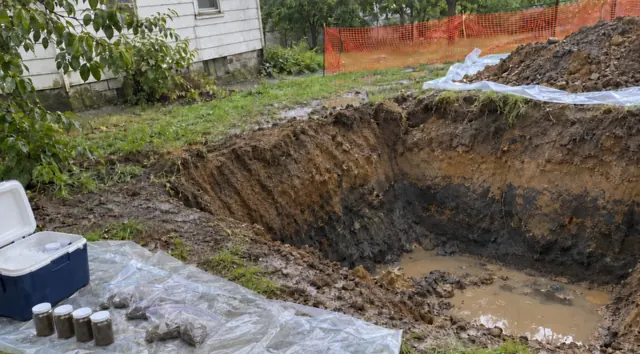
The typical Tennessee corrective action sequence runs initial site characterization, TDEC plan approval, active remediation, and confirmation sampling before a no-further-action letter issues. Characterization timelines run 60 to 120 days for straightforward sites and longer where karst pathways or off-property migration require expanded delineation. Remediation contractors on Tennessee UST releases must field crews with current HAZWOPER training, since 40-hour OSHA certification under 29 CFR 1910.120 is required at any active corrective action site. Before signing a contract, Tennessee property owners should ask the bidder for a current TDEC corrective action contractor number and references from completed Tennessee closure files. Verify that lab fees and IDW disposal costs appear as separate line items, not as a vague allowance.
Tennessee contractors for environmental remediation
Does Tennessee require a license for UST remediation work?
Tennessee requires corrective action contractors working on UST releases to register with TDEC and meet specific qualification standards. The contractor must demonstrate prior remediation experience, carry liability insurance acceptable to the state, and employ field personnel with current 40-hour HAZWOPER certification. TDEC publishes the registry of approved corrective action contractors, and only registered firms can submit corrective action plans, sample for closure, or sign reports. Property owners should verify a contractor's TDEC registration before signing any agreement, since plans submitted by unregistered firms get rejected. Some subspecialty work, such as monitoring well installation, also requires a Tennessee licensed driller for the borehole.
How much does UST remediation cost in Tennessee?
Tennessee remediation projects typically run $15,000 to $60,000 for soil-only cleanups confined to a small UST excavation footprint. Groundwater impacts that require pump-and-treat systems, monitored natural attenuation, or in-situ chemical oxidation can run $75,000 to $250,000 over a multi-year program. Memphis-area sites along the Mississippi alluvial aquifer trend higher because the shallow water table forces dewatering and treatment of pumped fluids during excavation. Karst-affected sites in Middle Tennessee can also exceed the typical range when contamination enters bedrock fractures and demands expanded delineation. Eligible owners can offset costs through the Tennessee Petroleum UST Fund after meeting the state deductible and notification requirements. When you compare quotes from soil remediation companies in Tennessee, make sure each one covers excavation, soil disposal, backfill, and the confirmation sampling needed to close the case.
How long does a UST remediation project take in Tennessee?
Initial site characterization in Tennessee runs 60 to 120 days from kickoff to TDEC corrective action plan submittal, depending on access, drilling depth, and lab turnaround. Active soil cleanup at a contained site can wrap in two to four weeks after plan approval, while groundwater programs with quarterly monitoring extend two to five years. Karst-area files in the Cumberland Plateau and Highland Rim often run longer because TDEC requires additional plume delineation downgradient of fractures. After confirmation sampling clears the cleanup standard, owners typically wait three to nine months for TDEC to issue the no-further-action letter. Real-estate-driven projects sometimes accelerate the early phase but rarely shorten the post-cleanup review window.
Does the Tennessee Petroleum UST Fund cover remediation costs?
The Tennessee Petroleum UST Fund administered by TDEC can reimburse eligible cleanup costs for releases from registered USTs in compliance at the time of the release. Coverage applies after the owner pays a deductible that varies by facility category and compliance status, with the fund covering corrective action costs above that threshold. The owner must report the release to TDEC promptly and submit corrective action plans through a registered contractor. Late reporting or uncorrected compliance violations can disqualify the claim, so timely TDEC notification matters for fund eligibility. The fund does not cover damages to third parties or property value loss, only the cleanup work itself.
What does Tennessee corrective action involve from start to finish?
A Tennessee corrective action file opens after a release report to TDEC. Site characterization defines the soil and groundwater plume through borings and monitoring wells. The contractor then submits a corrective action plan with proposed cleanup technology, target concentrations, and confirmation sampling protocol. After TDEC approval, the cleanup runs through soil excavation, in-situ treatment, or long-term groundwater monitoring depending on contaminant type and site conditions. Confirmation sampling verifies the cleanup standard, and the contractor submits a closure report that TDEC reviews before issuing the no-further-action letter.