
Tank Installation Contractors in West Virginia
Find contractors in West Virginia for underground storage tank installation, fuel system installation, dispenser installation, and piping upgrades. Serving Charleston, Huntington, Morgantown, Parkersburg, and communities statewide.
Planning a Tank Installation in West Virginia
West Virginia's interstate corridors shape where tank installation happens most. Charleston and Huntington account for the largest share of commercial fueling projects, from convenience store builds to fleet operations. Morgantown sees steady activity tied to university growth and regional development. Parkersburg, Wheeling, and Beckley round out the active markets with aging single-wall tanks at rural stations driving replacement work across the eastern panhandle and southern coalfield counties. The state's chemical and natural gas industries also generate demand for specialty tank systems storing non-petroleum products under similar installation protocols.
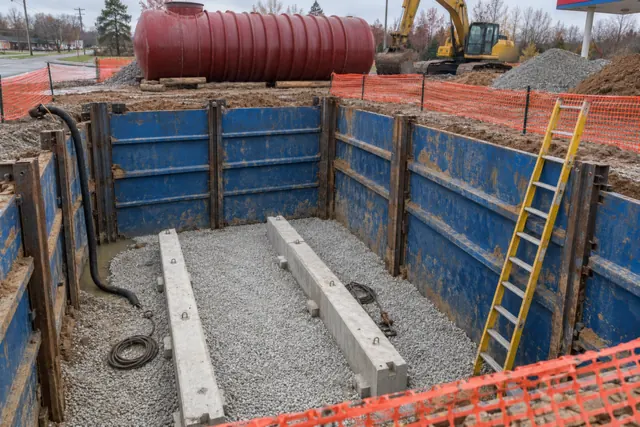
A single underground storage tank installation in West Virginia typically runs $50,000 to $140,000, depending on tank size, site conditions, and monitoring equipment. Multi-tank gas station build-outs with dispensers, canopy, and full piping systems push into the $250,000 to $450,000 range, with monitoring equipment adding $5,000 to $15,000 per tank. Rocky terrain in many parts of the state increases excavation costs by 10 to 25 percent compared to flat-ground sites. West Virginia does maintain a cleanup fund that may reimburse eligible remediation costs if contamination is discovered during installation, but the fund does not cover installation expenses themselves. Get line-item quotes that separate excavation, tank, piping, dispensers, and monitoring so you can compare bids on equal terms.
Every new UST system in West Virginia needs an approved installation plan before excavation begins, covering tank specifications, secondary containment, overfill prevention, and leak detection equipment. The state environmental protection agency oversees permitting, installation standards, and release detection requirements for all new systems. Contractors must hold a state-issued UST contractor license and register before breaking ground. Fiberglass or double-wall steel tanks are standard for new installations across the state. Facilities storing petroleum or hazardous substances in tanks with capacity above 110 gallons fall under these requirements, a threshold covering nearly every gas station, fleet fueling depot, and commercial storage operation in the state.
The installation process starts with a permit application that includes engineering drawings, tank specifications, and a site plan showing setback distances from buildings and property lines. Excavation follows with bedding material placed before the tank is lowered into position, then piping connections, dispenser installation, and leak detection system calibration happen before backfill and compaction. Expect the physical installation to take two to four weeks for a standard two-tank system, though permitting can add 30 to 60 days on the front end. Before signing a contract, confirm the installer holds a current state UST contractor license and verify they will handle the state notification paperwork, testing, and final inspection. Skipping the license check is a risk that no cost savings can justify.
Tank Installation Contractors in West Virginia
Browse contractors, see contact details, and request free quotes.
Browse West Virginia Contractors →Frequently Asked Questions
Do I need a licensed contractor for UST installation in West Virginia?
Yes. West Virginia requires contractors performing underground storage tank installation to hold a state-issued UST contractor license. Working with an unlicensed installer puts your facility at risk of failed inspections and denied permits. The state environmental agency maintains a list of approved contractors. Verify license status directly before signing any agreement, because an expired or suspended license carries the same consequences as no license at all.
How much does it cost to install an underground storage tank in West Virginia?
A single tank installation typically costs $50,000 to $140,000 in West Virginia. Full gas station build-outs with multiple tanks, dispensers, and piping run $250,000 to $450,000 or more. Rocky ground conditions common in the Appalachian terrain can increase excavation costs by 10 to 25 percent over flat sites. Monitoring equipment adds $5,000 to $15,000 per tank. Always request itemized bids so you can see exactly where the money goes.
How long does a tank installation project take in West Virginia?
Physical installation for a standard two-tank system takes two to four weeks. Permitting and plan review add 30 to 60 days before any excavation begins. Weather delays in mountainous areas can push timelines further, especially between November and March when frozen ground complicates excavation. Sites requiring rock blasting or extensive grading need additional time. Plan for a total project timeline of three to four months from permit submission to final inspection.
Does West Virginia's terrain affect underground storage tank installation?
Appalachian geology creates real challenges that flat-state installers rarely face. Rocky substrates may require blasting or hydraulic breaking before excavation can reach the required depth, and steep hillside sites need engineered retaining solutions to maintain proper tank bedding. High seasonal water tables in valley locations demand dewatering during installation. These conditions are exactly why the state requires licensed contractors, because improper bedding or inadequate drainage in rocky terrain leads to tank shifting, piping stress fractures, and premature system failures.
What monitoring equipment is required for new USTs in West Virginia?
All new underground storage tanks in West Virginia must include secondary containment and continuous interstitial monitoring, per federal and state regulations. Automatic tank gauging systems track product levels and detect leaks. Line leak detectors are required on all pressurized piping. Overfill prevention equipment, either a shutoff valve or a restrictor, must be installed on every tank. Budget $5,000 to $15,000 per tank for the full monitoring package, and make sure your installer includes system calibration and training in the scope of work.
Browse contractors, see contact details, and request free quotes.
Browse West Virginia Contractors →For West Virginia UST regulations, visit the West Virginia Department of Environmental Protection. Federal requirements are available from the EPA UST Program.
