
Tank Installation Contractors in Delaware

Find contractors in Delaware for underground storage tank installation, fuel system installation, dispenser installation, and piping upgrades. Serving Wilmington, Dover, Newark, and communities statewide.

Browse Delaware Contractors →

What to Know About Tank Installation in Delaware

Delaware requires contractor certification through the state environmental agency before any UST installation work begins. This applies to all underground storage tank installations, including new fuel systems, replacement tanks, and piping work at gas stations, fleet fueling facilities, and commercial properties. The certification process covers tank handling, installation standards, leak detection setup, and release prevention protocols. Because Delaware is one of the smaller states geographically, the regulatory agency tends to track active projects closely, and inspectors often visit installation sites within the first week of work. Facilities operating without a certified installer risk permit revocation and fines that can exceed $10,000 per violation.
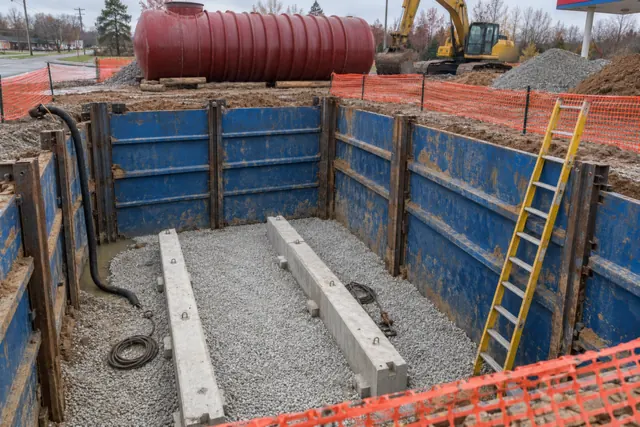
Most tank installation demand in Delaware concentrates along the I-95 corridor between Wilmington and Newark, where commercial density and fuel throughput are highest. Dover sees steady activity from fleet operators and convenience store chains expanding into central Delaware. Rehoboth Beach and the coastal resort towns generate seasonal demand as gas stations upgrade aging systems before peak summer traffic. Delaware's small size means most state certification serve the entire state, so pricing stays competitive compared to neighboring Mid-Atlantic markets. The mix of petrochemical industry presence near the Port of Wilmington and the tourist-driven retail fuel market along Route 1 creates two distinct installation profiles that contractors handle differently.

A single underground storage tank installation in Delaware typically runs $50,000 to $150,000, depending on tank size, material, and site conditions. Multi-tank gas station build-outs with dispensers, canopy work, and monitoring systems push into the $250,000 to $500,000 range, with monitoring equipment alone adding $5,000 to $15,000 per tank. One factor that catches owners off guard: soil conditions in southern Delaware's coastal plain are sandier and drain faster, which simplifies excavation but increases leak detection requirements. Northern Delaware near Wilmington has denser clay soils that slow excavation and raise labor costs by 10 to 15 percent. Delaware does not operate a traditional cleanup reimbursement fund for new installations, so financial responsibility falls entirely on the tank owner from day one.

The installation process starts with a permit application to the state environmental agency, followed by site engineering and tank procurement, which together take four to eight weeks before any ground is broken. Excavation and tank setting typically require three to five days for a single tank, longer for multi-tank systems. After the tank is in the ground, piping connections, dispenser installation, and leak detection commissioning add another one to two weeks, followed by a mandatory state pre-operational inspection before fuel deliveries can begin. Before signing a contract, confirm that the installer holds current state certification, carries pollution liability insurance (standard CGL policies exclude tank work), and includes post-installation monitoring setup in the scope. Ask whether the quote covers permitting fees and the mandatory pre-operational inspection, because those line items add $2,000 to $5,000 that some bids leave out.

Tank Installation Contractors in Delaware

Browse contractors, see contact details, and request free quotes.

Browse Delaware Contractors →

Frequently Asked Questions

Do contractors need a state license to install underground storage tanks in Delaware?

Yes, Delaware requires contractors to hold certification from the state environmental agency before performing UST installation work. This certification covers tank handling, piping installation, and leak detection system setup. Contractors must demonstrate competency in federal UST technical requirements as well as state-specific protocols. Working with an uncertified installer can result in permit denial and fines for the facility owner, not just the contractor.

How much does it cost to install a new underground storage tank in Delaware?

A single tank installation typically costs $50,000 to $150,000, with the range depending on tank capacity, material choice, and site excavation difficulty. Full gas station build-outs with multiple tanks, dispensers, and monitoring systems run $250,000 to $500,000 or more. Monitoring equipment adds $5,000 to $15,000 per tank. Northern Delaware sites with clay soils tend to cost 10 to 15 percent more in excavation labor than sandy coastal plain sites in the southern part of the state. These estimates do not include remediation costs if contamination from a previous tank is discovered during excavation.

How long does it take to install a new UST system in Delaware?

From permit application to fuel delivery, expect eight to fourteen weeks total. The permitting and engineering phase takes four to eight weeks before excavation begins. Physical tank installation runs three to five days for a single tank. Piping, dispensers, and leak detection commissioning add one to two weeks after the tank is set. A mandatory pre-operational inspection by the state must pass before the system goes live, and scheduling that inspection can add a few extra days depending on agency workload.

Does Delaware's coastal soil affect UST installation requirements?

Southern Delaware sits on a coastal plain with sandy, well-drained soils that make excavation easier but create a faster contamination pathway to groundwater. Installers in this region must meet stricter secondary containment and leak detection standards because any release migrates quickly through the porous substrate. Northern Delaware has heavier clay soils that slow both excavation and potential contamination spread, but increase structural considerations for tank bedding and backfill. Your contractor should specify bedding material and compaction methods based on the soil profile at your site, not use a one-size approach.

What monitoring equipment is required for a new UST installation in Delaware?

All new UST installations in Delaware must include automatic tank gauging, interstitial monitoring for double-wall tanks, and line leak detectors on pressurized piping. The state follows EPA technical requirements under 40 CFR 280 for release detection on new systems. Continuous monitoring is required from the day the system becomes operational, so the equipment must be installed and tested before you receive your first fuel delivery. Budget $5,000 to $15,000 per tank for monitoring hardware and initial calibration. Skipping or deferring monitoring setup is not an option; the pre-operational inspection will flag it.

Looking for a contractor in Delaware?

Browse contractors, see contact details, and request free quotes.

Browse Delaware Contractors →

For Delaware UST regulations, visit the Delaware Department of Natural Resources and Environmental Control. Federal requirements are available from the EPA UST Program.

Related Services in Delaware

Find Delaware ContractorsRequest a Free Quote
Free Quotes