Phase 1 Environmental Site Assessment Companies in Idaho
Find contractors in Idaho for Phase I ESA, Phase II environmental site assessment, soil testing, and groundwater investigation. Serving Boise, Meridian, Nampa, Idaho Falls, and Coeur d'Alene communities statewide.
What to Know About Site Assessment in Idaho
Idaho property transactions on fuel sites require an environmental site assessment before closing. The Idaho DEQ Underground Storage Tank Program administers federal 40 CFR 280 requirements alongside state rules under IDAPA 58.01.07. Lenders demand a Phase I ESA conforming to the ASTM E1527-21 standard for commercial property with a current or historical UST. Buyers pursuing the CERCLA Bona Fide Prospective Purchaser defense must complete the environmental evaluation before closing to preserve their liability protection. When the Phase I records review identifies a Recognized Environmental Condition, a Phase II investigation with soil borings and groundwater sampling typically follows, with extra scrutiny for properties overlying the federally designated Eastern Snake River Plain sole-source aquifer.
Demand for environmental investigation in Idaho concentrates in the Treasure Valley around Boise, Meridian, and Nampa, where commercial real estate turnover along the I-84 corridor keeps Phase I ESA work steady. The Boise metro now runs over 800,000 residents, and infill redevelopment of former service stations drives consistent contamination assessment activity. Eastern Idaho work clusters around Idaho Falls and Pocatello, where former bulk plants and rail-served fuel terminals frequently need Phase II soil testing before bank financing closes. Coeur d'Alene and Lewiston handle the northern panhandle workload, often involving timber-industry properties with diesel and used oil contamination histories. Twin Falls and the Magic Valley generate work tied to dairy operations and agricultural fueling stations across the Eastern Snake River Plain footprint.
Phase I ESAs in Idaho typically run $1,800 to $3,800 for a standard commercial property, with rural sites in Custer or Owyhee County trending higher because of travel time from Boise-based consultants. Phase II investigations range from $4,000 for a single-tank dispenser island to $12,000 or more on multi-tank former service stations requiring six or more soil borings. Individual soil sampling costs $500 to $2,000 per location, while groundwater monitoring well installation runs $2,500 to $5,000 per well. Properties owned by participants in the Idaho Petroleum Storage Tank Fund, administered under the Idaho Petroleum Storage Tank Fund Act, may qualify for cleanup reimbursement if Phase II work confirms a release. The fund covers corrective action rather than the assessment itself, so property assessment costs come out of the buyer's or seller's pocket regardless of fund eligibility.
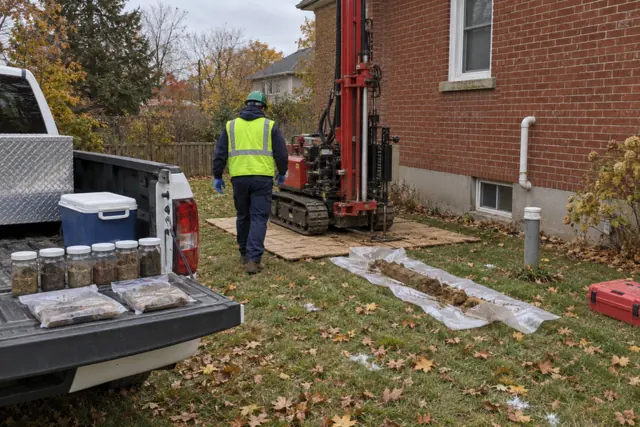
Idaho ESA workflow begins with the consultant pulling regulatory records from the Idaho DEQ leaking UST database, historical Sanborn maps, and aerial photographs of the property's history. A site visit and owner interviews follow, and the resulting Phase I report typically arrives a few weeks after authorization. If a Recognized Environmental Condition surfaces, the Phase II environmental investigation is scoped around suspected source areas, and soil testing laboratory turnaround adds two to three weeks. Treasure Valley property assessment work out of Boise, Meridian, and Nampa moves faster than Panhandle jobs reaching Coeur d'Alene because of consultant proximity. IDEQ-experienced firms expect field staff to hold current HAZWOPER training, and buyers should ask for two prior Idaho DEQ Phase I deliverables plus the lender's reliance language before signing.
Does Idaho require licensing for environmental consultants doing site assessments?
Idaho does not maintain a state license specifically for Phase I or Phase II environmental site assessments, but consultants performing the work must meet the Environmental Professional definition under 40 CFR 312 and ASTM E1527-21. That definition typically requires a Professional Geologist license issued by the Idaho Board of Registration of Professional Geologists or a Professional Engineer license, paired with direct ESA experience. Field staff conducting Phase II soil borings must hold current 40-hour HAZWOPER training under 29 CFR 1910.120. Idaho DEQ corrective action work goes a step further and requires consultants to be on the agency's qualified consultant list. Always ask the firm for proof of errors and omissions insurance and a list of recent Idaho DEQ submittals.
How much does a Phase I ESA cost in Idaho?
A standard Phase I ESA on a single-parcel commercial property in Idaho typically costs $1,800 to $3,800. Pricing depends on parcel size, regulatory database radius, the number of historical occupants the file review uncovers, and travel distance from Boise, Coeur d'Alene, or Idaho Falls. Multi-parcel portfolios and properties with extensive historical industrial use can run $4,500 to $7,000 per Phase I. Phase II investigations layer on top and typically start around $4,000 for a single dispenser island and rise quickly when monitoring wells are required. Lender-driven rush deliveries inside 10 business days usually carry a 25 to 40 percent premium.
How long does a Phase I ESA take in Idaho?
Most Idaho consultants quote 15 to 25 business days from authorization to final Phase I deliverable. The schedule depends on county recorder turnaround for chain-of-title research, Idaho DEQ response time on regulatory file requests, and Sanborn map availability through EDR or the Idaho State Historical Society archives. Rural counties such as Custer, Lemhi, and Boundary can add a week because records are not fully digitized. Rush 7 to 10 business day deliveries are available from larger firms but cost more. Phase II adds another three to five weeks once laboratory analysis is factored in.
Why do Idaho Phase II investigations focus heavily on groundwater?
The Eastern Snake River Plain Aquifer underlies much of southern and eastern Idaho and holds an EPA federal sole-source aquifer designation, meaning contamination there threatens drinking water for hundreds of thousands of residents. Treasure Valley properties also sit above shallow alluvial aquifers connected to the Boise River. Lenders, insurers, and Idaho DEQ apply heightened scrutiny to Phase II groundwater testing in these zones, often requiring multiple monitoring wells where another state would accept soil grab samples alone. Properties in the Lewiston basin or Coeur d'Alene Lake watershed face similar groundwater testing expectations. Plan on $2,500 to $5,000 per monitoring well, with at least three wells typical on former fuel sites.
What happens if a Recognized Environmental Condition is identified?
When a REC appears in the Phase I, the consultant scopes a Phase II to characterize the suspected source area through soil borings, vapor sampling, and groundwater monitoring wells where conditions warrant. Laboratory results take two to three weeks, and the Phase II report either clears the property or recommends Idaho DEQ enrollment in the corrective action process. If a release is confirmed, the property may qualify for the Idaho Petroleum Storage Tank Fund, though enrollment deadlines run from the discovery date rather than the claim filing date. Buyers and lenders sometimes negotiate escrow holdbacks during this phase to keep the deal moving. The transaction can usually close once the Phase II is in hand and a corrective action plan is filed with the agency.