
Oil Tank Removal Contractors in Georgia
Find Georgia contractors for oil tank removal, UST closure, UST decommissioning, commercial tank excavation, petroleum tank removal, gas station closures, and environmental remediation. Serving Atlanta, Savannah, Augusta, Macon, Columbus, Athens, and communities statewide.
How Georgia Regulates UST Closure and the GUST Trust Fund
Georgia oil tank removal runs under the Georgia EPD UST Program. GAEPD administers USTs under Georgia Rules Chapter 391-3-15 and federal 40 CFR 280 rules. Commercial UST closure at gas stations, fleet yards, and industrial sites requires a Georgia-licensed UST installer or remover. Residential heating oil tanks below the federal threshold sit outside the formal licensing requirement, though older Atlanta neighborhoods and Savannah historic districts still surface legacy tanks during real estate transactions.
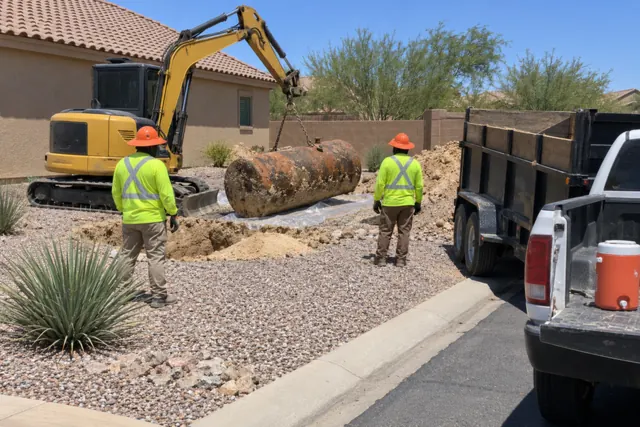
Georgia tank removal work concentrates across Atlanta, including the I-285 commercial ring, downtown corridors, and north-suburban Cobb and Gwinnett gas station networks. Savannah anchors coastal Georgia demand through port facilities, historic district properties, and I-95 gas station turnover. Augusta, Macon, Columbus, and Athens add regional commercial UST work at fleet yards and university-adjacent fueling sites. Coastal Plain pine-belt operations cycle farm and forestry fuel tanks, and Blue Ridge mountain communities around Dahlonega and Blue Ridge see seasonal tourism-fueling tank closures. Red clay Piedmont soils slow excavation compared to softer Coastal Plain alluvium.
Commercial UST closure at Georgia gas stations typically runs $5,000 to $18,000 per tank depending on piping and pit size. Residential heating oil tank removal in older Atlanta or Savannah neighborhoods runs $1,800 to $4,000. If soil sampling exceeds GAEPD cleanup thresholds, environmental remediation adds $10,000 to $50,000 or more, particularly near coastal salt marshes or Piedmont streams that trigger expanded sampling. The Georgia UST Trust Fund (GUST) reimburses eligible regulated-tank owners for corrective action costs after a deductible, aligned with the federal LUST Trust Fund program. Our cost guide breaks down pricing.
A typical Georgia commercial closure starts with Georgia 811 locates, GAEPD notification, tank pumping, degassing, excavation, and soil sampling. A single-tank Atlanta or Savannah gas station closure wraps in two to three days. Multi-tank closures stretch across a week. Soil laboratory turnaround runs seven to fourteen business days. Summer heat and afternoon thunderstorms in the Piedmont compress excavation windows. Before signing, verify the contractor holds an active GAEPD UST installer or remover license, carries pollution liability insurance, and can show a recent closure report from a comparable Atlanta, Savannah, or Augusta job. Property owners often View Georgia contractors or submit a quote request to scope a project.
Oil Tank Removal Contractors in Georgia
Browse contractors, see contact details, and request free quotes.
Browse Georgia Contractors →Frequently Asked Questions
Do I need a licensed contractor to remove an oil tank in Georgia?
Yes. Georgia Rules Chapter 391-3-15 requires UST closure to be performed by a Georgia-licensed installer or remover under federal 40 CFR 280 rules. The GAEPD UST Program maintains the licensed-contractor list. Residential heating oil tanks below the federal threshold sit outside the formal licensing requirement, but Atlanta, Savannah, and Augusta contractors that handle residential removals routinely carry pollution liability insurance and GAEPD credentials.
How much does oil tank removal cost in Georgia?
Commercial UST closure at Georgia gas stations typically runs $5,000 to $18,000 per tank. Residential heating oil tank removal in older Atlanta or Savannah neighborhoods runs $1,800 to $4,000. Contamination adds $10,000 to $50,000 or more, particularly near coastal salt marshes or Piedmont streams. Georgia's GUST Trust Fund may offset a portion for eligible regulated sites. See our cost guide for details.
How long does oil tank removal take in Georgia?
A single-tank commercial closure in Atlanta, Savannah, or Augusta wraps in two to three days on site. Multi-tank pulls stretch across a week. Soil laboratory turnaround runs seven to fourteen business days. If sampling triggers GAEPD cleanup review under 40 CFR 280, paperwork adds six to fourteen weeks. Summer Piedmont thunderstorms often compress summer excavation windows.
How does the Georgia UST Trust Fund (GUST) work?
The Georgia UST Trust Fund reimburses eligible regulated-tank owners for a significant share of corrective action costs after a deductible, drawing on per-gallon petroleum assessments plus federal LUST Trust Fund allocations. Eligibility requires the tank to be registered with GAEPD, the release reported within state timeframes, and all work performed by licensed contractors. Atlanta, Savannah, and Augusta contractors with GUST paperwork experience move claims faster.
Do I need to remove a buried oil tank before selling a Georgia home?
No Georgia statute forces removal. Buyers, lenders, and inspectors in Atlanta neighborhoods like Druid Hills, Inman Park, and Virginia-Highland, Savannah historic districts, and Augusta's Summerville and Forest Hills routinely treat a buried heating oil tank as a reason to renegotiate or require escrow. Most sellers complete a tank closure, pass soil sampling, and hand buyers a clean closure report before listing.
Browse contractors, see contact details, and request free quotes.
Browse Georgia Contractors →For Georgia UST regulations, visit the Georgia EPD UST Program. Federal requirements are available from the EPA UST Program.
