
Oil Tank Removal Contractors in New Mexico

Find New Mexico contractors for oil tank removal, UST closure, UST decommissioning, commercial tank excavation, petroleum tank removal, gas station closures, and environmental remediation. Serving Albuquerque, Santa Fe, Las Cruces, Rio Rancho, Roswell, Farmington, and communities statewide.

Browse New Mexico Contractors →

How New Mexico Regulates UST Closure and the Corrective Action Fund

New Mexico oil tank removal runs through the NMED Petroleum Storage Tank Bureau. NMED administers USTs under New Mexico Administrative Code 20.5.101-117 and federal 40 CFR 280 rules. Commercial UST closure at gas stations, oilfield support yards, and industrial sites requires an NMED-certified tank service provider. Residential heating oil tanks are uncommon across New Mexico because natural gas and electric heating dominate, though legacy tanks occasionally surface in older Santa Fe and Taos neighborhoods during real estate transactions.
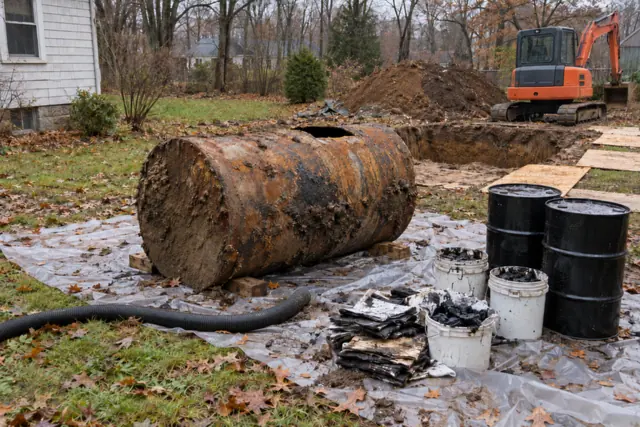
New Mexico tank removal work concentrates in the Albuquerque metro, Santa Fe, and the Las Cruces-El Paso border corridor. Permian Basin activity drives heavy commercial UST turnover at Hobbs, Carlsbad, and Artesia oilfield service yards and truck stops along US-285. The Four Corners region through Farmington cycles natural gas and oil service-company fuel tanks. Rio Grande Valley agricultural operations from Socorro to Las Cruces add farm fuel storage. Northern mountain towns around Taos and Red River see seasonal ski-resort fueling-tank work. High-desert elevation and arid soils slow petroleum plume migration but complicate vapor-intrusion monitoring at urban closures.

Commercial UST closure at New Mexico gas stations typically runs $5,000 to $15,000 per tank. Permian Basin oilfield truck-stop closures can reach $20,000 to $50,000 for multi-tank sites. Residential heating oil tank removal in older Santa Fe or Taos neighborhoods runs $2,000 to $4,500. If soil sampling exceeds NMED cleanup thresholds, environmental remediation adds $10,000 to $60,000 or more, with Rio Grande watershed proximity triggering expanded sampling. The New Mexico Corrective Action Fund reimburses eligible regulated-tank owners for corrective action costs after a deductible, aligned with the federal LUST Trust Fund program. Our cost guide breaks down pricing.

A typical New Mexico commercial closure starts with New Mexico 811 locates, NMED notification, tank pumping, degassing, excavation, and soil sampling. A single-tank Albuquerque or Las Cruces closure wraps in two to three days. Multi-tank Permian Basin oilfield closures stretch across a week. Soil laboratory turnaround runs seven to fourteen business days. Summer monsoon afternoon storms across central New Mexico compress excavation windows in July and August. Before signing, verify the contractor holds an active NMED UST service provider certification and can show a closure report from a comparable Albuquerque, Santa Fe, Las Cruces, or Permian Basin job. Property owners can View New Mexico contractors or submit a quote request from active contractors.

Oil Tank Removal Contractors in New Mexico

Browse contractors, see contact details, and request free quotes.

Browse New Mexico Contractors →

Frequently Asked Questions

Do I need a licensed contractor to remove an oil tank in New Mexico?

Yes. NMAC 20.5.101-117 requires UST closure to be performed by an NMED-certified tank service provider under federal 40 CFR 280 rules. The NMED Petroleum Storage Tank Bureau maintains the certified-contractor list. Residential heating oil tanks are uncommon across New Mexico, but Albuquerque, Santa Fe, and Las Cruces contractors that handle occasional residential removals routinely carry pollution liability insurance and NMED credentials.

How much does oil tank removal cost in New Mexico?

Commercial UST closure at New Mexico gas stations typically runs $5,000 to $15,000 per tank. Permian Basin oilfield truck-stop closures can reach $20,000 to $50,000 for multi-tank sites. Residential heating oil tank removal in older Santa Fe or Taos neighborhoods runs $2,000 to $4,500. Contamination adds $10,000 to $60,000 or more, particularly in Rio Grande watershed overlay zones. New Mexico's Corrective Action Fund may offset a portion for eligible regulated sites. See our cost guide.

How long does oil tank removal take in New Mexico?

A single-tank Albuquerque or Las Cruces commercial closure wraps in two to three days on site. Multi-tank Permian Basin oilfield closures stretch across a week. Soil laboratory turnaround runs seven to fourteen business days. If sampling triggers NMED cleanup review under 40 CFR 280, paperwork adds six to fourteen weeks. Summer monsoon storms compress July and August excavation windows.

How does the New Mexico Corrective Action Fund work?

The New Mexico Corrective Action Fund reimburses eligible regulated-tank owners for a significant share of corrective action costs after a deductible, drawing on per-gallon petroleum assessments plus federal LUST Trust Fund allocations. Eligibility requires the tank to be registered with NMED, the release reported within state timeframes, and all work performed by certified contractors. Albuquerque, Santa Fe, and Permian Basin contractors experienced in Corrective Action Fund paperwork move claims faster.

Why is Permian Basin oilfield work a distinct UST closure market in New Mexico?

Permian Basin activity across Hobbs, Carlsbad, and Artesia drives heavy commercial UST turnover at oilfield service yards, truck stops along US-285, and production-support fueling sites. Multi-tank closures commonly exceed single-tank Albuquerque or Santa Fe jobs in size and complexity. Karst-influenced Permian carbonate geology requires expanded sampling in some areas. Contractors with Permian Basin experience handle equipment logistics, tank-size variations, and NMED paperwork faster than Albuquerque-only operators.

Looking for a contractor in New Mexico?

Browse contractors, see contact details, and request free quotes.

Browse New Mexico Contractors →

For New Mexico UST regulations, visit the NMED Petroleum Storage Tank Bureau. Federal requirements are available from the EPA UST Program.

Related Services in New Mexico

Find New Mexico ContractorsRequest a Free Quote
Free Quotes