

What to Know About Tank Decommissioning in Wisconsin
This page covers tank decommissioning for buried fuel and heating oil tanks in Wisconsin. The Wisconsin Department of Agriculture, Trade and Consumer Protection (DATCP) regulates storage tanks through its Bureau of Weights and Measures. The Wisconsin Department of Natural Resources (WDNR or DNR) oversees the cleanup once petroleum gets into the environment. DATCP's tank closure fact sheet says chapter ATCP 93 covers underground tanks with a liquid capacity of 60 gallons or more. Under ATCP 93.310, an underground tank that stores heating oil, including one at a home, must follow the same out-of-service, closure, site assessment and release sections as any other underground storage tank. Heating oil tanks used on the premises, and farm or residential motor fuel tanks under 1,100 gallons, are exempt from the permit to operate under ATCP 93.145. That exemption does not lift the tank closure rules.
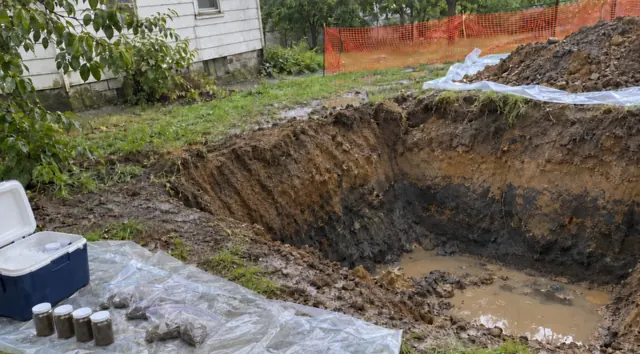
Tank decommissioning in Wisconsin starts with notice. Under ATCP 93.560, the owner, operator or a designee notifies DATCP or the local authorized agent on form TR-WM-121 at least 5 business days before closure begins. Tank removal is the default, and the excavation stays open until the inspector approves backfilling. Closure in place needs a DATCP determination, on written request, that one of eight listed conditions exists. Before backfilling or closing in place, a certified tank-system site assessor samples for a release under ATCP 93.580, unless the tank falls under one of its exemptions. Within 21 business days of closure, the owner sends DATCP the closure documentation: a revised registration on form TR-WM-137 and Part A of form TR-WM-140. For every tank removal, the site assessment report also goes to a WDNR regional office within 21 business days. Under ATCP 93.545, product must come out of a tank that has been out of service for 12 months. A tank that falls out of compliance is treated as abandoned and must be closed within 60 calendar days.
The Legislative Fiscal Bureau reports that PECFA, Wisconsin's old cleanup fund, closed to new claims as of June 30, 2020. DNR's narrower Tank Removal Program, described on its petroleum cleanup page, pays to remove abandoned tanks only. Under Wis. Stat. 292.64, DNR may contract for the removal when it finds the tank abandoned and the owner unable to pay, and it then records a lien on the property. Penalties under Wis. Stat. 168.26 are a forfeiture of $10 to $5,000 for each violation, and each day of continued violation is a separate offense. The guide to closure in place versus UST removal compares the two methods.
For a home heating oil tank, location decides the rules. A buried tank at a house is an underground tank, so the notice, certified remover and UST removal steps above apply. Under ATCP 93.020, aboveground tanks under 5,000 gallons are not regulated by the chapter. DATCP's service company page also lifts the certified remover requirement for heating fuel tanks aboveground or in basements of one- or two-family dwellings. Under ATCP 93.020, Milwaukee, the only first class city as of November 1, 2019, may apply its own requirements for plan review and inspections. Before hiring, look up the firm and its technicians on DATCP's tank service lists.