
Oil Tank Removal Contractors in Wisconsin
Find licensed Wisconsin contractors for oil tank removal, UST decommissioning, heating oil tank closure, farm fuel tank removal, soil contamination testing, and environmental remediation. Serving Milwaukee, Madison, Green Bay, Racine, Kenosha, Appleton, and communities statewide.
What to Know About Oil Tank Removal in Wisconsin
Wisconsin splits tank regulation between two agencies, with WDNR and DSPS sharing oversight across Milwaukee, Madison, and Fox Valley jobs. The Wisconsin Department of Safety and Professional Services regulates tank installation, operation, and closure under Chapter SPS 310, while the Wisconsin DNR Remediation and Redevelopment Program oversees site cleanup under NR 700 after a confirmed release. SPS 310.425 requires a 30-day advance notice before any permanent tank closure, and a DSPS-credentialed tank contractor must perform the excavation, collect soil samples, and file the closure report. Property owners cannot legally abandon or partially close a regulated tank without that credential.
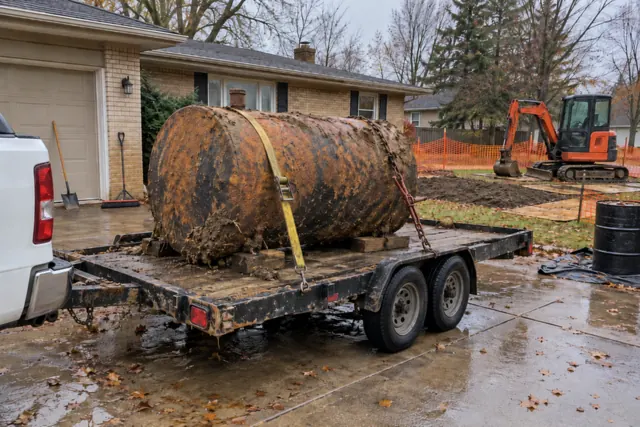
Commercial UST turnover concentrates across the Milwaukee, Madison, and Green Bay metros, with gas stations and truck stops cycling tanks since the 1990s federal deadlines. The Menomonee Valley and Kinnickinnic corridors carry a deeper inventory tied to Milwaukee's manufacturing and rail history, and the Fox Valley ring through Appleton, Oshkosh, Neenah, and Fond du Lac adds paper-mill and industrial fuel-system closures. Racine, Kenosha, and the I-94 corridor see steady fleet-yard activity. Rural dairy country across Outagamie, Brown, Marathon, and Dane counties carries scattered on-farm bulk fuel tanks from the 1950s through 1980s, which surface most often during farm-transition sales. Door County and Wisconsin Dells resort corridors add seasonal gas-station closure work tied to tourism density.
Residential pricing in older Milwaukee and Madison neighborhoods runs $1,500 to $3,200 for a standard buried tank with clean soil and machine access. Basement-adjacent heating oil tanks in Milwaukee's Bay View, Riverwest, and Washington Heights bungalows and Madison's Marquette and Vilas neighborhoods climb to $2,500 to $4,500 because crews work around foundations. Commercial UST closure at Wisconsin gas stations starts around $5,000 per tank. Farm fuel tank removal in rural counties runs $2,000 to $6,000. If contamination surfaces, environmental remediation adds $10,000 to $50,000 or more, particularly near Lake Michigan shoreline or Mississippi River basin sites where groundwater sensitivity triggers expanded sampling. Wisconsin's PECFA program closed to new claims in 2014 but still pays legacy claims under federal LUST Trust Fund coordination, so newer releases rely on owner-funded cleanup or environmental insurance. Our oil tank removal cost guide breaks down the final invoice.
A straightforward Wisconsin residential job wraps in one day on site, with soil laboratory results returning in five to ten business days. Basement-adjacent tanks in older Milwaukee and Madison homes stretch to two or three days. November through March frost depth across most of the state effectively halts excavation, pushing residential and farm work into April through October. If sampling flags petroleum, the site enters corrective action under Wisconsin DNR oversight, with timelines running weeks to months depending on plume size and proximity to Lake Michigan, Lake Superior, or major river basins. Before signing, ask for the contractor's DSPS tank credential number, a recent Wisconsin closure report, and written pricing for both clean-soil and contaminated outcomes. To compare estimates from Wisconsin UST contractors, request a quote.
Oil Tank Removal Contractors in Wisconsin
Browse contractors, see contact details, and request free quotes.
Browse Wisconsin Contractors →Frequently Asked Questions
Do I need a credentialed contractor to remove a tank in Wisconsin?
Yes for regulated underground storage tanks. Chapter SPS 310 requires closure work to be performed by a tank contractor credentialed through Wisconsin DSPS, with a 30-day advance notice filed before excavation. Smaller residential heating oil tanks can fall under local fire-department authority, but any discovered leak triggers reporting to Wisconsin DNR under NR 700. Uncredentialed work blocks legacy PECFA reimbursement, creates personal liability for future cleanup, and commonly derails Milwaukee, Madison, and Fox Valley commercial property sales.
How much does oil tank removal cost in Wisconsin?
Standard residential buried tank closure in Milwaukee, Madison, Green Bay, and the Fox Valley runs $1,500 to $3,200 with clean soil. Basement-adjacent tanks in older Bay View, Riverwest, Marquette, and Vilas homes climb to $2,500 to $4,500. Commercial UST closure at Wisconsin gas stations starts near $5,000 per tank. Farm fuel tank removal in rural Outagamie, Brown, and Marathon counties runs $2,000 to $6,000. Contamination extends every bracket. Wisconsin's PECFA program closed to new claims in 2014, so newer releases rely on owner funds or environmental insurance. Our pricing guide breaks out each variable.
Does Wisconsin's PECFA program still reimburse tank cleanups?
The Wisconsin PECFA program closed to new claims on July 1, 2014, but legacy claims for pre-cutoff releases continue to be processed. Releases discovered after that date are not eligible, shifting newer commercial cleanup costs to tank owners or their environmental insurance policies. Owners with older open claims should work with a contractor experienced in legacy PECFA paperwork because documentation standards remain strict. Wisconsin DNR manages the program through regional hydrogeologists.
Are Wisconsin farm fuel tanks regulated like commercial USTs?
Many on-farm bulk fuel tanks across Outagamie, Brown, Marathon, and Dane counties fall below federal UST regulatory thresholds because they store heating fuel for farm use or sit aboveground. That does not mean they are unregulated. Any release triggers reporting to Wisconsin DNR under NR 700, and dairy-country groundwater sensitivity means even small farm fuel leaks can reach private wells quickly. Farm-transition sales are when these tanks most often surface, and buyers, lenders, and FSA offices routinely request closure documentation.
When is the best time of year to schedule a Wisconsin tank closure?
April through October covers the practical excavation window for most of Wisconsin. November through March frost depth regularly exceeds three feet across the state, which makes digging prohibitively slow. Milwaukee and Madison metro crews sometimes work through mild early winters, but rural and northern Wisconsin projects effectively pause. Most residential sellers and farm owners schedule closures between Memorial Day and early October to leave buffer time for soil lab results and any Wisconsin DNR follow-up. Contractors across the Milwaukee, Fox Valley, and Green Bay markets fill their summer schedules quickly.
Browse contractors, see contact details, and request free quotes.
Browse Wisconsin Contractors →For Wisconsin UST regulations, visit the Wisconsin DNR Underground Storage Tanks. Federal requirements are available from the EPA UST Program.
