

What to Know About Tank Decommissioning in Montana
This page covers tank decommissioning in Montana, from a gas station UST to a buried heating oil tank. The Montana Department of Environmental Quality, or Montana DEQ, runs the state underground storage tank program. Under 40 CFR 282.76, EPA has approved that program to operate in lieu of the federal one. Montana reaches more heating oil tanks than federal law does. The federal UST definition leaves out every tank storing heating oil for use on the premises. Montana's definition in MCA 75-11-503 leaves out only a farm or residential heating oil tank of 1,100 gallons or less that was installed as of April 27, 1995. Any other buried heating oil tank, such as one at a business, a larger home tank, or a home tank installed after that date, is a regulated underground storage tank.
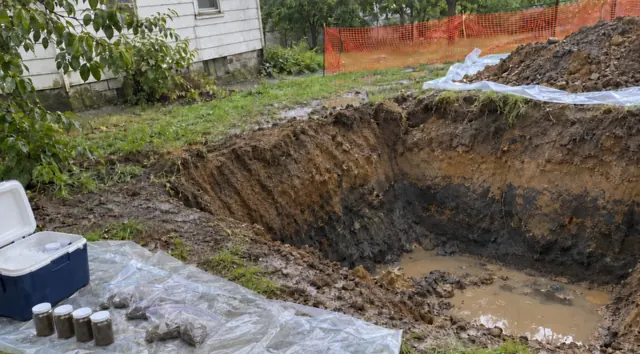
Tank decommissioning for a regulated tank starts with a Montana DEQ permit. MCA 75-11-209 bars closing a UST without one. Under ARM 17.56.1401, the person who closes the tank must hold a DEQ license. Under ARM 17.56.702, the owner notifies DEQ at least 30 days before tank closure begins, and DEQ accepts a closure permit application as that notice. The tank is emptied and cleaned, then removed or, with DEQ approval, filled with an inert solid. A site assessment with soil samples is required for every closure under ARM 17.56.703. Under ARM 17.56.1305, a permit is valid for six months unless DEQ extends it in writing. The licensee delivers the signed permit and required closure documentation to DEQ within 30 days of closure. Under ARM 17.56.701, a tank out of service for three months or more must be emptied, with vents open and other lines capped. An out-of-service tank without compliant corrosion protection must be closed or brought into compliance within 12 months.
The Petroleum Tank Release Compensation Board, or PTRCB, runs the Petroleum Tank Release Cleanup Fund. It reimburses corrective action under a DEQ-approved plan after an eligible release. Under MCA 75-11-307, it does not pay to repair or replace a tank or piping. For most tanks, the owner's copay is 50% of the first $35,000 of eligible costs, or $17,500, and the fund pays the rest up to $982,500. For an eligible release from a heating oil tank used on the premises, the copay is 50% of the first $10,000, or $5,000, and the cap is $495,000. A 2025 law, MCA 75-11-310, reimburses the owner of a facility actively dispensing petroleum up to $2,000 every 1,000 days for listed preventive work, including removal of inactive tanks. Under ARM 17.56.1304, a permit application to close a tank carries a review fee of $161 plus $0.02 per gallon of tank capacity, capped at $1,208 per permit. See closure in place versus UST removal for how the method changes the job.
For a home heating oil tank, check the install date and size first. MCA 75-11-203 ties the permit law to the 75-11-503 definition, so DEQ's closure permit requirement does not reach an excluded home tank. A home tank that does meet the definition needs the same permit, licensed remover and site assessment as a commercial UST. DEQ's closure summary tells the licensee to notify the local fire department and obtain all applicable local permits. Montana DEQ licenses individuals, not companies, and publishes installer and remover and remover only lists. Before hiring a firm from this page, confirm that the person who will run the UST removal appears on one of those lists.