
Tank Installation Contractors in Montana
Find contractors in Montana for underground storage tank installation, fuel system installation, dispenser installation, and piping installation. Serving Billings, Missoula, Great Falls, Helena, Bozeman, and communities statewide.
Planning a Tank Installation Project in Montana
Tank installation in Montana runs $50,000 to $150,000 for a single system. Multi-tank gas station build-outs with dispensers, canopy, and piping run $250,000 to $500,000 or more, and monitoring equipment alone adds $5,000 to $15,000 per installation. Montana's remote geography inflates costs compared to states with denser contractor networks; equipment mobilization to eastern or central Montana sites can add $5,000 to $15,000 beyond the base project price. The state's petroleum cleanup fund operates on a 50/50 copay for eligible remediation, but it does not cover installation costs directly. If your project involves replacing a leaking tank, the removal and soil cleanup qualify separately for fund reimbursement, so keep the installation and closure scopes separated in your contracts.
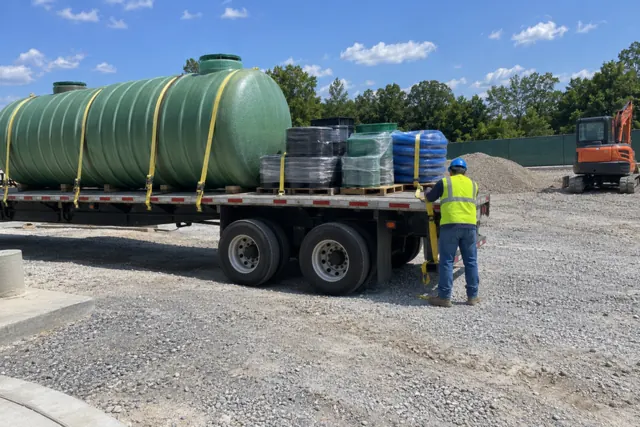
Montana requires DEQ contractor certification for any underground storage tank installation. The state's environmental quality department oversees permitting, installation standards, and post-installation testing for all regulated UST systems. Any facility storing petroleum or hazardous substances underground needs state approval before breaking ground, and the installing contractor must hold active credentials. Fiberglass and double-wall steel tanks dominate new installations here because federal release detection rules demand secondary containment and interstitial monitoring on every new system. The state also requires a notification form submitted at least 30 days before installation begins, and the tank must pass tightness testing before it receives product.
Montana's fuel corridor along I-90 and I-94 drives most tank installation activity. Billings anchors the eastern end with refinery operations, truck stops, and fleet fueling depots that periodically replace aging systems. Great Falls and Missoula see installation projects tied to convenience store expansions and municipal fleet upgrades. Bozeman's rapid growth has pushed new gas station construction at a pace unusual for Montana, while Helena and Butte generate steady replacement work at state facilities and mining operations. Outside these population centers, remote fueling stations serving agricultural operations and energy extraction sites create scattered demand across enormous distances. The limited number of certified installers in the state means projects compete for the same crews, particularly during the May through October construction window.
The installation process starts with site engineering and soil borings, followed by excavation, bedding material placement, tank setting, piping connections, and backfill in controlled lifts. Expect the physical installation to take one to three weeks for a single-tank system, with multi-tank projects running four to eight weeks. Frozen ground between November and March makes excavation impractical or extremely expensive in most of Montana, so projects that miss the October deadline often sit until spring. Before signing a contract, confirm the installer holds current DEQ certification, carries pollution liability insurance separate from their general liability policy, and includes post-installation tightness testing in the scope. Ask specifically whether the quote covers monitoring system commissioning, because that step is sometimes billed separately and skipping it leaves you out of compliance on day one.
Tank Installation Contractors in Montana
Browse contractors, see contact details, and request free quotes.
Browse Montana Contractors →Frequently Asked Questions
Do UST installers need a state license in Montana?
Montana requires contractors performing UST installation to hold certification through the state's environmental quality department. This applies to tank setting, piping, and monitoring equipment installation on any regulated system. Contractors must demonstrate competency in current federal and state installation standards before receiving credentials. If a contractor tells you they only need a general contractor license for the job, that is a red flag. Verify certification status directly with the state before signing any agreement.
How much does it cost to install an underground storage tank in Montana?
A single-tank installation in Montana typically runs $50,000 to $150,000, covering the tank, excavation, piping, and monitoring equipment. Multi-tank commercial build-outs with dispensers and canopy work range from $250,000 to $500,000 or higher. Remote sites in eastern or central Montana should budget an extra $5,000 to $15,000 for equipment mobilization. Tank material choice affects pricing significantly. Fiberglass tanks cost less upfront but need careful handling during installation, while double-wall steel with cathodic protection costs more but lasts longer in rocky Montana soils.
How long does a UST installation project take in Montana?
A single-tank installation typically takes one to three weeks from excavation to final testing, assuming no contamination is found during digging. Multi-tank gas station projects run four to eight weeks for the underground work alone, with dispenser and canopy installation adding time beyond that. Permitting and engineering review can take four to eight weeks before any equipment arrives on site. The realistic timeline from project kickoff to pumping fuel is three to six months for a straightforward single-tank job and six to twelve months for a full station build-out.
How does Montana's frozen ground season affect tank installation scheduling?
Montana's ground freezes hard enough between November and March that excavation becomes impractical across most of the state. Northern counties and higher elevations can stay frozen into late April. Attempting winter installation requires frost ripping or heated enclosures, which can double excavation costs without improving quality. Most installers book their May through October schedule by early spring, so reaching out in January or February for a summer start date is not too early. If you miss the fall window, you are likely waiting until the following May, which means six months of project delay from a scheduling decision.
What monitoring equipment is required on new UST installations in Montana?
Every new UST installation in Montana must include automatic tank gauging, interstitial monitoring for double-wall systems, and line leak detection on pressurized piping. These requirements follow federal standards under 40 CFR 280 and the state enforces them through post-installation inspection. Monitoring equipment typically costs $5,000 to $15,000 depending on the number of tanks and complexity of the piping network. The system must be operational and tested before the facility receives its first fuel delivery. Skipping or delaying monitoring commissioning puts you in violation immediately and can trigger a state inspection within the first year of operation.
Browse contractors, see contact details, and request free quotes.
Browse Montana Contractors →For Montana UST regulations, visit the Montana DEQ Underground Storage Tanks. Federal requirements are available from the EPA UST Program.
