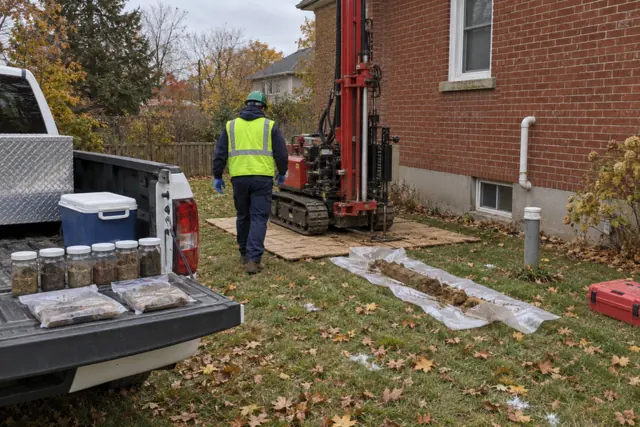
Phase 1 Environmental Site Assessment Companies in Missouri
Find contractors in Missouri for Phase I ESAs, Phase II soil testing, groundwater testing, and environmental investigation work. Serving Kansas City, St. Louis, Springfield, Columbia, and communities statewide.
What to Know About Site Assessment in Missouri
Missouri commercial property buyers rarely close on former fueling sites without a site assessment. The Missouri Department of Natural Resources administers underground tank rules through 10 CSR 26-2, which sets the framework for closure investigations and release reporting at petroleum facilities. Commercial property owners typically order an environmental investigation when a former filling station, fleet yard, or fuel-distribution site enters a sale, refinance, or change-of-use cycle. The state requires investigations at any facility where a release has been suspected or confirmed, with results filed to the Tanks Section in Jefferson City. A standard Phase I ESA process reviews historical records before any drilling begins.
Demand for property assessment work clusters along Missouri's interstate freight corridors and major metros. Kansas City and St. Louis carry the bulk of brownfield redevelopment activity, with former rail yards, jobber terminals, and corner gas stations cycling through commercial transactions. Springfield, Columbia, and Joplin generate steady Phase I ESA volume tied to franchise fueling sites along I-44 and I-70. The Ozark karst belt south of the Missouri River creates groundwater pathways that complicate contamination assessment work, since fractured limestone moves petroleum quickly toward springs and private wells. Agricultural fueling sites scattered across the Bootheel and northern grain belt add another layer of demand, particularly when farms transfer between generations or sell to corporate operators.
Phase I ESA pricing in Missouri typically runs $1,800 to $3,500 for standard commercial parcels, with larger industrial sites stretching past $4,500. A Phase II ESA with soil testing and groundwater testing usually lands between $4,000 and $12,000, depending on borings, laboratory turnaround, and monitoring well installation. Sites along the Ozark karst belt or near the Missouri River floodplain often cost more because drillers must cope with bedrock or shallow aquifers. The Petroleum Storage Tank Insurance Fund (PSTIF), administered by a board of trustees under RSMo 319.129, may reimburse eligible cleanup costs for registered tank owners after a deductible set in the participation agreement. The fund expires December 31, 2030 unless the general assembly extends it. Missing the PSTIF pre-approval window is the single biggest cost driver on contaminated parcels.
The typical Missouri process starts with the Phase I ESA: a record search through MoDNR's Tanks Section database, Sanborn maps, aerial photographs, and a property walk-through. If recognized environmental conditions appear, the assessor recommends Phase II ESA work, which involves soil borings, groundwater monitoring wells, and laboratory analysis for petroleum constituents. Phase I turnaround usually runs two to four weeks; Phase II adds another four to eight weeks once drilling crews mobilize. Field crews must carry HAZWOPER training documentation under 29 CFR 1910.120, and PSTIF paperwork should be filed in-house when applicable. Before signing, Missouri property owners should verify Environmental Professional credentials under ASTM E1527-21 and require the firm to pull MoDNR's tank registration records before quoting.
Does Missouri require certification to perform a site assessment?
Missouri does not separately license environmental consultants who perform property assessment work. The assessor performing a Phase I or Phase II ESA must qualify as an Environmental Professional under the federal All Appropriate Inquiries rule. Field crews collecting soil and groundwater samples must hold current HAZWOPER certification under OSHA 29 CFR 1910.120. Drilling subcontractors who install monitoring wells need a Missouri well installation contractor permit issued through MoDNR's Wellhead Protection Section. Assessors who file work tied to the Petroleum Storage Tank Insurance Fund must follow PSTIF technical specifications, which are stricter than the federal AAI minimum.
How much does a Phase I ESA cost in Missouri?
Phase I ESA pricing across Missouri usually falls between $1,800 and $3,500 for typical commercial parcels in metros like Kansas City and St. Louis. Smaller rural sites in the Bootheel or Ozark counties sometimes run $1,500 because file searches go faster, while complex industrial parcels along the Mississippi riverfront can exceed $5,000. A Phase II ESA with soil testing usually adds $4,000 to $12,000 to the project. Costs climb when historical aerial photo coverage is incomplete or when prior tank owners scattered records across multiple municipalities. Always confirm whether the quoted price includes the regulatory database search and the property reconnaissance, since some firms list those separately.
How long does a site assessment take in Missouri?
A standard Phase I ESA in Missouri runs two to four weeks from kickoff to draft report, assuming MoDNR's Tanks Section returns its record request within the typical 10-business-day window. Phase II ESA work adds four to eight weeks because drillers, samplers, and the analytical laboratory each need lead time. Sites near St. Louis or Kansas City sometimes turn faster because more drillers are available; rural Ozark parcels can stretch longer due to mobilization distance. If MoDNR requires a closure report or a Tier 1 risk-based corrective action review, expect another two to six months for state sign-off.
How does the Missouri PSTIF affect site assessment costs?
The Petroleum Storage Tank Insurance Fund covers eligible cleanup expenses for tank owners registered with MoDNR's Tanks Section. It is run by a board of trustees under RSMo 319.129, not by the Department of Insurance. PSTIF does not pay for Phase I ESAs ordered for routine real estate transactions. Reimbursement kicks in after a confirmed release is reported and a corrective action plan is approved. Deductibles are set in the PSTIF participation agreement rather than in statute, so confirm your own figure with PSTIF. Note that RSMo 319.129 sunsets the fund on December 31, 2030 unless extended. The fund applies pre-approval requirements to investigation costs, meaning the contractor must scope and bid the Phase II work before drilling. Owners who skip the pre-approval step often discover the Fund will not reimburse them after the fact.
What happens during a Phase II environmental investigation?
A Missouri Phase II ESA starts with a sampling plan tied to the recognized environmental conditions identified in Phase I. Drillers advance soil borings at suspected release points, typically near former dispensers, fill ports, and tank pits. Groundwater monitoring wells go in if shallow groundwater is encountered or if MoDNR requires plume delineation. Soil and water samples ship to a Missouri-certified laboratory for petroleum hydrocarbon analysis, with results typically returning in 10 to 21 days. The final report compares laboratory values against MoDNR's Tier 1 cleanup criteria and recommends whether Tier 2 modeling or active remediation is needed.