

What to Know About Tank Decommissioning & Closure in California
California splits UST oversight between the State Water Resources Control Board (SWRCB), which sets statewide rules, and local Unified Program Agencies, usually the county or city CUPA, which issue permits and approve tank closures. For heating oil and motor fuel tanks, California's exclusions are narrower than the federal ones. Health and Safety Code 25281 excludes a heating oil tank only if it sits on a farm or at a residence, holds 1,100 gallons or less, and stores heating oil used on the premises. The motor fuel exclusion covers only farm tanks of 1,100 gallons or less used mainly for agriculture. The federal rules, by contrast, exclude on-premises heating oil tanks of any size. State law also preserves a local agency's right to regulate tanks outside the state chapter.
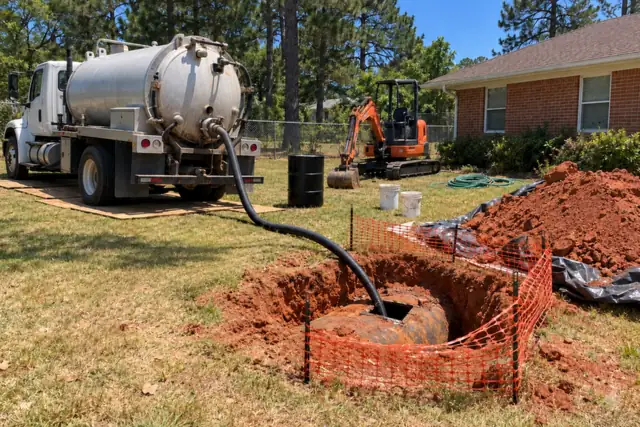
The UST regulations in 23 CCR chapter 16 were rewritten effective January 1, 2026, and closure now sits in sections 2680 to 2684, posted on the Water Board's regulations page. The owner gives the local agency, usually the CUPA, a closure proposal for approval with 30 days' notice, and must apply within 90 days of stopping storage. A tank closed in place must be completely filled with an inert solid. Soil samples are taken at least two feet into native soil under each end of the tank, along piping and at each dispenser, and groundwater is sampled if present. The closure report goes to the CUPA or other local agency within 30 days, and the agency issues an Underground Storage Tank Closure Letter.
California's Underground Storage Tank Cleanup Fund reimburses eligible corrective action costs for cleaning up contamination, not routine closure. The fund's FAQ page says Priority Class A is limited to owners of residential tanks, and a small home heating oil tank of 1,100 gallons or less can qualify. HSC 25299.57 limits payment to $1,000,000 per occurrence, and the fund stops accepting claim applications after January 1, 2035. Small businesses can apply for RUST grants and loans, but work cannot begin until the Water Board executes the grant or loan. Our guide to closure in place versus UST removal explains what changes the scope of a closure job.
Under Business and Professions Code 7058.7, a contractor may not install or remove an underground storage tank without passing the Contractors State License Board's hazardous substance certification exam. A leak found during the work must be reported to the local agency within 24 hours. Keep closure sample results for at least 36 months after the tank is properly closed. CalEPA's Unified Program Regulator Directory shows which CUPA covers a property. Before hiring any contractor on this page, confirm its hazardous substance certification with the CSLB and ask your CUPA about any local closure requirements.