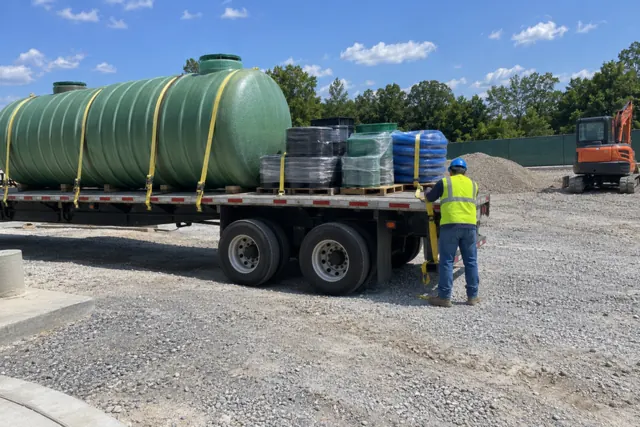
Find contractors in Maine for underground storage tank installation, fuel system installation, dispenser installation, and piping upgrades. Serving Portland, Bangor, Lewiston, Augusta, and communities statewide.
What to Know About Tank Installation in Maine
Demand for tank installation in Maine follows the Interstate 95 corridor and clusters around the state's population centers. Portland, South Portland, and the surrounding Cumberland County area see the most new fuel system construction due to steady commercial growth and gas station turnover. Bangor anchors fuel distribution in the northern half of the state, while Lewiston, Auburn, and Augusta see installation work from convenience store chains expanding into central Maine. Rural areas present a different challenge: fewer contractors will mobilize equipment to Aroostook or Washington County, and the construction season between May and October compresses scheduling. Fleet operators and heating oil distributors with bulk storage facilities represent a growing segment outside traditional gas station work.
New UST installation in Maine requires state oversight from start to finish. The Department of Environmental Protection mandates that all new tank systems meet federal secondary containment, leak detection, and spill prevention standards. Maine requires a new tank to be registered with the state at least ten business days, and no more than two years, before installation. Operators must register every new tank and demonstrate financial responsibility coverage before storing regulated substances. Maine law lets only an installer certified by the Board of Underground Storage Tank Installers install an underground oil storage tank, and municipal fire marshal approval may be needed for gas stations.
A single underground storage tank installation in Maine typically costs $55,000 to $150,000, depending on tank size, material, and site conditions. Multi-tank gas station build-outs with dispensers, canopy, and monitoring systems run $250,000 to $500,000 or more. Monitoring equipment alone adds $5,000 to $15,000 per tank. Rocky, ledge-heavy soil adds $10,000 to $30,000 in excavation costs at many Maine sites, and frozen ground between December and March pushes costs up another 15 to 25 percent. The state's Ground and Surface Waters Clean-up and Response Fund covers releases from existing tanks but does not offset new installation costs, and owners replacing contaminated tanks should budget separately for remediation.
The installation process begins with site engineering and permit applications, which typically take four to eight weeks before any ground is broken. Excavation, tank placement, backfill, piping connections, and dispenser installation follow over two to six weeks for a standard single-tank project. Multi-tank stations can take three to five months from groundbreaking to operational status. Every new system must pass its installation tightness tests, and for a motor fuel system the certified installer must send DEP a certificate of proper installation before fuel is dispensed. Verify that any contractor you hire has direct experience with Maine's ledge conditions and carries pollution liability insurance before work begins.
Does Maine require a specific license for UST installation?
Yes. Maine law lets only an installer certified by the Board of Underground Storage Tank Installers install an underground oil storage tank, including a residential heating oil tank. Ask commercial fuel system installers for proof of environmental liability coverage as well. Most municipalities also require fire marshal approval before any underground tank can be installed at a gas station or fueling facility. When selecting a contractor, verify they have experience with Maine's registration rules, including registering a new tank at least ten business days before installation, and with federal secondary containment standards.
How much does it cost to install an underground storage tank in Maine?
A single UST installation in Maine typically runs $55,000 to $150,000 for a standard commercial project. Multi-tank gas station build-outs with dispensers and monitoring systems range from $250,000 to $500,000 or more. Maine's rocky terrain often increases excavation costs by $10,000 to $30,000 at sites where ledge removal is required. Monitoring equipment adds $5,000 to $15,000 per tank. Replacing a tank at a previously contaminated site can add $15,000 to $100,000 in remediation costs not included in these figures.
How long does a tank installation project take in Maine?
Permitting and site engineering typically take four to eight weeks before construction begins. A single-tank installation runs two to six weeks from excavation through final inspection. Multi-tank gas station projects can stretch three to five months from groundbreaking to the first fuel delivery. Winter scheduling between December and March adds time and cost due to frozen ground conditions. Planning your project to break ground between May and October gives you the best pricing and the most contractor availability in Maine's compressed construction season.
Why does Maine's rocky soil affect UST installation costs?
Much of Maine sits on granite ledge and glacial till that standard excavation equipment cannot cut through efficiently. Sites where bedrock is within six to eight feet of the surface may require hydraulic breaking or controlled blasting before a tank pit can be excavated to the proper depth. This rock work adds $10,000 to $30,000 to the project depending on volume removed. Contractors experienced in Maine already factor subsurface conditions into their proposals, while out-of-state firms sometimes underbid because they assume standard soil. A geotechnical survey before finalizing your budget eliminates this surprise entirely, and most Maine-based installers can recommend a local firm for the boring work.
What inspections are required after a new tank is installed in Maine?
Every newly installed UST in Maine must pass a tightness test on both the tank and associated piping before the system can hold regulated product. The state requires the operator to register the new tank with the Department of Environmental Protection and provide proof of financial responsibility coverage. A fire marshal inspection is typically required at the municipal level for commercial fueling facilities. Release detection equipment must be operational and tested before the tank enters service. Operators who skip or delay any of these steps risk a fully installed system sitting idle while paperwork catches up.