

What to Know About Oil Tank Inspection & Testing in Oklahoma
Oklahoma requires HAZWOPER training for contractors performing oil tank inspection and testing on regulated underground storage tanks. The certification requirement carries particular weight in Oklahoma because few states have a deeper relationship with petroleum. Basic tightness testing runs $500 to $2,000 across the state. Oil and gas production has shaped the state's economy for over a century, and that history built one of the densest petroleum fueling networks in the country relative to population. Gas stations, pipeline support facilities, oilfield equipment yards, truck stops, and fleet operations are spread across every corner of the state. Many of these facilities installed their underground tanks during the Oklahoma oil booms of the 1970s and 1980s, and those tanks are now 40 to 50 years old. A state built on oil has a lot of aging oil infrastructure underground, and the only way to know what condition it is in is a certified fuel tank inspection.
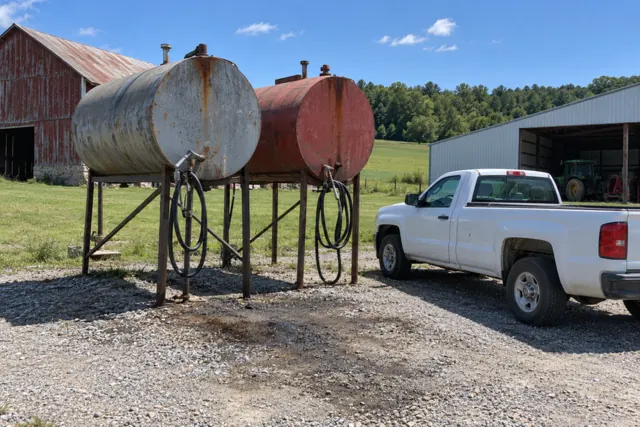
Underground oil tank inspection demand in Oklahoma concentrates in two major metros and a vast rural network. Oklahoma City and its surrounding communities drive the highest volume of commercial and industrial inspection work, supported by the I-35 and I-40 corridor intersection that makes the metro a national logistics crossroads. Tulsa and the I-44 corridor generate a second concentration tied to the refining industry, pipeline operations, and regional distribution. But Oklahoma's rural tank inventory is disproportionately large for a state its size. Small-town gas stations, oilfield support facilities, agricultural fueling sites, and truck stops along two-lane highways account for a significant portion of the state's regulated tanks. Many of these sites operate on original single-wall steel systems that have never been upgraded. The same contractors who perform underground oil tank inspection across the state also handle oil tank removal and tank decommissioning when these aging rural systems reach end of life. At 40 to 50 years of service, that conversation is increasingly common.
Oil tank inspection cost in Oklahoma typically ranges from $500 to $2,000 for a basic tank tightness test and $2,000 to $5,000 for comprehensive multi-tank assessment at larger commercial or industrial sites. Cost varies by location and access. An Oklahoma City station along I-35 is routine. An oilfield support site on a county road in the Panhandle is not. But the cost that makes inspection worthwhile is not the contractor's bill. Oklahoma's geology varies dramatically from the red clay soils of the central plains to the fractured limestone of the Arbuckle Mountains to the sandy alluvial soils along the Arkansas and Red River basins. Each soil type moves petroleum contamination differently. A leaking underground storage tank in red clay may trap contamination close to the source, but a release in fractured limestone can travel underground through cracks and reach water wells miles from the original site. Soil contamination from a missed inspection routinely generates environmental remediation costs of $10,000 to $50,000 or more, and releases that reach fractured bedrock or alluvial groundwater push costs significantly higher.
Federal law requires EPA or the state to inspect each regulated underground storage tank at least once every three years. Owners also have duties of their own under 40 CFR 280: release detection on tanks at least every thirty days by one of several approved methods, and walkthrough inspections every thirty days and once a year. Oklahoma's weather adds stress that accumulates over decades. Summer temperatures routinely exceed 100 degrees, which accelerates degradation of flexible connectors and gaskets. Tornado season can produce ground saturation and flooding that shifts soil around buried tanks. The combination of extreme heat, severe weather, and aging infrastructure makes the three-year inspection cycle a bare minimum for Oklahoma facilities. For sites with older tanks, annual fuel tank inspection is the practical standard most environmental remediation contractors in Oklahoma recommend. Facility owners who have been running the same tank for decades without problems should not mistake longevity for invincibility. An aging tank that has survived 40 Oklahoma summers is not getting stronger. It is getting closer to failure, and tank decommissioning on a planned schedule is always less expensive than emergency response after a rupture.