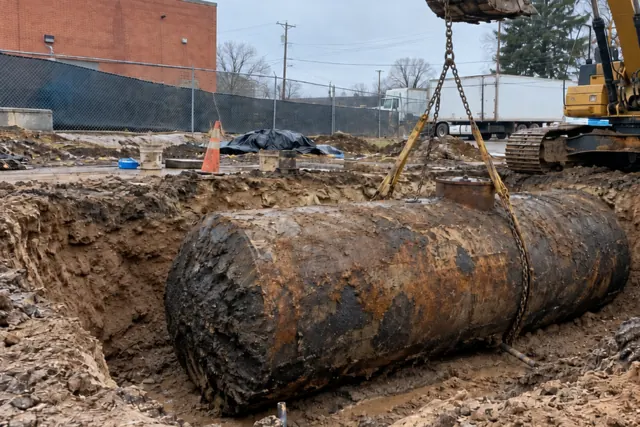
Oil Tank Removal Contractors in New York
Find New York contractors for oil tank removal, UST closure, tank decommissioning, heating oil tank removal, basement tank excavation, petroleum tank removal, PBS-regulated tank work, and environmental remediation. Serving New York City, Long Island, Westchester, Albany, Syracuse, Rochester, Buffalo, Hudson Valley, and communities statewide.
Oil Tank Closure Under NYSDEC PBS and Navigation Law
Buried heating oil tanks cost New York homeowners $2,000 to $4,000 for a standard yard removal when no contamination is present. Basement oil tank removal in older New York City and Long Island homes runs $3,000 to $5,500 because access constraints force contractors to cut tanks into sections. Commercial UST work at gas stations and fuel facilities ranges from $8,000 to $30,000 depending on tank size and site conditions. The real cost variable is soil contamination, and if post-removal sampling reveals petroleum, environmental remediation adds $10,000 to $50,000 or more. New York does not operate a traditional petroleum cleanup reimbursement fund, so property owners should carry pollution legal liability insurance before any removal begins.
Long Island, particularly Nassau and Suffolk counties, has one of the highest concentrations of buried residential heating oil tanks in the country. Brooklyn, Queens, and Staten Island carry significant residential tank populations from the same mid-century era. Upstate cities including Syracuse, Rochester, and Buffalo see steady removal demand from older housing stock, and colder winters kept oil heating in service longer than elsewhere. Commercial UST work centers on gas stations and fleet facilities along the I-87, I-90, and I-95 corridors, with real estate transactions triggering most residential removals statewide. Adirondack vacation properties around Lake George and the Saranac Lakes chain add seasonal residential tank work where natural gas service never reached.
New York regulates tank closure through the NYSDEC Petroleum Bulk Storage (PBS) program, which covers tanks at 1,100-gallon and larger capacity. The PBS program is distinct from the NYSDEC Chemical Bulk Storage (CBS) program that regulates non-petroleum chemical tanks under separate thresholds. Smaller residential heating oil tanks below the 1,100-gallon PBS threshold sit outside state regulation but still require local fire-department permits in most NYC and Long Island jurisdictions. The Navigation Law Article 12 Oil Spill Fund handles emergency spill response under NYSDEC administration and is not a UST cleanup reimbursement fund for owner costs. Contractors must notify the local fire department before excavating any tank, and our cost guide walks through pricing by tank type and regional market differences.
A residential New York closure starts with permit applications to the local fire department, utility markouts, and excavation scheduling. Most residential removals take one to two days on clean-access yard sites, with basement jobs in older New York City and Long Island homes adding a half day for interior disassembly. Soil samples collected after the tank is lifted take one to three weeks for lab results. Before hiring, request at least two quotes covering soil sampling and closure documentation, and verify each contractor carries general and pollution liability coverage. For commercial jobs, confirm the contractor holds current NYSDEC PBS credentials and can produce a past closure report from a comparable Hudson Valley or Buffalo site. Property owners weighing options can browse the New York UST contractor directory or start a quote from active contractors.
Oil Tank Removal Contractors in New York
Browse contractors, see contact details, and request free quotes.
Browse New York Contractors →Frequently Asked Questions
How much does oil tank removal cost in New York?
Residential oil tank removal typically costs $2,000 to $4,000 for a yard burial with no contamination. Basement tanks cost $3,000 to $5,500 because the tank must be cut apart for removal. Commercial tank work at gas stations ranges from $8,000 to $30,000 depending on tank count and size. If contamination is found, remediation adds $10,000 to $50,000 or more. Our cost guide walks through pricing by tank type, contamination, and NYC or Long Island market drivers.
Do I need a licensed contractor to remove an oil tank in New York?
Regulated commercial USTs under the NYSDEC PBS program require contractors holding appropriate credentials and fire-department notification before work begins. Local jurisdictions often layer additional permits on top of state rules. Residential heating oil tanks below the 1,100-gallon PBS threshold do not require state-level contractor licensing but typically demand fire-department permits in NYC and Long Island. Verify the contractor carries both general and pollution liability coverage, because standard CGL policies exclude pollution events.
What is the difference between NYSDEC PBS and CBS programs?
PBS (Petroleum Bulk Storage) regulates petroleum storage tanks with capacity at or above 1,100 gallons, including heating oil tanks above that size. CBS (Chemical Bulk Storage) regulates hazardous-substance tanks under separate thresholds and different chemical lists. Heating oil releases fall under PBS, not CBS, and conflating the two is one of the most common mistakes on New York regulatory paperwork. Owners of larger commercial USTs should confirm which program applies to their tanks before scheduling closure work.
Does New York have a cleanup fund for oil tank releases?
New York does not operate a state petroleum cleanup reimbursement fund. The Navigation Law Article 12 Oil Spill Fund handles emergency spill response and limited third-party damages, not owner cleanup reimbursement. Property owners are responsible for the full cost of remediation caused by a leaking tank. Pollution legal liability insurance is therefore particularly important for New York owners with buried tanks, since standard CGL policies exclude pollution events.
How long does oil tank removal take in New York?
A residential tank removal typically takes one to two days from excavation to backfill if no contamination is found. Basement tank removals add a half day due to interior disassembly. Soil sample lab results take one to three weeks after collection. If contamination is detected, the timeline extends significantly depending on the scope of cleanup required, and clean closures from start to final documentation typically wrap within four to six weeks.
Browse contractors, see contact details, and request free quotes.
Browse New York Contractors →For New York UST regulations, visit the NYSDEC Petroleum Bulk Storage. Federal requirements are available from the EPA UST Program.