

What to Know About Tank Decommissioning in Washington
This page covers closing an underground storage tank in Washington, from a gas station UST to a buried home heating oil tank. The Washington State Department of Ecology runs the state UST program, which EPA has approved to operate in lieu of the federal program under 40 CFR 282.97. WAC 173-360A-0110 exempts any UST system used solely for heating structures on the property where the system is located. It also exempts farm or residential motor fuel tanks of 1,100 gallons or less used for noncommercial purposes, and tanks of 110 gallons or less. Ecology states that it does not regulate any home heating oil tanks, underground or aboveground. For those tanks, the Pollution Liability Insurance Agency (PLIA) offers financial help, and local fire officials decide how an unused tank is handled.
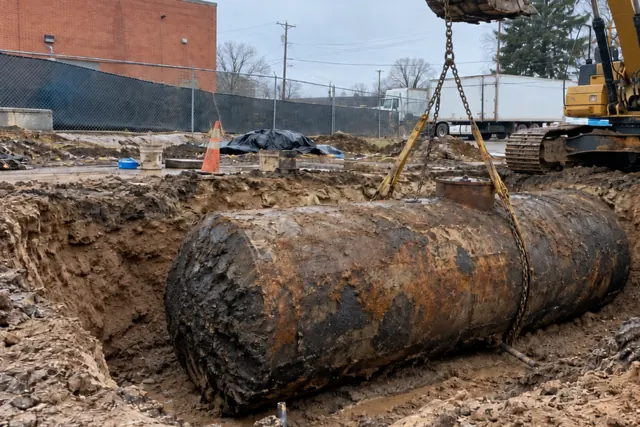
For a regulated tank closure, WAC 173-360A-0810 makes Ecology's 30-Day Notice due at least 30 days, but no more than 90 days, before the planned start date. The owner must also confirm the start date at least 3 business days ahead. Tank decommissioning must be done by or under the direct supervision of a certified service provider. The tank is emptied and cleaned, then either removed or given a closure in place by filling it with an inert solid material. A site assessment is required at closure in most cases, and WAC 173-360A-0940 bars lifting a tank out unless the decommissioner and the site assessor are both present. A release confirmed by the site assessment must be reported to Ecology within 24 hours under WAC 173-360A-0750. The decommissioning checklist and the site assessment report are each due to Ecology within 30 days. Under WAC 173-360A-0800, a temporarily closed tank that fails the rule's performance or upgrade standards must be closed within 12 months. Ecology may extend it after a site assessment.
Under WAC 173-360A-0210, the annual tank fee is owed for each tank until the system completes tank closure or a change-in-service. Under WAC 173-360A-0800, the fee stays due while a tank is only temporarily closed. For a leak that starts after a regulated UST is enrolled, PLIA's Financial Assurance Program covers up to $2 million for cleanup and infrastructure costs, with no deductibles. Eligible costs include cleanup of the release and disposal of nonrepairable tanks or systems. PLIA's UST Loan and Grant Program can fund removing a petroleum UST system, or closure in place only when that is necessary, under WAC 374-90-030. RCW 70A.345.030 sets a maximum award of $2 million per facility. Compare closure in place versus UST removal before choosing a method.
Heating oil tanks follow local fire rules. PLIA's heating oil tank decommissioning page says most fire districts follow International Fire Code section 5704.2.13. That section requires an underground heating oil tank out of service for at least one year to be removed or closed in place. In Seattle, Client Assistance Memo 5962 requires a Seattle Fire Department permit before each residential underground heating oil tank is decommissioned. An ICC certified UST decommissioner must do or directly supervise the work and return the report form within 30 days. For regulated USTs, WAC 173-360A-0120 does not preempt stricter local UST ordinances in effect on November 1, 1988. Ecology received notice of such ordinances from Redmond, Renton, Spokane, Spokane County and Tacoma-Pierce County. For a regulated UST, check the decommissioner and site assessor on Ecology's certified UST service provider list, which is updated quarterly. Ecology says that check is the responsibility of the UST owner or operator.