
Oil Tank Removal Contractors in Hawaii

Find Hawaii contractors for oil tank removal, UST closure, UST decommissioning, commercial tank excavation, petroleum tank removal, and environmental remediation. Serving Honolulu, Hilo, Kailua, Kaneohe, Waipahu, Oahu, Maui, Big Island, Kauai, and island communities statewide.

Browse Hawaii Contractors →

How Hawaii Regulates UST Closure and the DOH UST Program

Hawaii oil tank removal runs through the Hawaii DOH Solid and Hazardous Waste Branch. HDOH administers USTs under Hawaii Administrative Rules Chapter 11-280.1 and federal 40 CFR 280 rules. Commercial UST closure at gas stations, military installations, and industrial sites requires a Hawaii-certified UST service provider. Residential heating oil tanks are virtually nonexistent in Hawaii because the tropical climate eliminates heating demand, but legacy commercial tanks remain concentrated at Honolulu gas stations, Hilo port operations, and inter-island fuel terminals.
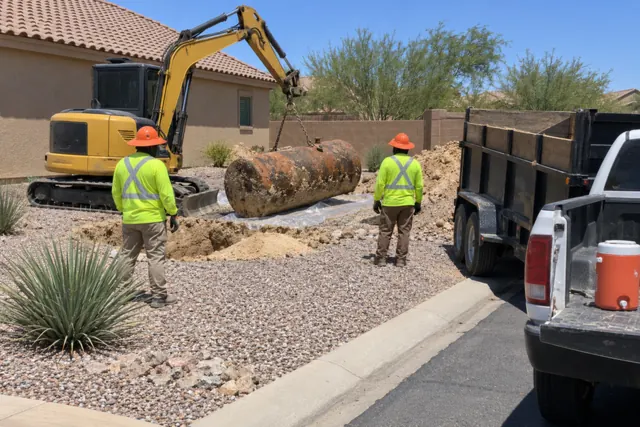
Hawaii tank removal work concentrates on Oahu, particularly Honolulu, Waipahu, Kapolei, and the Pearl Harbor corridor where Navy and commercial fuel systems drive most closure volume. Hilo and Kailua-Kona on the Big Island anchor inter-island fuel terminal work and agricultural fuel storage at coffee, macadamia, and ranching operations. Maui's Kahului airport and Lahaina fuel depots cycle tourism-support tanks, and Kauai sees periodic closures at Lihue harbor and resort fueling sites. Volcanic soils across the islands vary from dense basalt at Hilo to porous coral-influenced substrates on Kauai, which affects excavation methods and soil sampling protocols.

Commercial UST closure at Hawaii gas stations typically runs $8,000 to $25,000 per tank, with higher costs than mainland averages due to material shipping and inter-island logistics. Multi-tank Honolulu or Pearl Harbor area closures reach $40,000 to $100,000. If soil sampling exceeds HDOH cleanup thresholds, environmental remediation adds $15,000 to $80,000 or more, with coastal sites facing tighter HDOH oversight near reef and estuary systems. The Hawaii UST Program coordinates with the federal LUST Trust Fund for corrective-action support on regulated sites. Our cost guide breaks down pricing by tank size, site access, and island shipping factors.

A typical Hawaii commercial closure starts with Hawaii 811 locates, HDOH notification, tank pumping, degassing, excavation, and soil sampling. A single-tank Honolulu gas station closure wraps in two to three days. Inter-island jobs on Maui, Big Island, or Kauai add one to two days for equipment barging and crew logistics. Soil laboratory turnaround runs ten to fifteen business days because samples often ship to mainland labs. Before signing, verify the contractor holds an active HDOH UST service provider certification, carries pollution liability insurance, and can show a closure report from a comparable Oahu, Maui, or Big Island job. start a quote from active local contractors, or browse the Hawaii UST contractor directory to compare options.

Oil Tank Removal Contractors in Hawaii

Browse contractors, see contact details, and request free quotes.

Browse Hawaii Contractors →

Frequently Asked Questions

Do I need a licensed contractor to remove an oil tank in Hawaii?

Yes. Hawaii Administrative Rules Chapter 11-280.1 requires UST closure to be performed by a Hawaii-certified UST service provider under federal 40 CFR 280 rules. The HDOH UST program maintains the certified-contractor list. Residential heating oil tanks are virtually nonexistent in Hawaii, but any discovered commercial tank requires a licensed Honolulu, Hilo, or inter-island contractor.

How much does oil tank removal cost in Hawaii?

Commercial UST closure at Hawaii gas stations typically runs $8,000 to $25,000 per tank, higher than mainland averages due to shipping and inter-island logistics. Multi-tank Honolulu or Pearl Harbor closures reach $40,000 to $100,000. Contamination adds $15,000 to $80,000 or more. Coastal sites near reef or estuary systems often require expanded sampling. See our cost guide for pricing.

How long does an oil tank removal take in Hawaii?

A single-tank Honolulu gas station closure wraps in two to three days on site. Inter-island work on Maui, Big Island, or Kauai adds one to two days for equipment barging. Soil laboratory turnaround runs ten to fifteen business days because samples often ship to mainland labs. If sampling triggers HDOH review under 40 CFR 280, paperwork adds eight to sixteen weeks.

How does Hawaii's tropical climate affect tank closure?

Hawaii's year-round warm temperatures eliminate freeze-thaw concerns but create consistent vapor-intrusion risk and volcanic-soil variability. Big Island basalt and Kauai coral-influenced substrates require different excavation methods than mainland alluvial sites. Coastal reef and estuary proximity triggers expanded sampling from the HDOH UST program. Trade wind patterns and winter surf events sometimes affect shoreline site access on Oahu and Maui.

Why is Hawaii oil tank removal more expensive than mainland work?

Material shipping from the mainland, inter-island equipment barging between Oahu, Maui, Big Island, and Kauai, and longer soil-lab turnaround all add cost. Specialized HDOH-certified labor pools are smaller than on the mainland. Remote Big Island and Kauai sites sometimes require barge scheduling around trade wind and winter surf windows. Waste disposal back to mainland facilities also adds per-tank cost compared to a typical Honolulu or Hilo job.

Looking for a contractor in Hawaii?

Browse contractors, see contact details, and request free quotes.

Browse Hawaii Contractors →

For Hawaii UST regulations, visit the Hawaii DOH Solid and Hazardous Waste Branch. Federal requirements are available from the EPA UST Program.

Related Services in Hawaii

Find Hawaii ContractorsRequest a Free Quote
Free Quotes