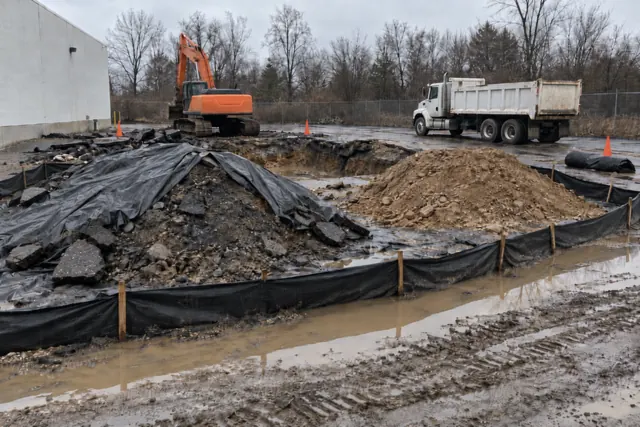
Missouri soil cleanup, groundwater treatment, and MoDNR closure for petroleum tank releases in Kansas City, St. Louis, Springfield, and Columbia.
What to Know About UST Remediation in Missouri
UST remediation in Missouri demands fast action under tight MoDNR deadlines. The Missouri Department of Natural Resources Tanks Section enforces corrective action under the Missouri Risk-Based Corrective Action (MRBCA) framework and 10 CSR 26-2. Tank owners must report a confirmed petroleum release within 24 hours and submit initial site characterization on the schedule set in the agency's release notice. Most projects open with a careful Phase I ESA that traces historical tank locations, prior owners, and nearby private wells before any drilling starts. Missouri's mix of Ozark karst dolomite in the south, deep loess in the northwest counties, and Mississippi River alluvium near St. Louis means plume behavior changes dramatically across the state. Hiring a contractor who already knows your regional MoDNR project manager saves months of review time.
Cleanup work happens across every corner of Missouri, from former service stations near the Country Club Plaza in Kansas City to legacy fuel terminals along the St. Louis riverfront. Springfield carries a heavy load of older retail-corridor releases tied to Route 66 era stations and Ozarks tourist traffic. Columbia and Jefferson City see steady activity around University of Missouri redevelopment and state government parcel transfers. Suburban municipalities like Independence, Lee's Summit, and O'Fallon push faster cleanups because commercial redevelopment will not wait for slow corrective action. Joplin still works through legacy contamination tied to its mining and rail history, while MoDNR's online E-Start database lists every active and closed petroleum release that any prospective buyer should pull before closing on commercial property.
Pricing for Missouri UST remediation varies sharply with depth, plume size, and selected treatment method. Soil-only excavations on small releases of 50 to 200 tons typically run $15,000 to $55,000 including hauling and disposal at a Missouri-permitted Subtitle D landfill. Mid-range groundwater projects in the Kansas City or St. Louis metros land between $75,000 and $220,000 once monitoring wells, quarterly sampling, and MRBCA risk assessment paperwork are included. Complex sites with off-site plumes in Ozark karst near Branson, Rolla, or West Plains can exceed $400,000 and stretch four to seven years before closure. The Missouri Petroleum Storage Tank Insurance Fund (PSTIF) reimburses eligible compliant owners after a deductible. Coverage limits and deductibles are set in the PSTIF participation agreement rather than in RSMo 319.129, so confirm both with PSTIF before budgeting. The fund expires December 31, 2030 unless the general assembly extends it.
Crew qualifications matter as much as equipment selection, since Missouri requires a registered professional engineer or professional geologist to sign and seal MRBCA corrective action plans before MoDNR will approve a closure. Field crews handling petroleum-contaminated soil and groundwater must hold current HAZWOPER training under OSHA 29 CFR 1910.120, and reputable Missouri firms also carry pollution legal liability coverage along with PSTIF-eligible registration. Ask any bidder for proof of current registration, three recent No Further Action letters issued in the past two years, and the license number of the professional who will stamp your closure submittals. Compare scope, contingency budgets, and projected closure timeline rather than headline price alone. Before signing a contract, request itemized line-item quotes from at least three contractors familiar with the MoDNR regional office covering your county, then call two of those references before any deposit changes hands.
Missouri contractors for environmental remediation
How long does UST remediation typically take in Missouri?
Most Missouri cleanups run one to three years from initial release report to closure, though soil-only sites without groundwater impact can wrap inside ten months. The timeline depends on plume reach, the proximity of private wells, basements, or surface water, and how fast the MoDNR project manager covering your region reviews each MRBCA submittal. Sites in the Kansas City or St. Louis metros typically move quicker than rural Ozark karst projects because qualified labs and consultants are closer at hand. Quarterly groundwater monitoring usually runs eighteen to thirty months after source removal before the agency issues a No Further Action letter. Plan any sale, refinance, or redevelopment around the closure date, not the excavation date.
Does the Missouri PSTIF cover my cleanup costs?
The Missouri Petroleum Storage Tank Insurance Fund reimburses eligible cleanup costs after a deductible. The coverage limit and the deductible are set in the PSTIF participation agreement, not in RSMo 319.129, so ask PSTIF for the figures that apply to your facility. RSMo 319.129 sunsets the fund on December 31, 2030 unless the general assembly extends it. To qualify, the tank must be properly registered, all PSTIF participation fees paid current, and the release reported to MoDNR within the required notification window. Equipment overruns, work outside the approved corrective action plan, and third-party damages typically fall outside coverage. Hiring a PSTIF-experienced contractor is critical because invoices must match pre-authorized line items in the approved scope. Plan to front the deductible and any non-eligible costs since the fund pays after invoiced work is completed and reviewed. When you compare quotes from soil remediation companies in Missouri, make sure each one covers excavation, soil disposal, backfill, and the confirmation sampling needed to close the case.
When is excavation better than in-situ treatment in Missouri?
Excavation usually wins for shallow, well-defined plumes under fifteen feet where contaminated soil can move to a Missouri-permitted landfill within a week or two. In-situ approaches like air sparging, soil vapor extraction, or chemical oxidation make sense when contamination sits below buildings, deep in the water table, or spread across a large parcel. Missouri's heavy clay tills in the northern counties slow in-situ treatment, while Ozark karst in southern counties can channel injected reagents away from the target zone. Hybrid projects that combine a source-area dig with downgradient in-situ polishing are common at former service stations in Kansas City and St. Louis. Your contractor's site characterization report should walk through the choice with cost and time tradeoffs before you sign anything.
What contractor credentials should I verify in Missouri?
Look for a Missouri-registered professional engineer or geologist on staff who can stamp MRBCA submittals, and confirm the firm holds active PSTIF-eligible status with MoDNR. Verify general liability and pollution legal liability insurance in writing, and require current 40-hour HAZWOPER training plus annual 8-hour refreshers for every field crew member touching petroleum-impacted media. Ask how many active corrective action cases the firm currently manages in your MoDNR regional office area, and request three recent No Further Action letters issued in the past 24 months. References from Missouri property owners near Springfield, Columbia, or Independence carry more weight than out-of-state project counts. Verify every credential through MoDNR before signing because using an ineligible consultant can disqualify your PSTIF reimbursement claim.
Can I sell a Missouri property during active remediation?
Yes, but disclosure obligations and lender expectations complicate these transactions significantly. The seller must disclose the active corrective action case to any prospective buyer, and most commercial lenders refuse to close until MoDNR issues a No Further Action letter or strict environmental indemnity language is recorded. Some buyers accept assignment of the corrective action plan and PSTIF claim if the deal price reflects the remaining cleanup risk. An environmental attorney along with a contractor experienced with Missouri transfers in Kansas City, St. Louis, or Springfield should review the purchase agreement before signing. Closing too early without protective language can leave the seller liable for decades of post-closure groundwater monitoring obligations.