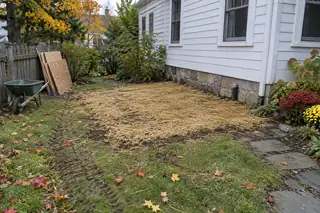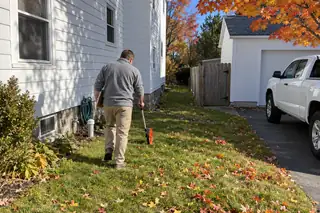
An oil tank sweep test is 30 minutes of walking your yard with a sensor. Nobody digs anything. A technician rolls or carries detection equipment across the property, marks any spots where metal registers below grade, and hands you a report. That is the entire process.
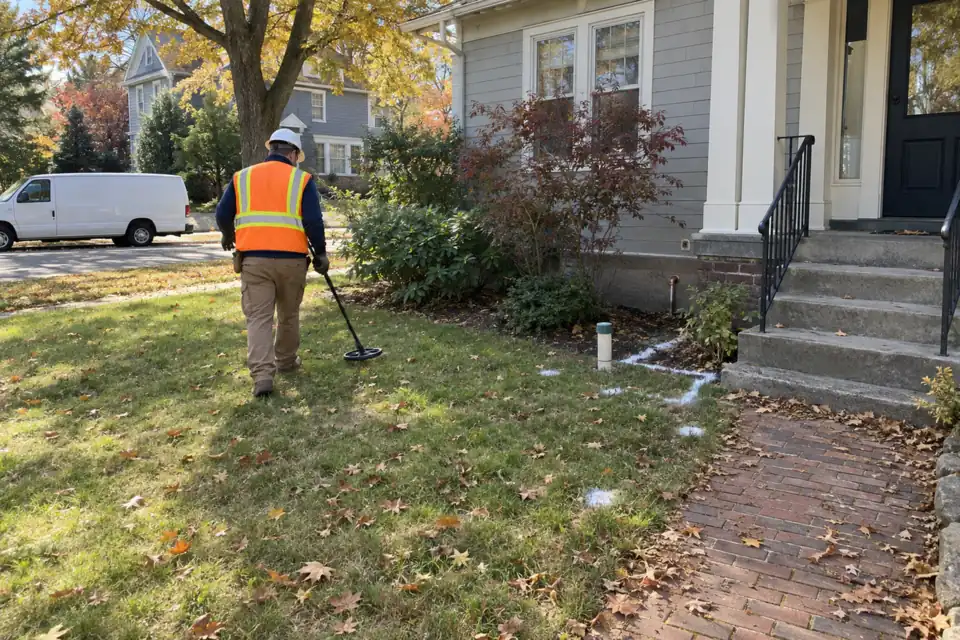
Most people picture excavation when they hear "tank sweep." The reality is closer to a home inspection: someone shows up, walks the lot with specialized gear, and tells you what they found. The property stays completely untouched.
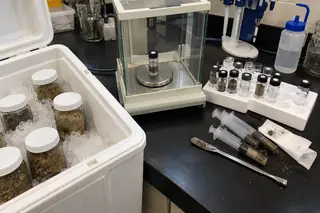
The sweep finds metal. The soil test finds trouble.
New Jersey is a good example of why buyers order sweeps. A 2024 state law makes the Seller's Property Condition Disclosure Statement mandatory for residential sellers. The form asks whether the seller knows of any fuel tanks on the property, above or underground, and whether any underground tank has been tested. That rule comes from the Division of Consumer Affairs rather than NJDEP, and it requires disclosure only. It does not require a sweep. A sweep lets the buyer check for themselves instead of relying on what the seller knows.
Why Real Estate Deals Trigger Most Tank Sweeps
In Pennsylvania, about one in eight homes still heats with oil, according to the Census Bureau's 2024 American Community Survey, so a sweep is worth considering in older neighborhoods there too. Some towns regulate the removal itself: Buckingham Township in Bucks County, for one, requires a permit and 48 hours' notice to the fire marshal before a tank comes out.
Buyers sometimes skip this step entirely. That is a reasonable call if the house was built after 1975, shows no fill or vent pipes, and was never heated with oil. If any of those conditions are uncertain, a $300 scan is cheap insurance against the $15,000 to $100,000 a leaking tank can cost after closing.
A tank sweep before buying a house is usually the buyer's choice. New Jersey's disclosure form asks about tanks but does not require a sweep, and the practice is driven by liability rather than law. Some lenders and title companies in the Northeast treat a sweep as a de facto closing condition. A single missed tank that leaks after closing exposes the buyer to remediation costs that can exceed the down payment.
Two main tools handle buried oil tank detection: ground penetrating radar and magnetometers. They work on different principles, find different things, and each has blind spots the other one covers.
Two Technologies Behind Every Oil Tank Sweep Test
Ground penetrating radar sends electromagnetic pulses into the soil and reads the reflections. A GPR tank scan can identify the shape, depth, and approximate size of a buried object. It performs well in sandy or dry soil. Clay, saturated ground, and heavy root systems degrade the signal badly. GPR also picks up non metallic objects like concrete vaults and plastic tanks, which a magnetometer misses entirely.
A magnetometer survey measures distortions in the earth's magnetic field caused by ferrous metal. It is extremely sensitive to steel tanks, iron pipes, and cast iron fittings. It cannot tell you the shape or depth of what it found, and it ignores fiberglass and plastic completely. Most tank locating services run both tools together because neither one alone catches everything.
How to detect an underground oil tank with just one tool is a question contractors hear constantly. The honest answer is that a single instrument works for straightforward lots with confirmed oil heat history, where you already know a steel tank exists and just need to pinpoint it. Properties with unknown heating history or complex fill need both tools.
The technician arrives with a wheeled GPR unit, a handheld magnetometer, or both. The job starts at the front of the property and works toward the back in parallel passes spaced roughly three to four feet apart. Most residential oil tank surveys cover the entire lot in 20 to 40 minutes.
What the Technician Actually Does on Your Property
Before scanning, the technician looks for visual clues: fill pipes, vent pipes, oil supply lines entering the foundation, patched concrete, and depressions in the yard. A visible fill pipe does not make the sweep unnecessary. It confirms a tank was once installed but says nothing about whether it was ever removed.
After scanning, the technician flags or spray paints any anomaly locations on the ground. You get a written report with a site diagram, anomaly locations, estimated depth, and the technician's interpretation of each reading. The entire visit, including setup, scanning, and walkthrough of findings, typically runs under an hour.
Experienced technicians also check the basement. Oil supply lines that terminate at a capped fitting near the foundation wall are strong evidence of a former tank connection. Staining on the basement floor near the boiler area can indicate a previous indoor tank that was removed but never documented.
The report from a geophysical survey lists each anomaly by location and depth. A clean report says no subsurface anomalies consistent with a buried tank were detected. That exact language matters. It does not say "no tank exists." It says the equipment did not find one within its detection limits.
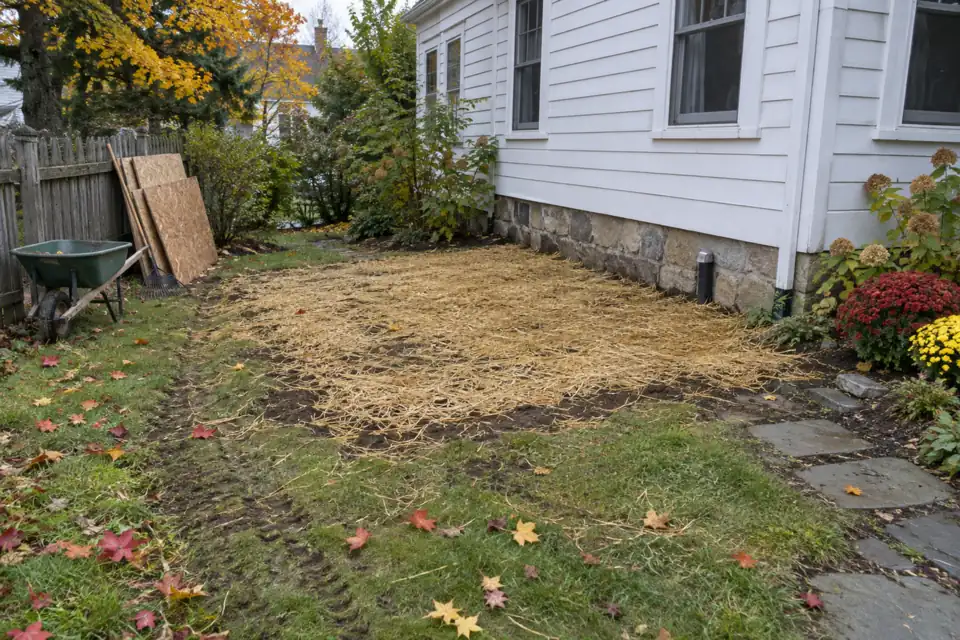
Reading the Report Without a Geology Degree
An anomaly report identifies areas of interest with notes on signal strength and estimated dimensions. A rectangular anomaly at three to five feet deep measuring roughly four by six feet is almost certainly a tank. A narrow linear reading at two feet is more likely a pipe or conduit. The technician's interpretation is valuable, but it remains an informed opinion, not a legal finding.
Do not expect certainty.
Soil sampling is what produces the definitive answer. If the report is ambiguous, a second opinion from a different firm using different equipment is worth the extra $200 to $400 before you make a decision that affects a six figure purchase.
Underground tank detection equipment finds metal, not tanks specifically. Old water pipes, well casings, septic components, car parts, construction debris, and buried utilities all register as anomalies. In older neighborhoods built before 1950, false positives are common.
The False Positive Problem Nobody Mentions
A flagged anomaly is a reason to look closer before anyone calls it a tank. The equipment did exactly what it was designed to do. The interpretation is where ambiguity creeps in, and no amount of technology eliminates that gap entirely.
The exception: when the anomaly lines up perfectly with a visible fill pipe and vent pipe, the probability of it being anything other than a tank drops to near zero. No experienced technician will hedge on that combination. When there are no surface indicators, further investigation is the only way to resolve the question.
Properties near old commercial sites or former gas stations produce more false positives because buried infrastructure from adjacent parcels can bleed into the scan area. A technician who knows the neighborhood history can save you from chasing readings that have nothing to do with your property.
Finding an anomaly does not kill the deal.
What Happens After the Sweep Finds a Buried Tank
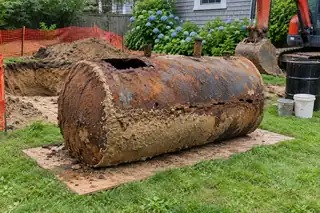
Thousands of properties in the Northeast have tanks that were properly decommissioned years ago and present zero current risk. The sequence after a positive result typically runs soil sampling first, then a decision based on what the sample shows.
If soil around the anomaly tests clean and the tank is confirmed abandoned in place, some lenders and title companies will accept a closure letter from the original contractor or a new closure verification report. Clean soil paired with a tank removal typically costs $1,500 to $3,500 in the Northeast.
Contaminated soil changes everything.
Remediation costs start at $15,000 and climb from there with no reliable ceiling. Some buyers negotiate a remediation escrow where the seller funds cleanup at closing.
Hiring a Tank Locating Service That Gets It Right
Others walk away. The right move depends on contamination severity, property price, and how motivated both parties are. Walking away from a $200,000 house with $60,000 in remediation liability is not the same calculation as walking away from a $600,000 one.
A standard tank sweep cost runs $200 to $500 for a residential property. Larger commercial lots or properties requiring combined GPR and magnetometer passes may reach $800 to $1,200. Firms in northern New Jersey and Connecticut charge at the higher end because demand keeps prices elevated year round.
Ask whether the firm uses GPR, a metal detector, or both. A metal detector oil tank scan is the cheapest option but misses fiberglass tanks and provides less data about anomaly depth and shape. A combined approach leaves fewer questions open and produces a more defensible report for your lender.
Get the report in writing with a site diagram. Verbal findings over the phone are worthless in a real estate transaction. Your attorney, lender, and title company all need documentation they can file. If a contractor resists putting results on paper, that tells you something about how they run their operation.
Will Calling 811 Find a Buried Oil Tank, or Do You Need a Private Locator?
Calling 811 will not find a buried oil tank. The call goes to your state one-call center, which notifies the companies that operate underground lines nearby, and those companies mark their own pipelines, telecom, electric, sewer and water lines, as PHMSA explains. Anything privately owned is the property owner's to locate. New York's one-call center lists propane tanks and lines and septic tanks among the private facilities its member utilities do not cover, and a home heating oil tank belongs to the owner in the same way.
Make sure an 811 ticket is in place before anyone digs to sample or remove a tank. PHMSA says every state has a one-call center and requires notice by law, typically 48 to 72 hours before digging, with the exact notice period set by state law. The service is free, and the national 811 number has routed callers to the right state center since May 1, 2007.
Finding the tank is the sweep firm's job, with the tools described above. For a house lot, start from the residential sweep price earlier in this guide and confirm it with local quotes. Ground penetrating radar cost for one federal job is on public record: in 2022 the U.S. Forest Service paid $5,665 for a ground penetrating radar search for abandoned storage tanks at a single trailhead, according to USAspending.gov.
Ask the excavator to work from both sets of marks: the utility flags from the 811 ticket and the locator's marks for the tank, its fill pipe and its supply line.
If the Sweep Finds Something, Here Is What to Do Next
Start with the report. If it came back clean, file it with your closing documents and move forward. Your attorney may want a copy for the title file. See also: Your Home Inspector Found a Buried Oil Tank.
If the report flagged an anomaly, get a soil test before you negotiate anything. The soil results determine whether you are dealing with a simple removal or a contamination problem, and those are two completely different conversations at the closing table. Our guide on Property Condition Assessment covers this in depth.
Do not hire the same firm for both the sweep and the removal. The company that finds the tank has a financial interest in the excavation work that follows. An independent sweep keeps the diagnosis and the treatment separate. For more detail, see our guide on What Happens If a Buried Oil Tank Is Not Removed.
Find a tank sweep contractor in your state through our directory. If you already have a report and need help understanding what comes next, request a quote and describe what the sweep found. A contractor can walk you through your options before you commit to anything.