Skip oil spill response training and a 40 CFR 112 inspection becomes a citation. The 1,320 gallon aboveground threshold in 40 CFR 112 triggers SPCC training requirements, and larger sites fall under the Oil Pollution Act of 1990 facility response planning tier. Most facilities will fit at least one of these regulatory frames, and many fall under both.
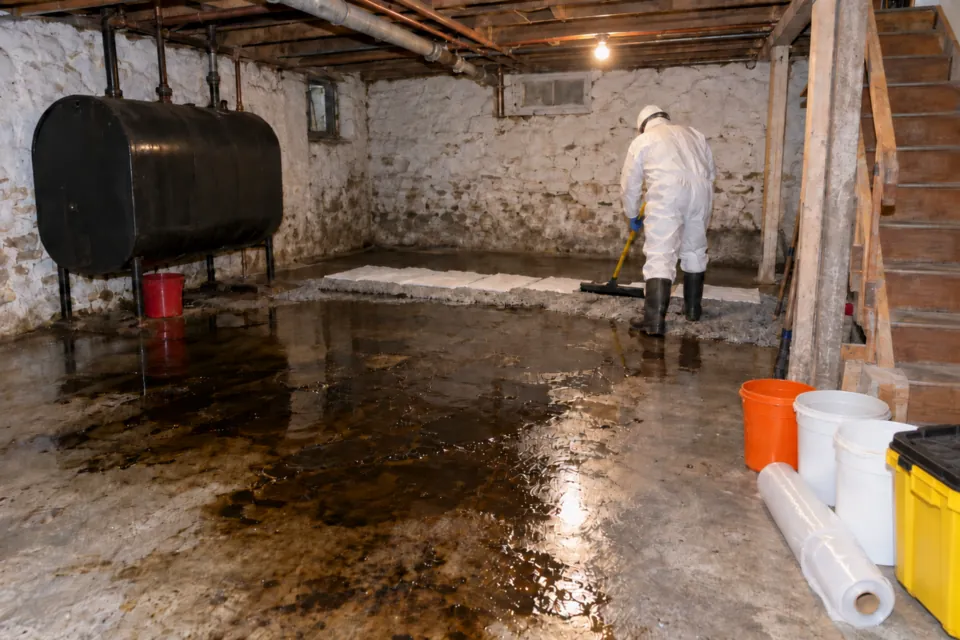
Oil spill response training is the instruction that teaches facility staff to prevent, contain, and report an oil discharge. Two regulatory frames drive most spill response training scopes for petroleum handling facilities. 40 CFR 112 SPCC covers facilities storing above the 1,320 gallon threshold, and OPA 90 facility response planning covers larger terminals near navigable waters. UST sites add a third frame via 40 CFR 280 Subpart F release response. Each frame carries its own documentation, refresher interval, and inspector checklist. Choosing the right course depends on which frame applies.
This guide answers the planning questions SPCC coordinators face during an audit. Federal inspectors and state UST programs increasingly cross check both SPCC and release response training during the same site visit. It also covers documentation requirements and what to look for when hiring a 24 hour response contractor. Use the contractor directory to compare providers once the planning is settled.
Three federal rules drive oil spill response training requirements in the United States. The SPCC rule at 40 CFR 112 covers facilities that could discharge to navigable waters and store more than 1,320 gallons of petroleum aboveground. The Oil Pollution Act of 1990 added the Facility Response Plan (FRP) layer for sites that could cause substantial harm. The National Contingency Plan provides the federal coordination framework when a release crosses thresholds for federal involvement.

Why Oil Spill Response Training Exists: SPCC and OPA 90
The history matters because exam questions and inspector queries trace back to it. Exxon Valdez ran aground in Prince William Sound in March 1989. Congress passed the Oil Pollution Act of 1990 the following year. EPA expanded SPCC requirements in 2002 and again in 2006, adding the FRP obligation for any onshore facility that could cause substantial environmental harm from a discharge.
Substantial harm is defined in 40 CFR 112.20 Appendix C and includes any facility with storage above 42,000 gallons that transfers oil over water, or any facility above 1,000,000 gallons in proximity to fish and wildlife receptors. These sites must keep an FRP on file with EPA Region staff. The plan names trained responders, response equipment inventory, and discharge scenarios.
For UST owners, the operator side overlaps but is not identical. 40 CFR 280 Subpart F requires owners and operators to report and respond to releases from underground tanks within specific timeframes. Operator training in 40 CFR 280 Subpart J is a separate credential from spill response training, though the two often share coursework. See the operator training guide for how the two requirements interact.
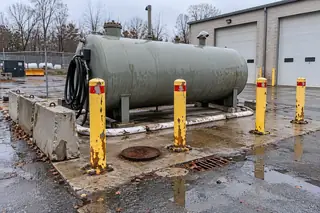
Oil spill response training under SPCC applies to any facility with aboveground petroleum storage above the 1,320 gallon threshold that could reasonably discharge oil to navigable waters or adjoining shorelines. The trigger covers more sites than most operators realize. A truck terminal with five 500 gallon day tanks meets the threshold once aggregate capacity is computed. So does a backup generator yard with twelve 250 gallon belly tanks at a hospital campus.
SPCC Plan Training: What 40 CFR 112 Requires of Facility Personnel
40 CFR 112.7(f) requires the owner or operator to train oil handling personnel in operation and maintenance of equipment to prevent discharges, discharge procedure protocols, and applicable pollution control laws. Training must cover the contents of the SPCC plan itself. Annual discharge prevention briefings are required for all personnel handling oil at the facility. The briefing log is a separate record from the formal training roster and must show date, attendees, and topical scope.
The SPCC training requirement is performance based. EPA does not specify a course length or curriculum content beyond the topical areas. Many facilities meet the rule with a 4 hour annual SPCC training session combined with the documented discharge prevention briefing.
Larger sites push toward 8 hour formats to cover OPA 90 FRP content in the same session. Performance based does not mean optional. Inspectors will pull the roster and quiz attendees on plan content.
SPCC training records must include the date, content, attendance roster, and instructor identification. Inspectors routinely pull these records during a Clean Water Act inspection. The SPCC plan must reference the training program by section. A common audit gap is a current SPCC document that references a training program retired two years earlier.
Facility Response Plans and the Worst Case Discharge Tier
Facility response plans sit one rung above SPCC requirements and dictate the training scope for substantially harmful sites. They are required by 40 CFR 112.20 for any facility that meets substantial harm criteria in Appendix C of the rule. The plan covers worst case discharge volume, response equipment inventory, response time benchmarks, and trained responders for each shift. EPA Region staff review and certify the plan on a five year cycle.
Worst case discharge is the volume of the largest single container at the facility, plus the volume of any oil that could be released during a full container transfer, calculated per 40 CFR 112.20 Appendix D. For a tank farm with a 1,000,000 gallon storage tank, the worst case discharge for planning is 1,000,000 gallons. That scenario shapes the entire response plan layout.
Three discharge tiers drive resource allocation in the response plan: average most probable discharge at 50 barrels, maximum most probable at 1,200 barrels, and worst case discharge sized per Appendix D.
Personnel named in the facility response plan must complete spill response training matched to their role. Qualified Individual training runs 8 hour to 40 hour depending on facility size. Incident commanders and unified command staff typically complete 40 hour emergency response training that overlaps with OSHA HAZWOPER at 29 CFR 1910.120(q). See the HAZWOPER training guide for how the curricula align.
UST Specific Release Response Under 40 CFR 280 Subpart F
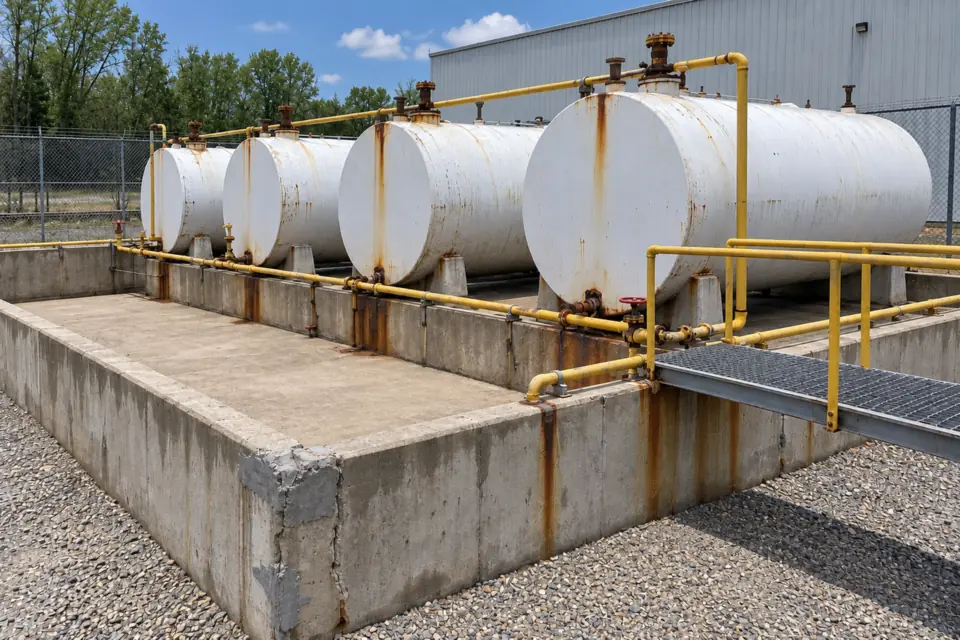
UST sites carry a third frame governed by 40 CFR 280 Subpart F for spill response. Subpart F covers what an owner or operator must do when a suspected release is identified. The reporting clock starts at 24 hours from discovery, with confirmed release reporting required within the same window for most state programs. Failure to report inside that window triggers stand alone enforcement at 40 CFR 280.50.
Initial response steps under 40 CFR 280.61 require the owner to take immediate action to prevent further release, identify and mitigate fire, explosion, and vapor hazards, and report the release to the implementing agency. The implementing agency is typically the state UST program rather than EPA directly. State programs vary in how aggressively they pursue documentation gaps during the initial response phase.
Under 40 CFR 280.62, initial abatement must occur within 24 hours of confirmed release. Required steps include removing remaining product from the UST system to prevent further release, identifying and addressing immediate hazards, and continuing visual inspection during the abatement period. Training for these steps is typically delivered by the spill containment specialist and the UST operator team. Product removal coordinated with release response keeps the timeline auditable.
Operators handle the day to day side of UST release response. UST workers who pull samples, run leak detection, and respond to alarms need release response familiarity even though they are not formal Qualified Individuals. Combining UST operator certification with spill response training keeps the entire UST team release ready. Smaller sites can build internal capacity through 4 hour annual courses tied to operator refresher cycles.
Training Curricula: 4 Hour Awareness, 8 Hour Operations, 40 Hour HAZWOPER
Three course lengths dominate the oil spill response training market for UST and bulk fuel sites. The 4 hour awareness level course matches the OSHA First Responder Awareness benchmark in 29 CFR 1910.120(q)(6)(i). Workers at this level recognize a release, notify trained responders, and secure the area. They do not perform offensive containment. Awareness level alone is rarely enough for SPCC personnel at facilities above the 1,320 gallon threshold.
The 8 hour operations level course adds defensive containment to the awareness curriculum. Workers learn to deploy boom, sorbents, drain plugs, and basic vapor monitoring per 29 CFR 1910.120(q)(6)(ii). This level fits the average SPCC coordinator role and is the most common training format for tank farms and fueling depots. Annual 8 hour refresher training maintains the credential. Many states require operations level coverage for at least two staff members per shift at terminals above 50,000 gallons.
The 40 hour HAZWOPER course is the maximum training level set by 29 CFR 1910.120 for hazardous waste site work, and includes release response coverage as a sub module. Workers at HAZWOPER 40 hour level can perform offensive containment, plug and patch, and product transfer at a confirmed release site. Annual 8 hour HAZWOPER refresher training is required to keep the credential active. Sites with their own Qualified Individuals typically build internal teams at this level.
Oil spill certification credentials vary by training provider. Industry recognized programs include API Recommended Practice 1639 curriculum, the National Spill Control School short course, and EPA endorsed regional training. When evaluating providers, confirm the curriculum maps to the regulatory frame your facility falls under. A 40 hour HAZWOPER certificate does not automatically satisfy SPCC training documentation if the SPCC plan itself is not addressed.
Documentation and What an Inspector Will Ask For
Documentation closes the oil spill response training audit loop. EPA inspectors and state UST inspectors will ask for four artifacts during an SPCC or release response inspection. The current SPCC plan with the training section completed and signed. Training rosters with dates, attendees, instructor identification, and topical scope covered. Missing any of the four creates a paper trail gap that converts a clean inspection into a citation.
The third artifact is the discharge prevention briefing log. Annual briefings per 40 CFR 112.7(f)(3) need a written record showing the date, content, and personnel attending. The fourth is contractor certification verification. When third party trainers deliver oil spill certification courses, the facility must retain the contractor credentials and the course outline. Inspectors regularly call these the four corners of an SPCC training file.
A common documentation failure shows up at acquisition due diligence. New ownership inherits an SPCC file that references training conducted before the sale, but cannot produce rosters. EPA will treat this as a recordkeeping violation at 40 CFR 112.7(e) even if the training itself occurred. Maintaining a five year training file at the facility prevents this gap and supports continuity through ownership changes.
For UST sites, training documentation overlaps with 40 CFR 280 Subpart J operator certification records. Class A, Class B, and Class C operator credentials must be retained for as long as the operator works at the site. Many states require the credential to be available at the facility during a site visit. Inspectors at a regulated UST site pull both training files together.
Hiring a 24 Hour Spill Response Contractor
A 24 hour spill response contractor extends spill response capacity beyond facility staff. The contractor sits between the facility's trained personnel and the federal On Scene Coordinator named in the National Contingency Plan. The contractor mobilizes equipment, deploys trained responders, and handles offensive containment that exceeds the facility's internal capability. Most SPCC documents name a primary contractor by company and a backup contractor for capacity overflow.
Evaluate spill response contractors on four criteria. Response time guarantee from receipt of call to on site mobilization at your facility. Equipment inventory matched to your maximum discharge volume per 40 CFR 112.20 Appendix D. Trained responder roster with 40 hour HAZWOPER and current oil spill certification credentials. Prior incident history in your facility type matters too, and references from EPA Region staff or state UST programs carry weight.
Contract pricing typically splits into a retainer for standby readiness and an incident rate for activation. Retainers range from $2,000 to $10,000 annually for a single small facility. Activation rates run $250 to $500 per hour for crew, plus equipment day rates and consumables. Larger facilities with OPA 90 FRP obligations usually negotiate higher retainers in exchange for shorter response time guarantees.
For facilities outside the spill response training window or short on internal capacity, contracted training services are another option. Some environmental contractors offer combined SPCC training delivery and standby response contracts in one engagement. Request quotes through the quote form to compare retainers, response time benchmarks, and curriculum scope across local providers.