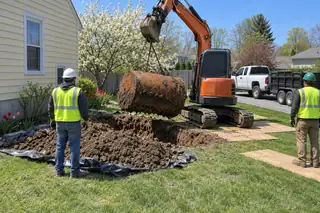
Spill containment captures fuel or oil before it reaches soil or surface water. Under 40 CFR 112, any regulated petroleum storage facility with above ground oil storage capacity over 1,320 gallons needs a written Spill Prevention Control and Countermeasure plan, known as SPCC. The plan must include secondary containment for every regulated tank.
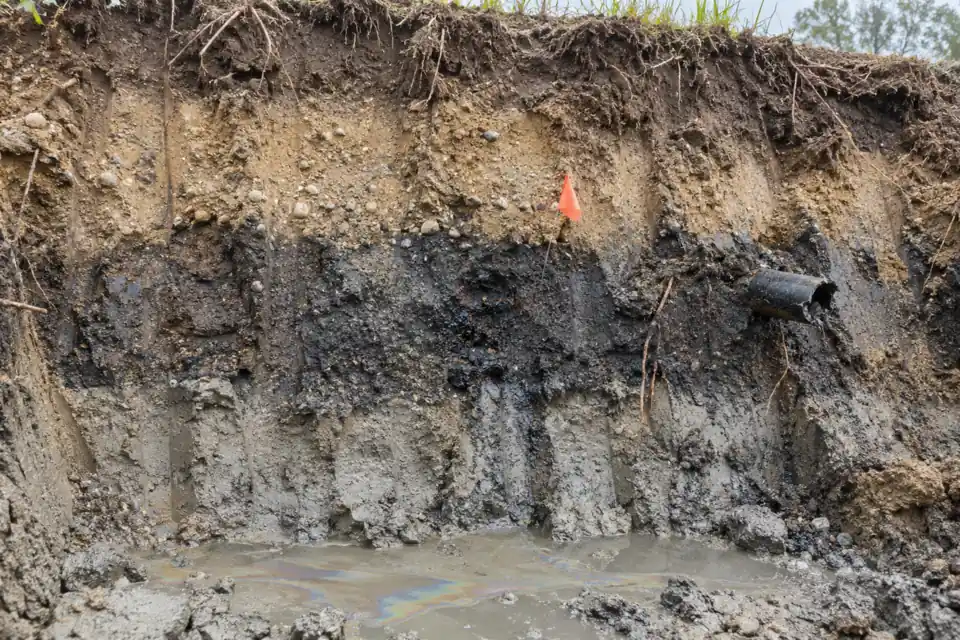
For underground storage tanks, 40 CFR 280.20(c) requires a spill bucket or similar spill catchment at the fill pipe, plus overfill equipment that shuts off flow, restricts it, or sounds a high-level alarm before the tank overfills. According to UL's code guidance, NFPA 30 requires above ground atmospheric tanks to be built to "one of several recognized engineering standards," and UL 142 for steel tanks and UL 2085 for protected tanks both meet that requirement. Failing to comply with the SPCC rule can bring a civil penalty of up to $59,114 per day of violation, the inflation-adjusted Clean Water Act figure listed in 40 CFR 19.4.
This guide covers federal and state rules, hardware tiers, inspection cycles, and cost ranges for a working spill containment program at fuel and oil sites. It walks through dispenser sump containment, fill port spill buckets, berm containment for above ground tanks, and spill pallets for drums and totes. Most operators reading this run a regulated facility somewhere between a single 500 gallon shop tank and a multi tank cardlock yard. The same federal framework applies across that entire range, unless state regulations impose a stricter overlay.
Done well, a containment program runs quietly for two decades while a single design error can convert the next release into a six figure remediation invoice.

What spill containment means and why federal rules require it
Spill containment is the engineered system that captures petroleum or hazardous liquid before it reaches the environment. It includes physical barriers like sumps, berms, and pallets, plus operational controls like overfill protection, level alarms, and trained spill response procedures. Federal law treats containment as a fundamental obligation for any operator handling regulated quantities of fuel or oil.
The Clean Water Act 1972 set the legal foundation by prohibiting unauthorized discharges of oil into navigable waters. EPA implemented the Spill Prevention Control and Countermeasure rule in 1973 at 40 CFR 112 to operationalize that ban for above ground oil storage. The rule requires written plans, secondary containment, regular inspections, and recordkeeping for every facility above the 1,320 gallon aggregate threshold.
Underground tank requirements live in a parallel framework at 40 CFR 280. That rule mandates spill buckets at the fill port, overfill prevention equipment, and corrosion protection for the tank shell and piping. Both rule sets often apply at the same site because most fuel yards mix above ground day tanks with underground bulk storage.
Operators who rely on insurance to cover a release without strong containment usually discover a painful gap. The policy pays for cleanup but not for fines, business interruption, or third party damages. A documented spill prevention program lowers premiums and shifts the legal calculus when a state inspector arrives. It also gives the operator something concrete to point to during the inevitable EPA file review.
Secondary containment requirements under 40 CFR 112 SPCC
Secondary containment is a physical barrier that holds product released from a primary tank long enough for an operator to recover it before it reaches soil or storm drains. Under 40 CFR 112.8(c)(2), bulk storage containment must hold the entire capacity of the largest single container in the area. Outdoor sites also need sufficient freeboard to contain precipitation, and EPA guidance offers a 25 year, 24 hour storm as one conservative way to size it. The tank volume calculator works out the largest tank's capacity from its dimensions.
Common secondary containment designs include reinforced concrete dikes, earthen berms with impermeable liners, double walled tanks meeting UL 2085 protected tank standards, and prefabricated steel containment pans for smaller installations. The choice depends on tank volume, soil conditions, climate, and proximity to surface water bodies covered under the Clean Water Act.
Sized correctly, the secondary containment area becomes a passive system that needs only periodic inspection and cleanout after rain events. Sized incorrectly, the same area overflows during a single storm. The operator then inherits an oil discharge to surface water, and one that leaves a sheen must be reported at once to the National Response Center under 40 CFR part 110.
Operators planning new installations often design containment alongside the tank installation itself. The civil work, the tank purchase, and the SPCC plan move through one engineering sequence instead of three. This is far cheaper than retrofitting containment around an existing tank ten years into operation, when soil compaction, traffic patterns, and concrete pads all complicate the work.
Spill buckets and overfill protection at the dispenser and fill port
A spill bucket is a 5 to 25 gallon catch basin installed at the fill port of every underground storage tank. EPA requires spill buckets under 40 CFR 280.20(c) for any new UST and for any existing UST receiving more than 25 gallons of product at a time. The bucket captures the dribble that drips off the delivery hose when the driver disconnects after a transfer.
Overfill protection prevents a tank from being filled past 95 percent capacity. The equipment uses a positive shutoff valve, a drop tube ball float, or an automatic high level alarm audible to the delivery driver. Under 40 CFR 280.20(c), allowed options include an automatic shutoff at no more than 95 percent full, or a flow restriction or alarm that alerts the driver at no more than 90 percent full. Modern installs use drop tube shutoffs combined with electronic high level alarms tied into the tank gauge console.
Spill buckets fail in two predictable ways. Water and debris accumulate in the basin and corrode the drain valve shut, then a real release overflows because the bucket is already full of stormwater. Alternatively the drain valve sticks open and product released into the bucket leaks straight into the soil through the failed seal. Both failure modes are caught by the integrity test that 40 CFR 280.35 requires at least once every 3 years for every spill prevention component.
Overfill protection equipment also requires inspection at least once every 3 years under EPA rules effective October 2018. Drop tube shutoffs, flapper valves, and high level alarms are tested by physically introducing product or simulating a high level condition with the right diagnostic tool. The tank inspection and testing guide explains each test and links to state pages for the firms that run them.
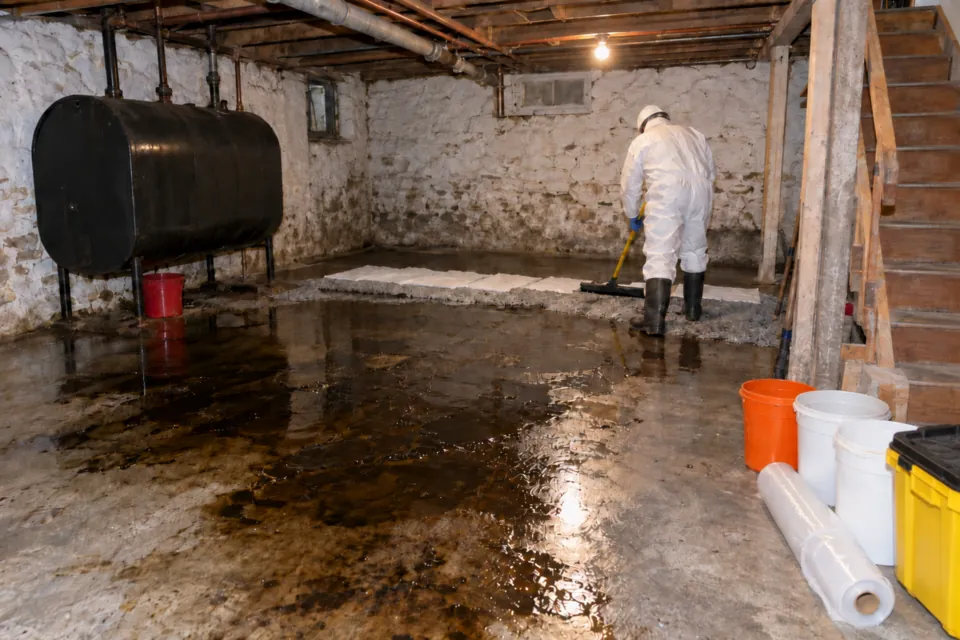
Berm containment, dikes, and earthen barriers for above ground tanks
Berm containment is the most common method for above ground tank facilities at private fuel yards, generators, and bulk plants. A containment berm built of compacted earth, concrete, or modular steel walls surrounds one or more tanks and creates a holding volume sized to the SPCC formula. EPA accepts both permanent and prefabricated berm designs as long as the engineered volume meets 40 CFR 112.8(c)(2).
Earthen berms with high density polyethylene liners run $4 to $12 per square foot installed and suit larger bulk storage layouts. Modular steel containment berms run $8 to $25 per square foot but allow rapid deployment for temporary fueling sites or remote generator pads. Concrete containment dikes cost $40 to $90 per square foot but last decades with minimal maintenance and resist heavy equipment traffic across the working pad.
A common design error is undersizing the rainfall freeboard on outdoor berm containment. The rule requires sufficient freeboard to contain precipitation and leaves the design storm to the owner. EPA guidance offers the 25 year, 24 hour storm as one conservative basis, and in much of the Gulf Coast and Southeast that storm exceeds 8 inches of rain in 24 hours. A containment berm sized only to 110 percent of tank volume in a high rainfall region can overflow the first time a tropical system passes over the site.
Stormwater that accumulates inside an intact containment area must be visually inspected before discharge, and operators must keep records of every drain event under 40 CFR 112.8(c)(3). A clear discharge log and a closed drain valve when not actively releasing water are the two findings inspectors look for first.
Spill containment for chemical drums, totes, and small containers (spill pallets)
Spill pallets are molded polyethylene or steel platforms that sit under 55 gallon drums, intermediate bulk containers, and other small petroleum or chemical packages. A standard 4 drum spill pallet holds a 66 gallon containment sump beneath the deck, more than the full contents of a single 55 gallon drum. Spill pallet pricing runs $200 to $1,200 depending on capacity and material.
Facilities storing oil in containers under 55 gallons are not counted toward the 1,320 gallon SPCC threshold, but containers between 55 gallons and bulk size do count. A workshop with three 275 gallon totes of hydraulic oil and a 500 gallon used oil tank crosses the threshold. That mix triggers an SPCC plan, secondary containment for each container, and trained personnel under EPA rules.
Indoor spill pallet placement also intersects with NFPA 30 fire code, which limits the storage volume per control area and sets clearances between flammable liquid containers and ignition sources. Local fire marshals enforce this layer separately from EPA. A containment plan that satisfies federal SPCC rules still fails a fire inspection if drum aisles and ceiling clearances are wrong.
Operators expanding container storage should plan layout against both rule sets before pouring concrete. A new container yard at a former industrial parcel often pairs spill pallet design with a site assessment. That assessment confirms there is no legacy contamination beneath the planned slab before the fire marshal walks the property.
Inspection, testing, and recordkeeping for containment systems
The SPCC rule calls for frequent checks of each tank's outside for deterioration and leaks. Aboveground valves and piping need regular inspection too. Under 40 CFR 112.8(c)(6), every aboveground container must also be tested or inspected for integrity at regular intervals and whenever a material repair is made. The owner sets the frequency and method from industry standards that weigh the tank's size and design, so a field-erected tank can follow a different schedule from a shop-built one. Inspectors check for stained soil, drain valve position, liner damage, and standing rainwater. Inspection records must be retained for 3 years and produced on request to EPA or state authority.
Underground storage tank spill prevention equipment must be tested at least once every 3 years under 40 CFR 280.35, and overfill protection components are inspected on the same 3-year cycle. Spill bucket integrity tests use a hydrostatic method, a vacuum method, or a third method approved by the manufacturer that proves the bucket holds liquid and the drain valve seats. Test results stay on site for 3 years minimum and travel with the property at sale.
A single missed inspection cycle is rarely fatal in itself. A pattern of missed cycles signals operator inattention to a state inspector and pushes a routine audit toward an enforcement file. Maintaining an inspection calendar tied to specific personnel, with a backup name to cover vacations and turnover, pays for itself quickly. It is the cheapest insurance policy a facility can buy against the next surprise visit.
Most enforcement actions begin with a paperwork failure rather than a physical leak. Operators who produce signed inspection logs, dated test reports, and a current SPCC plan during an unannounced visit walk away with verbal feedback. State rules can add to the federal plan. New Jersey applies its own Discharge Prevention, Containment, and Countermeasure rules at N.J.A.C. 7:1E to major facilities, a class it defines by combined storage capacity, with petroleum included.
How to choose an installer and your next compliance step
A qualified spill containment installer combines civil construction experience, environmental permitting knowledge, and familiarity with both 40 CFR 112 and 40 CFR 280. Generalist excavation contractors can build a berm. They rarely understand the inspection cycle, the recordkeeping burden, or the licensed engineer review SPCC plans require for facilities over 10,000 gallons aggregate above ground capacity.
References should include at least three sites of similar volume and configuration. The installer should also share inspection records, permit copies, and any state correspondence from the work. A reluctant installer is usually hiding a deficiency that the next inspector will discover. The contractor selection playbook walks through the credentials and questions that matter most.
Once a candidate installer is identified, request a written scope. The scope should list tank standards (UL 142 for steel, UL 2085 for protected) and the secondary containment material and engineered capacity. It should also cover spill bucket and overfill hardware, plus the inspection and test handoff at substantial completion. Verbal scopes and quick handshake bids often skip the documentation that audit defense relies on years later.
Owners should compare two or three bids from contractors in their state. The find UST contractors directory lists firms by state, which makes the shortlist quick to build before requesting scopes. Federal compliance dates and reporting variations are summarized in the UST compliance deadlines guide, so plan the inspection calendar around those dates before signing the contractor agreement.